
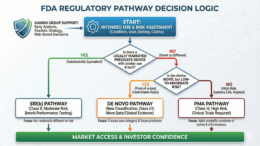
What Is the FDA Regulatory Pathway for Medical Devices?

Short answer: the FDA regulatory pathway for medical devices depends on risk, intended use, and whether a similar device already exists.

The three main pathways are:

510(k) – for devices that are substantially equivalent to an existing legally marketed device

De Novo – for novel, low-to-moderate risk devices with no predicate
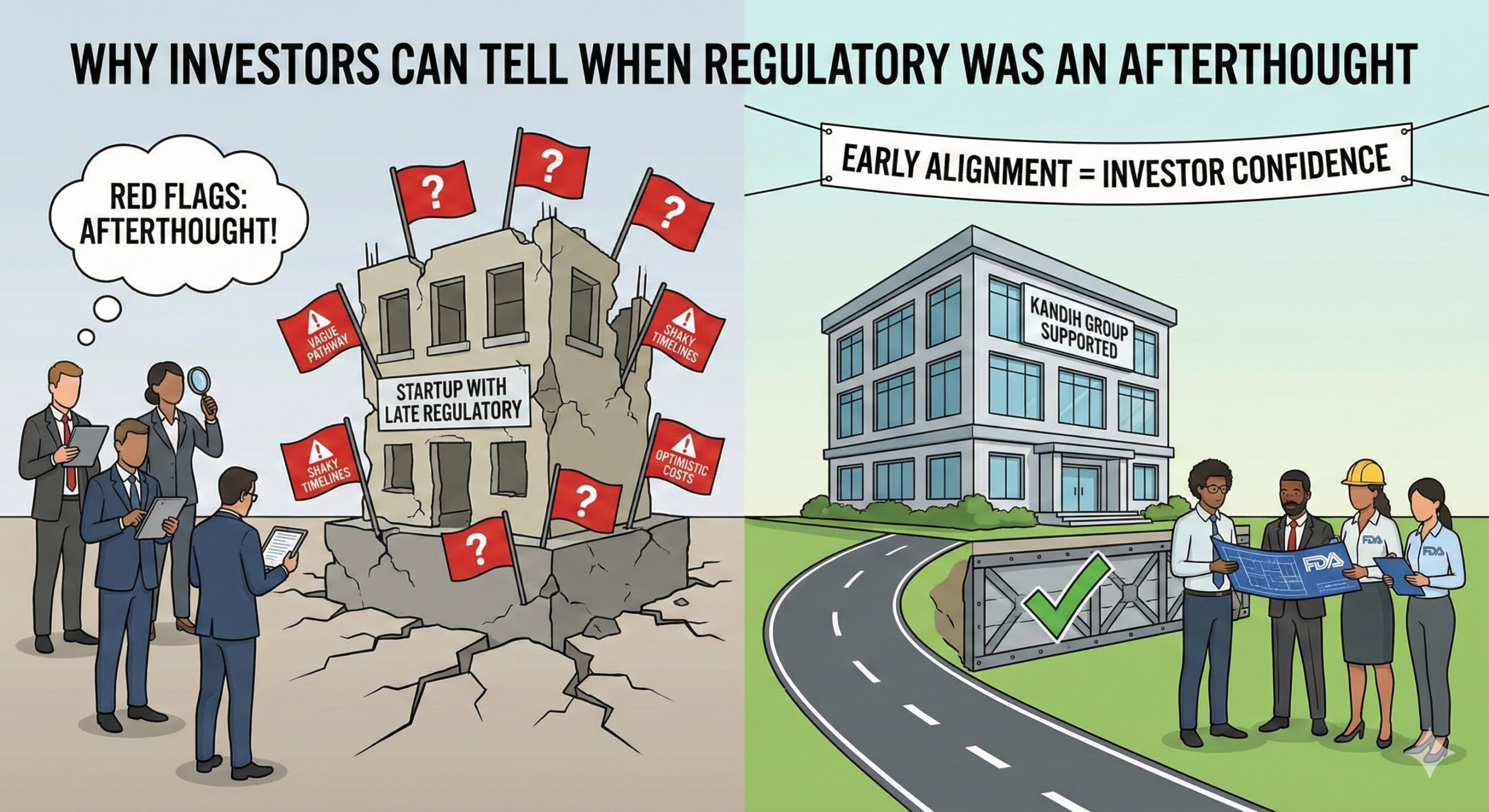
Why Investors Can Tell When Regulatory Was an Afterthought

Hard reality: experienced investors can tell—often within minutes—when regulatory strategy was bolted on late instead of built in early. You don’t need to say “we figured out regulatory later.” It shows up everywhere: in your data, your timelines, your budget, and your answers during diligence. The Diligence Red Flags Investors Immediately Recognize1. Vague or Shifting […]

Why Speed Is the Enemy of Good Fixes

How rushing to close issues creates shallow solutions—and repeat failures Speed is often praised in regulated environments. Fast responses look decisive. Quick closures look efficient. Leaders feel reassured when issues disappear from dashboards. But here’s the uncomfortable reality: the faster you rush to close an issue, the more likely it is to come back. In […]

Why the Same Problems Keep Showing Up in Medical Device Development

(And What Regulators Are Actually Looking For) The Everyday Problem A safety issue shows up during testing.The team investigates, applies a fix, and documents the decision. Everyone moves on. Months later, a similar issue appears.Sometimes it’s the exact same problem. Sometimes it looks new—but it feels familiar. Now the question comes up: Why are we […]

Why Fixes That Look Good on Paper Fail in Practice

Paper compliance isn’t the same as real-world performance On paper, everything can look perfect. The testing plan is written.The documentation is complete.The boxes are checked.The audit trail is clean. And yet—things still go wrong. This is one of the most common (and expensive) traps in regulated work: confusing paper compliance with real-world effectiveness. The problem […]

The False Comfort of Checking the Box

Why activity feels good—but doesn’t always fix anything Why “doing something” feels like progress Checking a box feels productive.You sent the email.You updated the SOP.You held the training.You documented the CAPA. It feels like the problem is handled. But here’s the hard truth: activity is not the same as impact. In regulated environments, it’s easy […]

The danger of “just reminding people”

Why telling people to “be careful” doesn’t fix real problems When something goes wrong and the fix is “just remind people”, that’s not a solution. That’s a warning sign.In real life—busy labs, fast-moving studies, tight timelines—people don’t fail because they don’t care. They fail because systems are built to depend on memory, and memory is […]

When a Fix Isn’t Enough — When the Product Itself Has to Change

Let’s say the quiet part out loud. Most product problems don’t fail inspections because no one cared.They fail because everyone thought the problem was already handled. The investigation was done.The corrective action was documented.People were retrained.The CAPA was closed. On paper, it looks responsible. Then FDA walks in…And the same issue shows up again. That’s […]

CAPA –  Design –  Risk Management

CAPA Survival Playbooks — Kandih Bioscience FDA expects CAPA, design controls, and risk management to operate as one integrated risk-control system.If CAPA closes without updating design assumptions or risk management files, FDA interprets this as stalled learning and weak management control—regardless of how complete the documentation appears. When CAPA, Design, and Risk Stop Talking, FDA […]

💬

Chat with us