
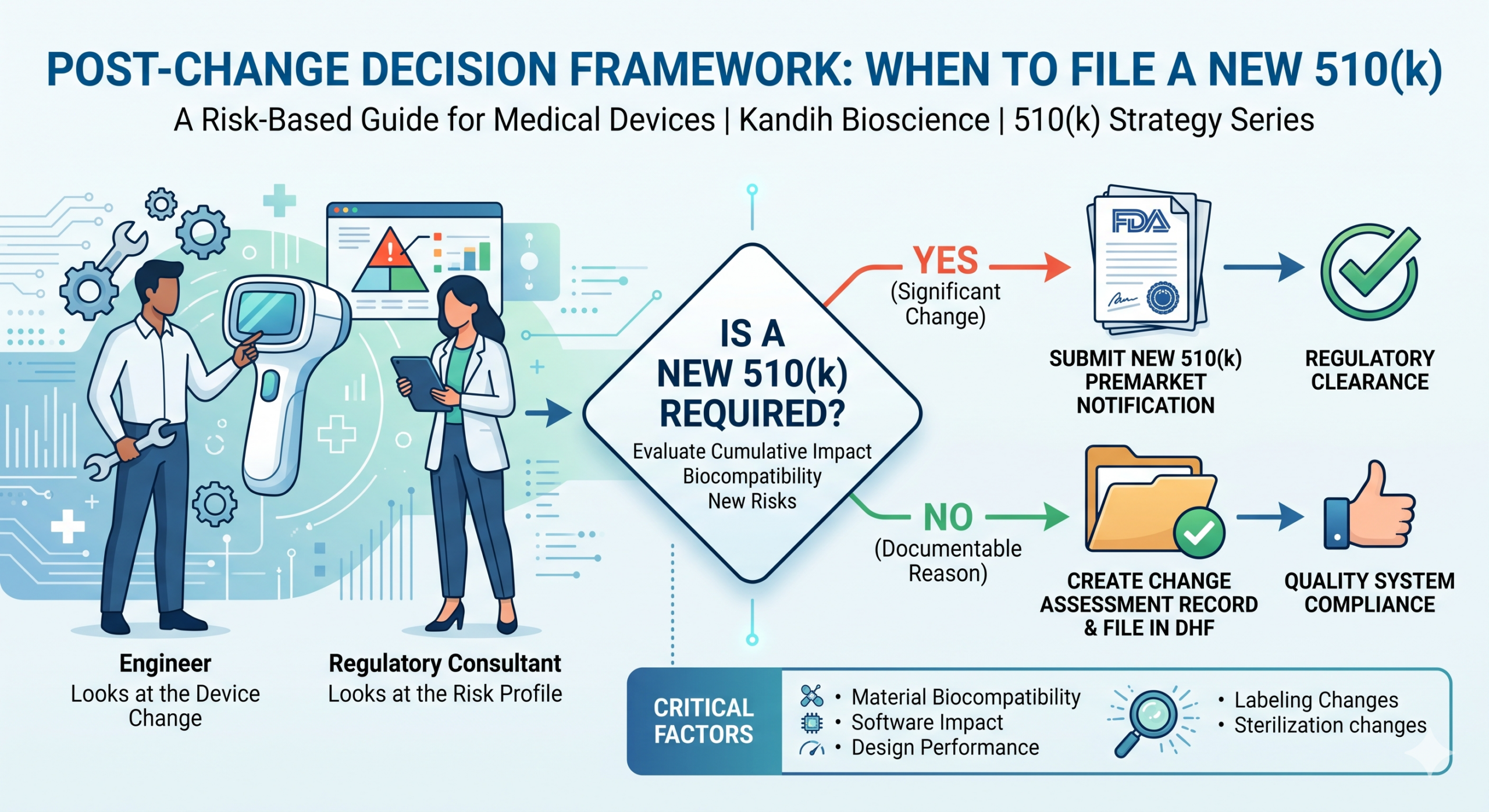
From r/FDA510kSupport: “We just changed our device housing material. Same function, cleaner aesthetics, similar polymer family. Our engineer says it’s a minor change. Our regulatory consultant went quiet for three days and came back saying we might need a new 510(k). Who is right and how do we even figure this out?”
Category: Uncategorized
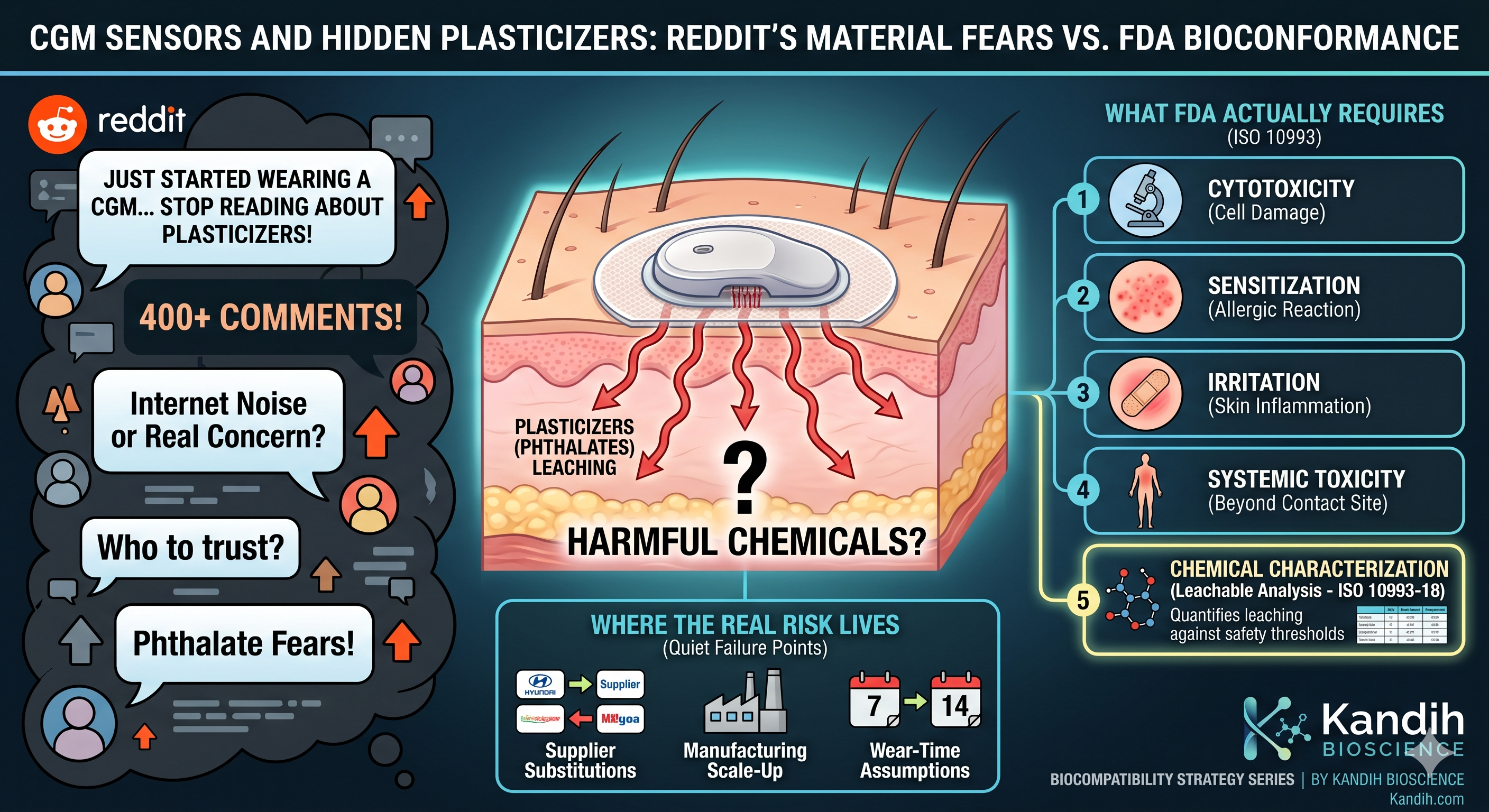
CGM Sensors and Hidden Plasticizers: Reddit’s CGM Material Fears
From r/prediabetes: “I just started wearing a CGM and now I can’t stop reading about plasticizers in the adhesive. Is this actually something I should worry about, or is it just internet noise? Genuinely don’t know who to trust here.”
That thread has over 400 comments. Some are reasonable. Some are not. A lot of them cite studies nobody actually linked, or repeat a claim that started somewhere else and got passed along until it sounded like fact.
This is a real concern with a confusing answer, and most of what’s online doesn’t actually explain how CGM materials get evaluated before they reach a patient’s arm.
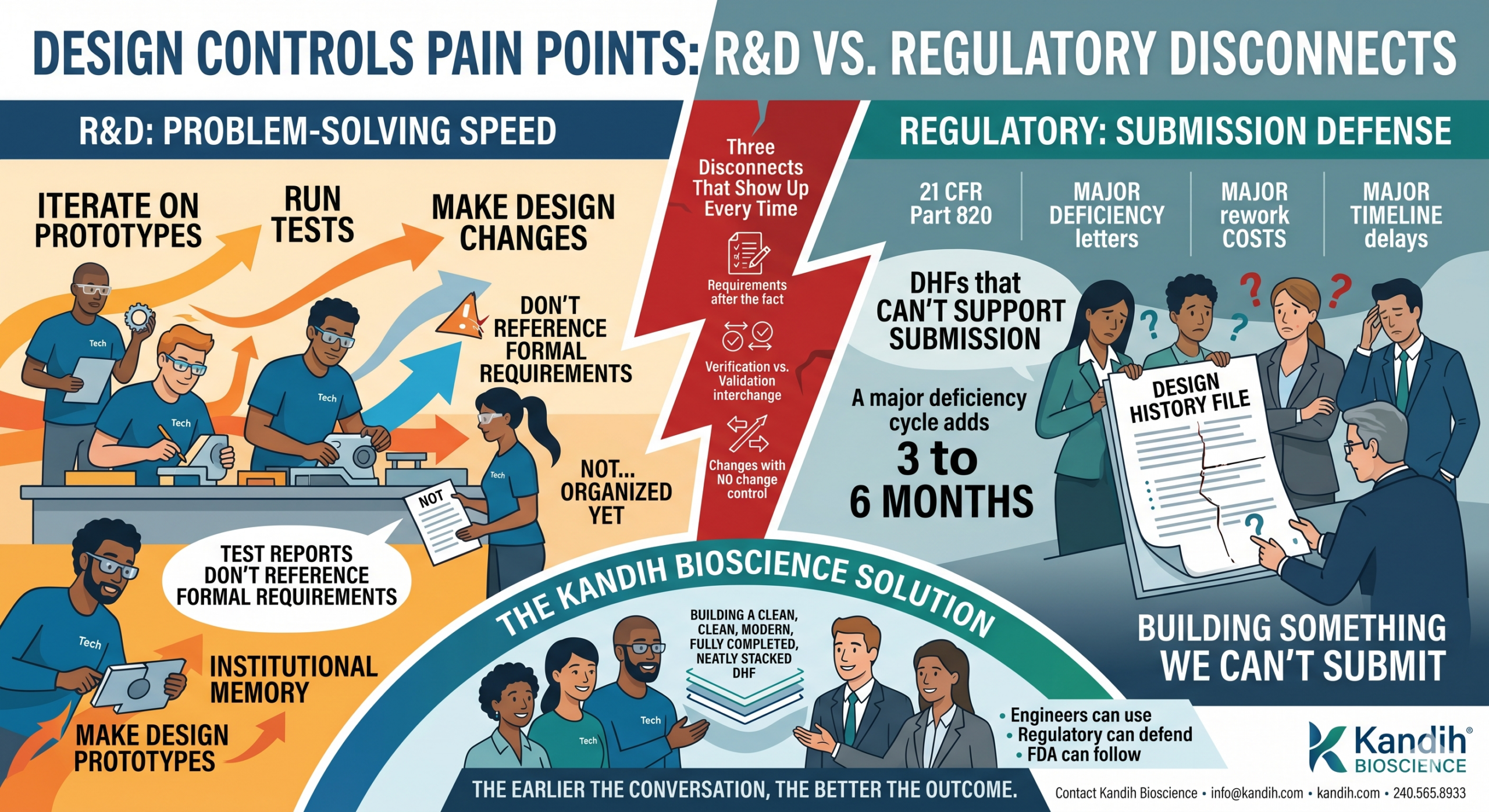
Design Controls Pain Points: R&D vs. Regulatory Disconnects
From r/medicaldevices: “Our R&D team thinks design controls are bureaucratic box-ticking. Our regulatory lead says we’re building something we can’t submit. They’re in the same room and they’re not speaking the same language. Has anyone actually fixed this?”
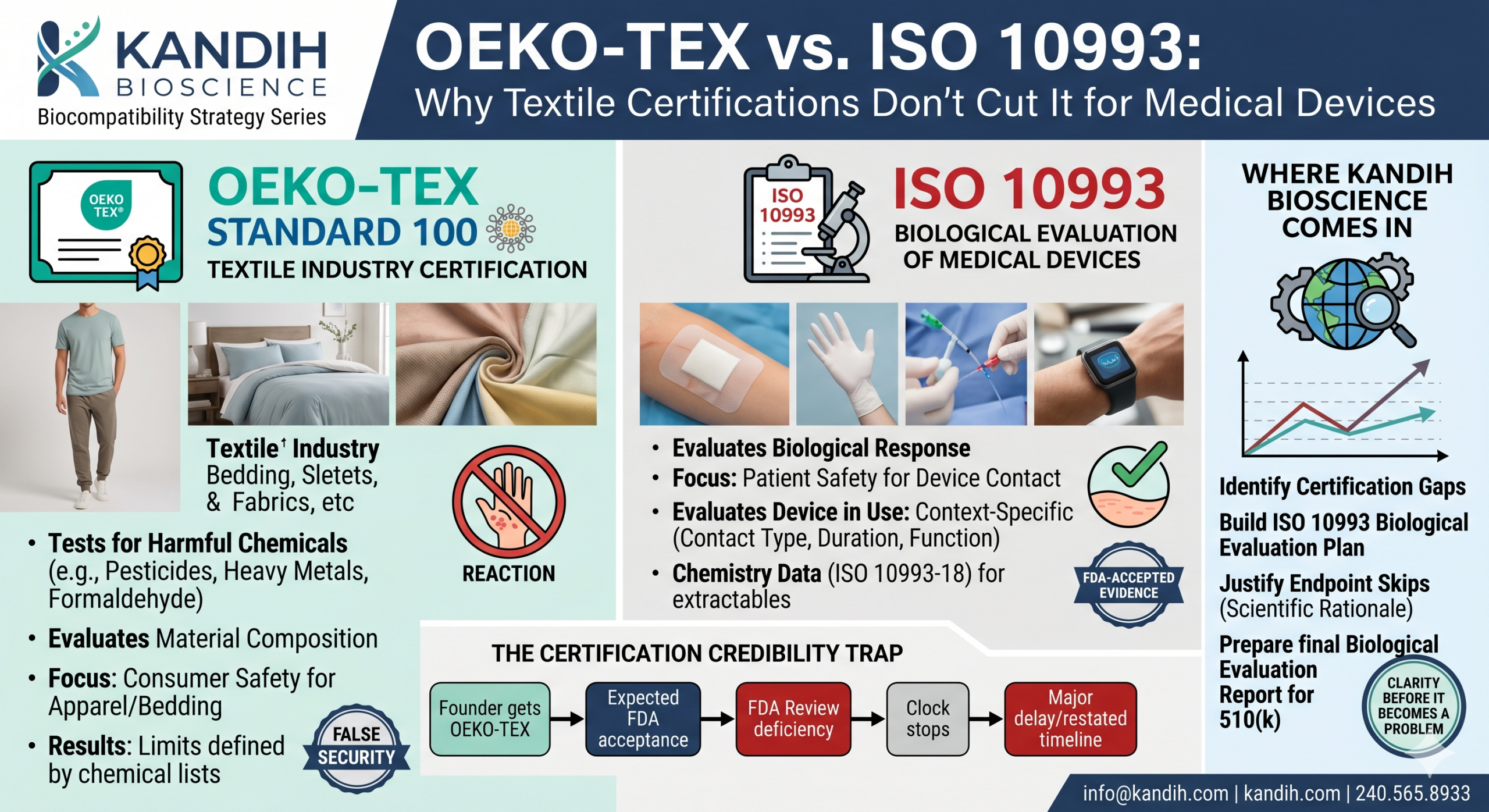
BIOCOMPATIBILITY • REGULATORY STRATEGY • INVESTOR INSIGHT
From r/medicaldevices: “We have OEKO-TEX STANDARD 100 certification on all our textile components. Our investor keeps asking if that’s ‘good enough’ for FDA. Honestly — I don’t know what to tell them.”
If you’re a founder or an investor in the medical device space, this scenario probably feels familiar. You’ve spent real money getting your textile materials certified. The certificate looks official. It has logos, test numbers, a clean layout. It says the materials are safe.
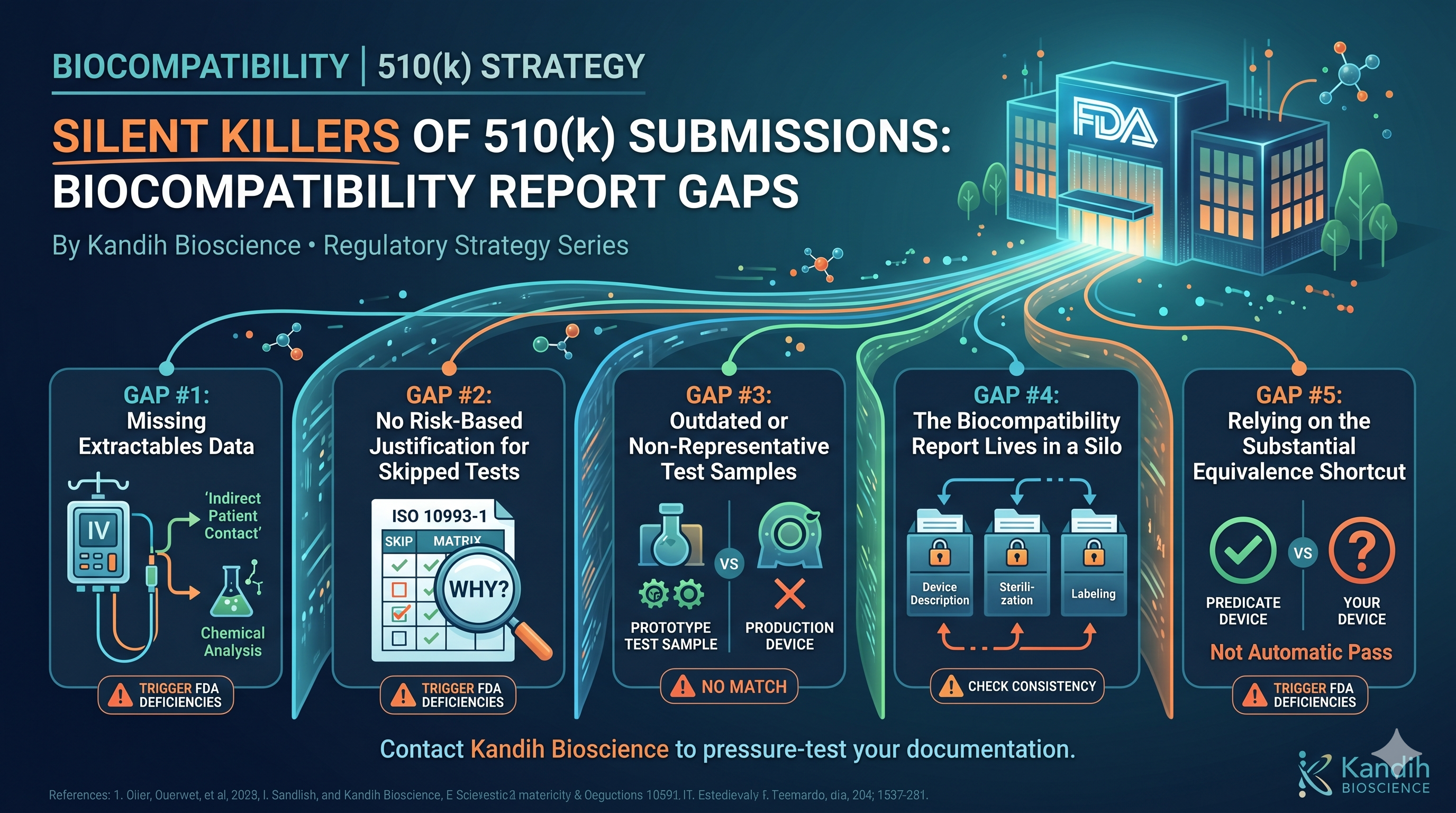
BIOCOMPATIBILITY | 510(k) STRATEGY
Silent Killers of 510(k) Submissions: Biocompatibility Report Gaps By Kandih Bioscience • Regulatory Strategy Series The truth is, it rarely comes out of nowhere. There are specific, well-documented gaps in biocompatibility reports that trigger FDA deficiencies almost every single time. They’re not obvious. They’re not always covered in training. And they can quietly kill a submission that should have sailed through. Let’s walk through what they […]
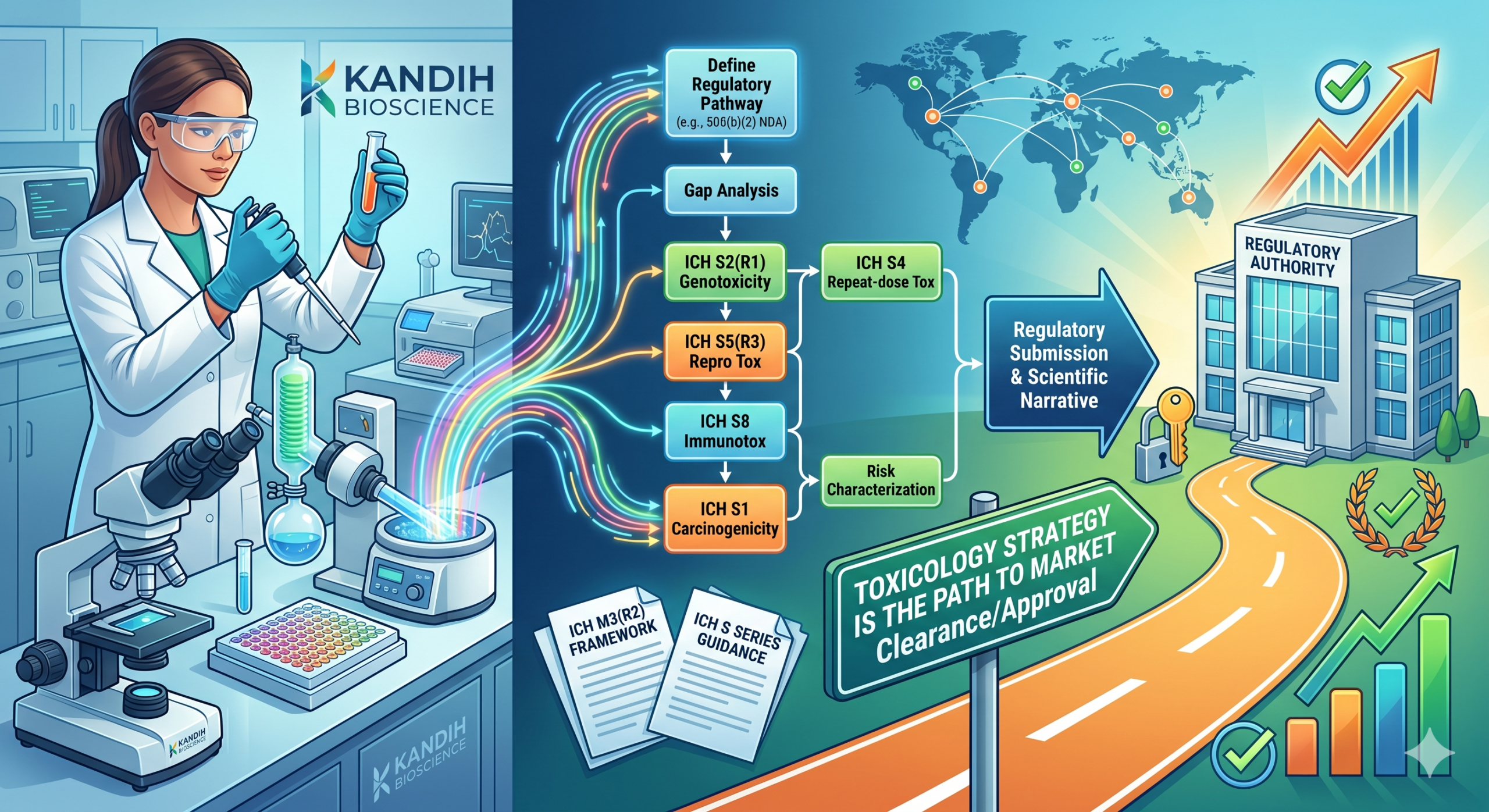
Why a Toxicology Strategy — Not Just Tox Studies — Is What Gets Your Product to Market
A toxicology strategy is a structured plan that connects your safety data to your regulatory pathway. It does more than confirm that a product won’t harm patients — it tells reviewers how you evaluated risk, why your evidence is sufficient, and what that means for market clearance or approval. Without it, even a clean set of tox studies can stall a submission.
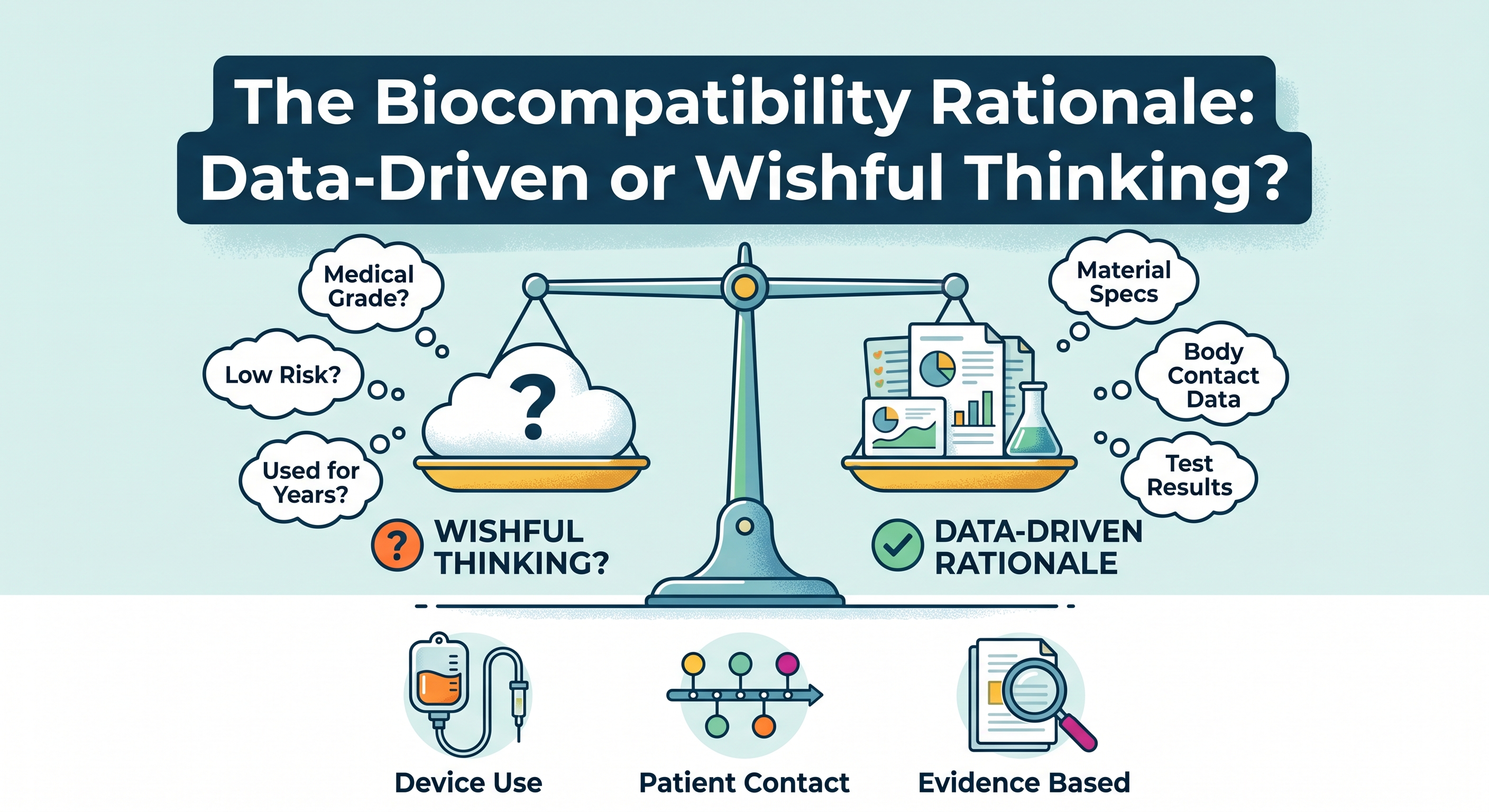
The Biocompatibility Rationale: Data-Driven or Wishful Thinking?
The team had a problem.
Their medical device needed a biocompatibility explanation. Not necessarily a huge testing program. Not necessarily a stack of lab reports. But they needed a clear reason why the device was biologically safe.
So someone wrote:
“The device is made from medical-grade materials and is therefore biocompatible.”
That sentence looked harmless.
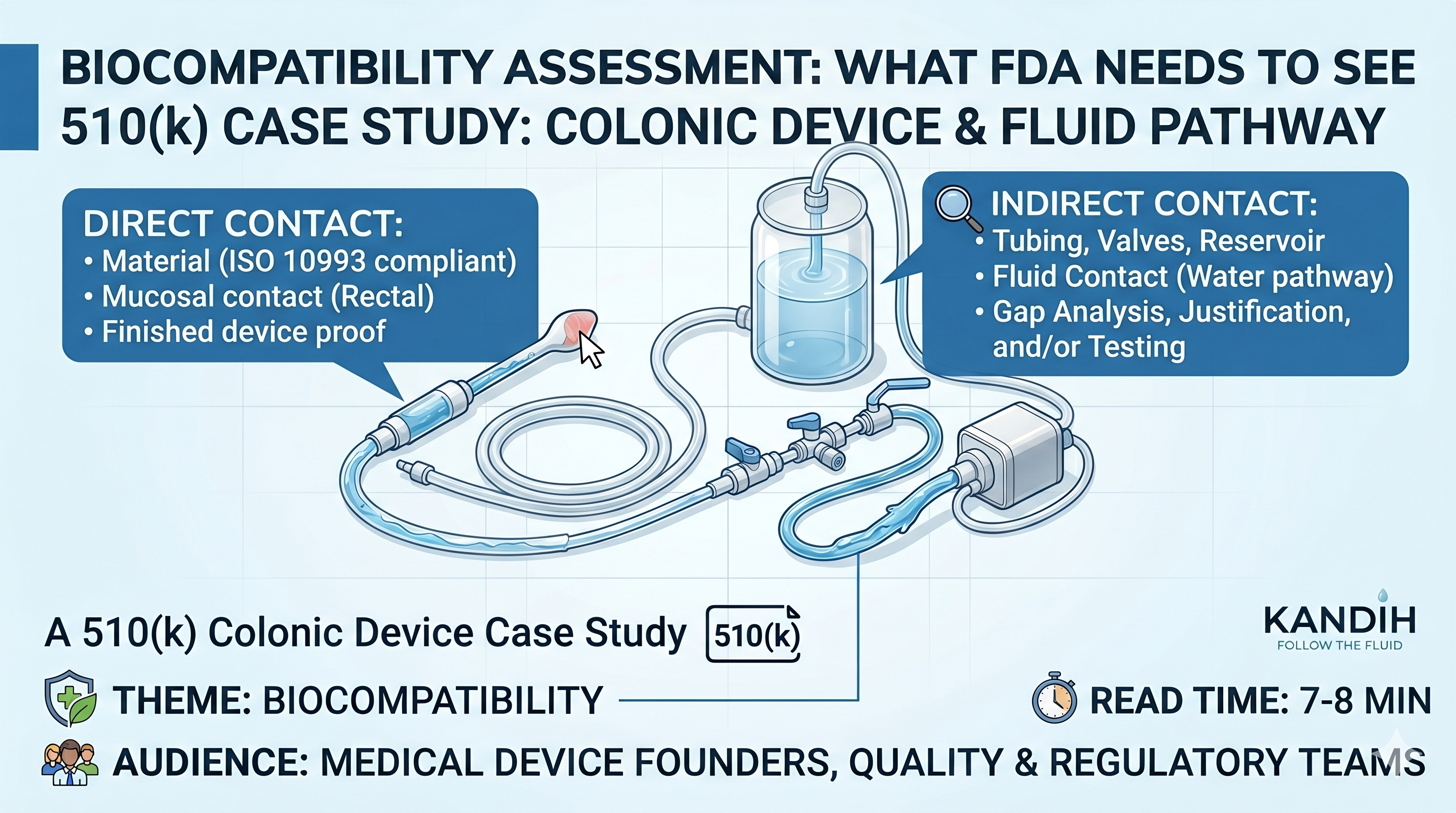
Direct vs. Indirect Contact in ISO 10993: A 510(k) Colonic Device Case
Theme: Biocompatibility Audience: Medical device founders, quality teams, regulatory teams, importers, and anyone trying to understand what FDA may ask in a 510(k) Estimated read time: 7–8 minutes Medical Devices: Irrigation System Confusion The team thought the device was simple. Water goes in. Waste comes out. Only one part goes into the patient. So someone said: “Only the nozzle touches the patient. That’s the only […]
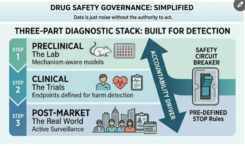
Safety is Not Advice: Why Better Data Won’t Save Your Drug Without Diagnostic Infrastructure
Every major medical product safety disaster has a predictable anatomy. From thalidomide in the 1960s to Vioxx in the 2000s, from Avandia to recent issues with JAK inhibitors, ranitidine, and opioids, the pattern is the same. It’s not that the science was missing – often the safety signals were there – but the system refused to be accountable to the science. In each case, warning signs existed, yet no one owned the obligation to act on them. This uncomfortable truth underpins why simply getting “better data” isn’t enough: safety advice only matters when someone is accountable to enforce it.