
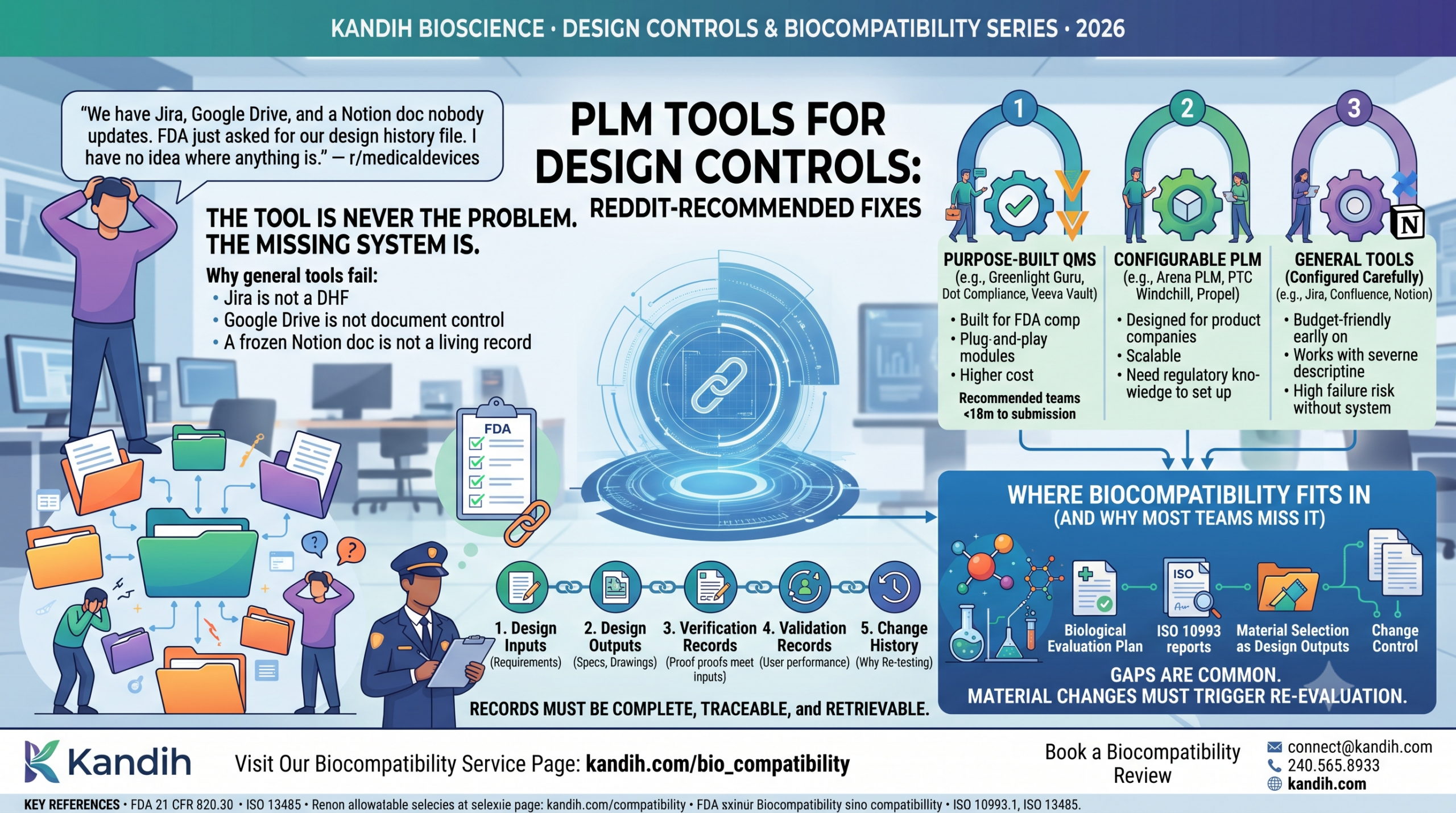
By Kandih Bioscience · Design Controls & Biocompatibility Series · 2026 “We have Jira, Google Drive, and a Notion doc nobody updates. FDA just asked for our design history file. I have no idea where anything is.” — r/medicaldevices, 180 replies That post hit home because it is honest. And it describes a situation that is far […]
Category: Medical Devices

Biocompatibility: What Assessors Are Really Debating Right Now
By Kandih Bioscience • Biocompatibility Strategy Series • 2026 Edition From r/Biocompatibility: “Went to a biocompatibility working group meeting last month. Two senior assessors couldn’t agree on whether a 2-week extractables study covered a device with 29-day wear. Someone cited a draft ISO update. Someone else said FDA’s guidance supersedes it. Nobody landed on an answer. I’m a small-company founder trying to figure […]
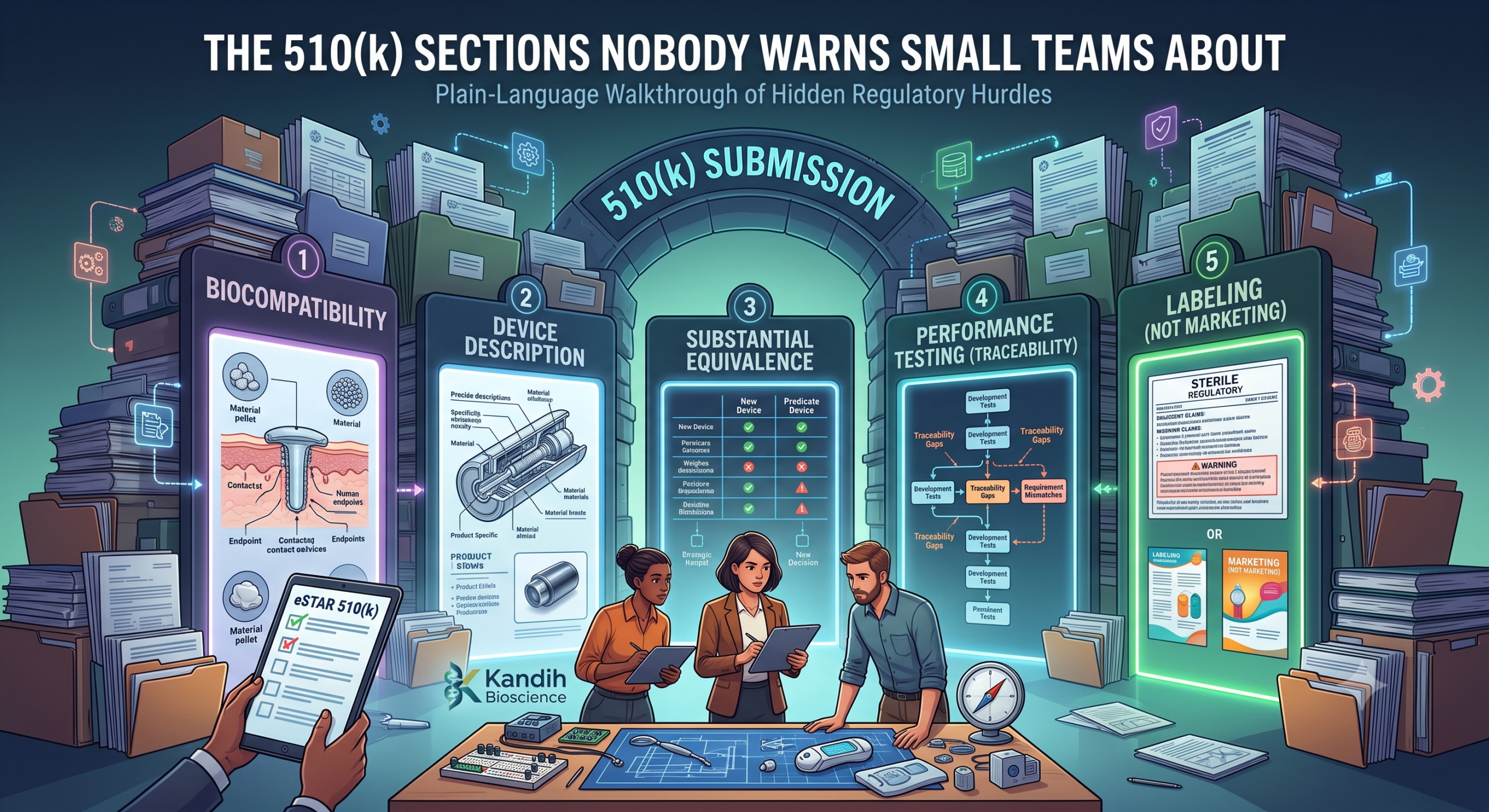
The 510(k) Sections Nobody Warns Small Teams About
From r/FDA510kSupport: “It’s just me and two engineers. We’ve been working on this device for three years and we’re finally close to submitting. But every time I dig into the 510(k) requirements, I find another section I don’t fully understand. Is there a checklist somewhere that actually explains what FDA wants? Not just what sections to fill in — what they actually want to see?”
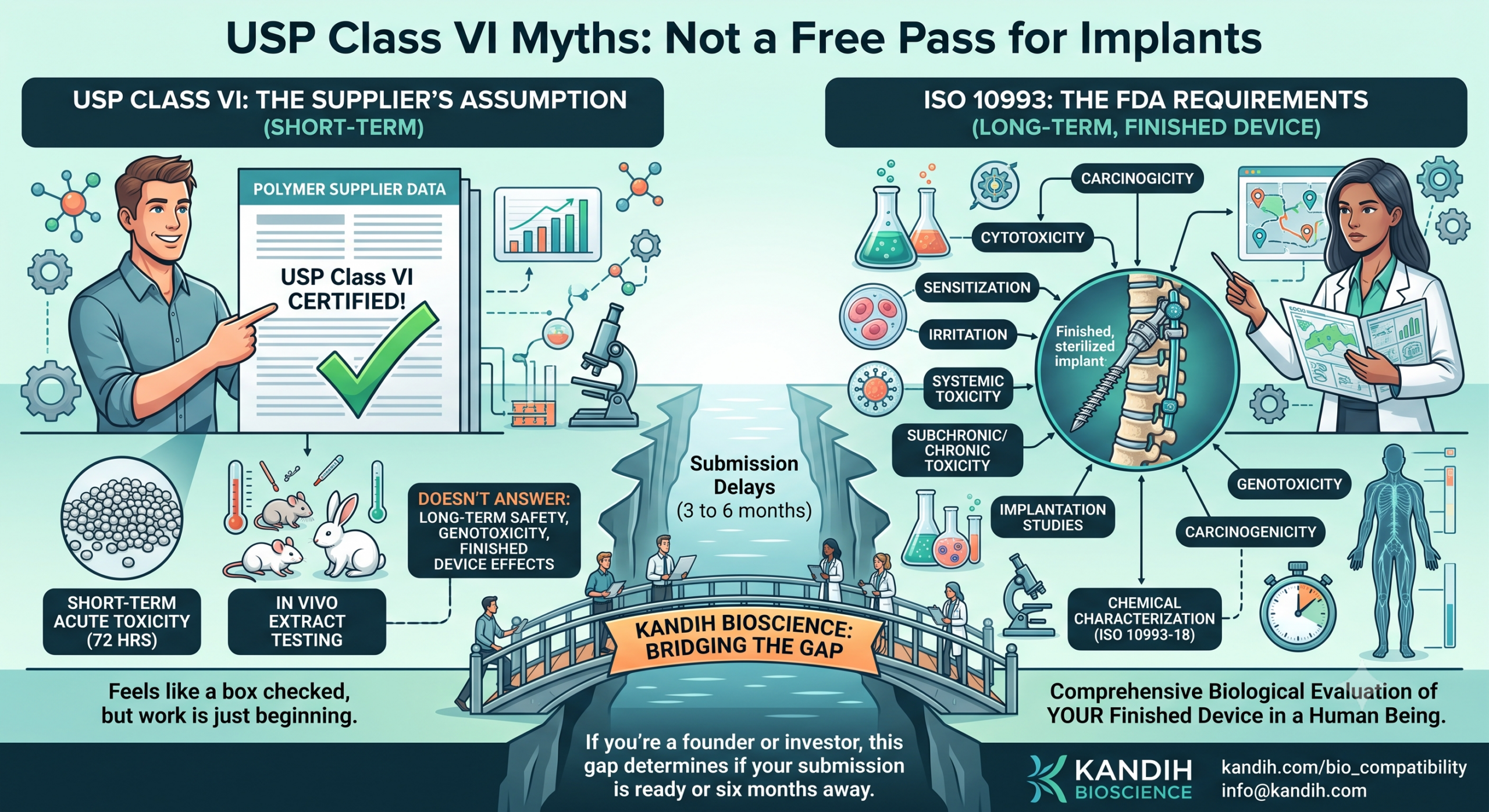
USP Class VI Myths: Not a Free Pass for Implants
From r/AskEngineers: “We’re using a USP Class VI rated polymer for our implantable device. Our supplier says it’s already been tested and it’s safe. Our regulatory consultant says we still need ISO 10993 testing. Who’s right? Feels like we’re being asked to pay for testing we already paid for.”
When Should Regulatory Strategy Start for a Medical Device?
Regulatory strategy should start the moment you decide to build a medical device—before you lock the intended use, user, setting, claims, or design inputs. Those early choices determine FDA pathway, evidence burden, testing scope, quality system requirements, and clinical risk. If you start later, you don’t “add regulatory”; you inherit avoidable cost, delay, and valuation […]

Pacemakers – How Is a Pacemaker Placed?
The procedure may be planned ahead of time, or it may be done during an emergency (temporary pacemaker). You will be given medicine to make parts of your body numb or make you sleep during the procedure.
You may receive antibiotics to prevent infection and blood thinning medicine to prevent blood clots during the procedure. Different types of pacemakers require different procedures to place them.

Implantation Study Design for 510(k) Success: A Toxicologist’s Guide
Many medical device developers pass cytotoxicity, irritation, and sensitization testing—only to hit a wall at the implantation stage.
In fact, one of the most common reasons 510(k) submissions face delays is a poorly designed ISO 10993-6 implantation study.

Stop Over-Testing Your Device: How Smarter Test Planning Saves Time, Samples, and $50K+
When it comes to medical device testing, more isn’t always better. One of the biggest mistakes we see? Teams defaulting to comprehensive test panels — even when the risk doesn’t call for it. I recently helped a client avoid six months of rework after the FDA flagged several redundant biocompatibility tests. Why? Their Biological Evaluation […]