

By Kandih Bioscience • Biocompatibility Strategy Series • 2026 Edition From r/Biocompatibility: “Went to a biocompatibility working group meeting last month. Two senior assessors couldn’t agree on whether a 2-week extractables study covered a device with 29-day wear. Someone cited a draft ISO update. Someone else said FDA’s guidance supersedes it. Nobody landed on an answer. I’m a small-company founder trying to figure […]
Author: admin
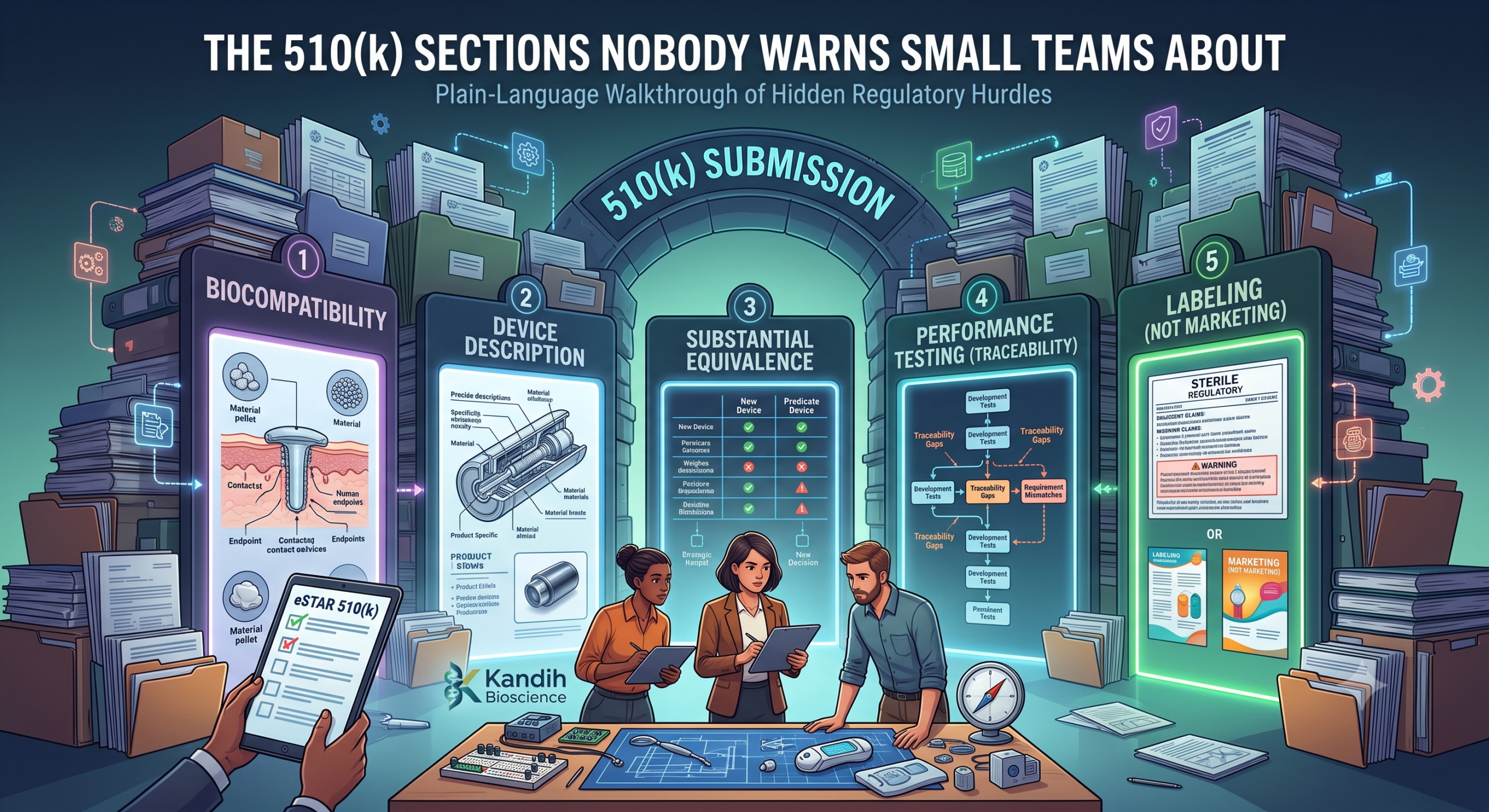
The 510(k) Sections Nobody Warns Small Teams About
From r/FDA510kSupport: “It’s just me and two engineers. We’ve been working on this device for three years and we’re finally close to submitting. But every time I dig into the 510(k) requirements, I find another section I don’t fully understand. Is there a checklist somewhere that actually explains what FDA wants? Not just what sections to fill in — what they actually want to see?”
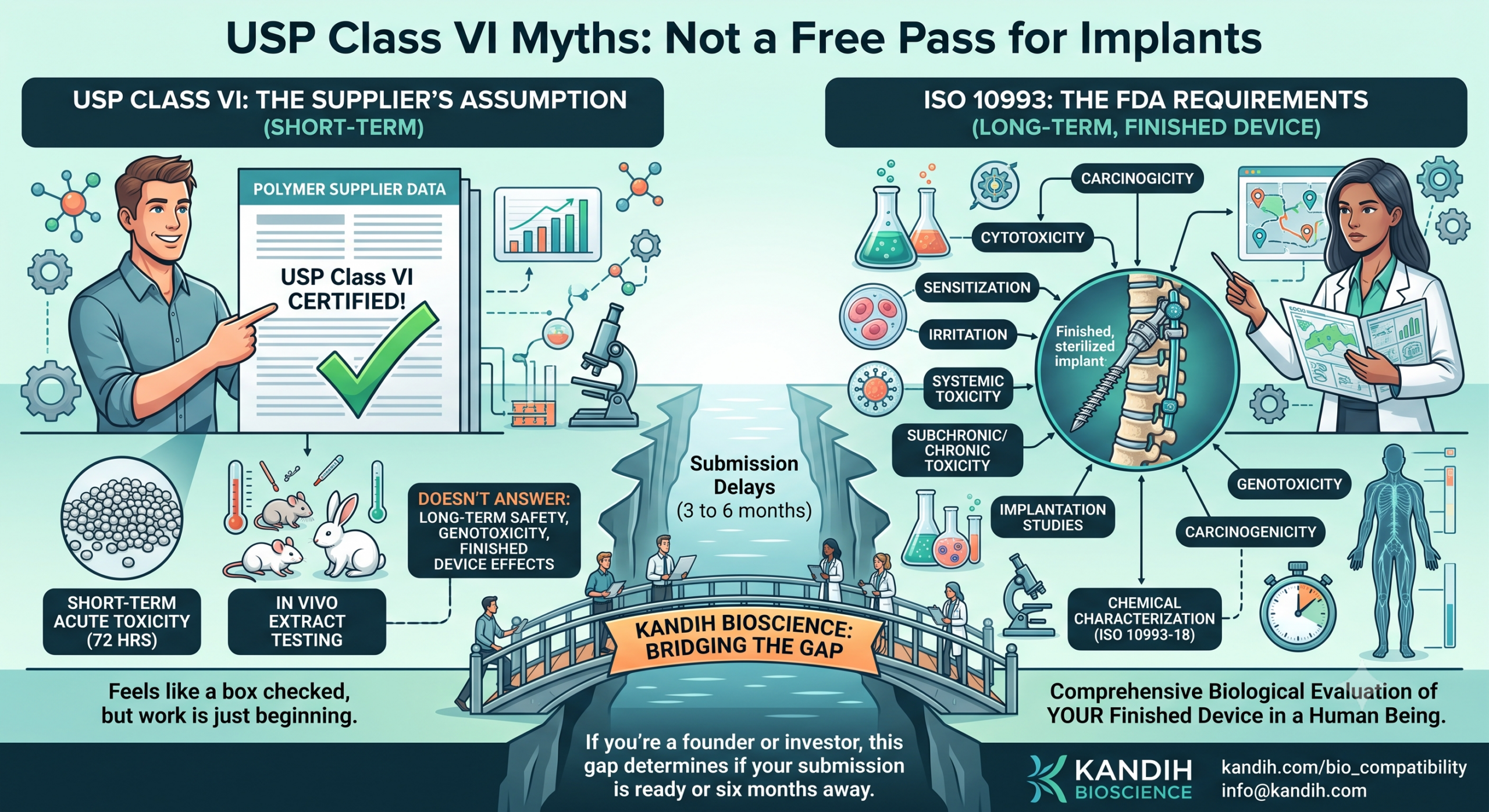
USP Class VI Myths: Not a Free Pass for Implants
From r/AskEngineers: “We’re using a USP Class VI rated polymer for our implantable device. Our supplier says it’s already been tested and it’s safe. Our regulatory consultant says we still need ISO 10993 testing. Who’s right? Feels like we’re being asked to pay for testing we already paid for.”
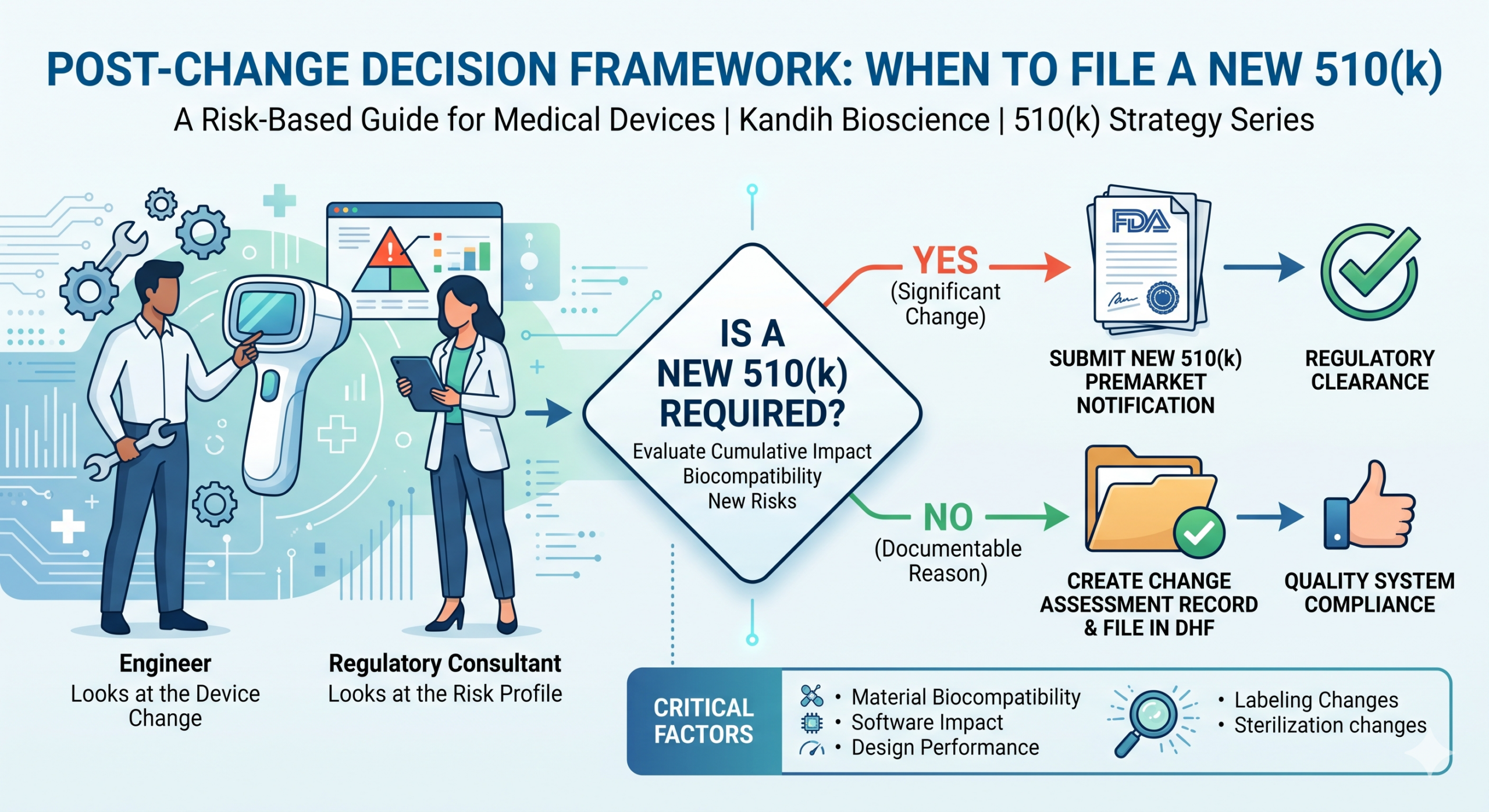
When to File a New 510(k): Post-Change Decision Framework
From r/FDA510kSupport: “We just changed our device housing material. Same function, cleaner aesthetics, similar polymer family. Our engineer says it’s a minor change. Our regulatory consultant went quiet for three days and came back saying we might need a new 510(k). Who is right and how do we even figure this out?”
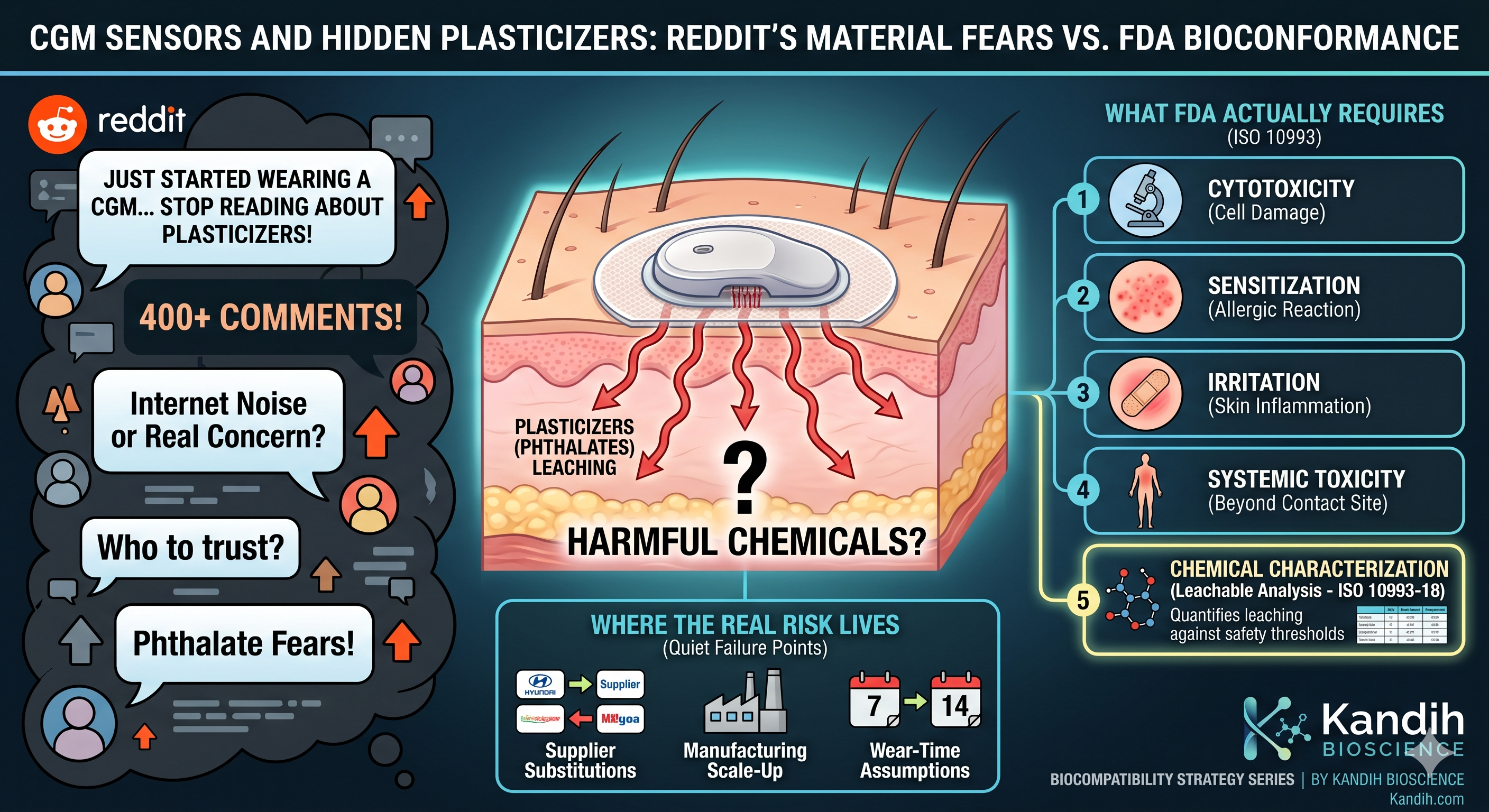
CGM Sensors and Hidden Plasticizers: Reddit’s CGM Material Fears
From r/prediabetes: “I just started wearing a CGM and now I can’t stop reading about plasticizers in the adhesive. Is this actually something I should worry about, or is it just internet noise? Genuinely don’t know who to trust here.”
That thread has over 400 comments. Some are reasonable. Some are not. A lot of them cite studies nobody actually linked, or repeat a claim that started somewhere else and got passed along until it sounded like fact.
This is a real concern with a confusing answer, and most of what’s online doesn’t actually explain how CGM materials get evaluated before they reach a patient’s arm.
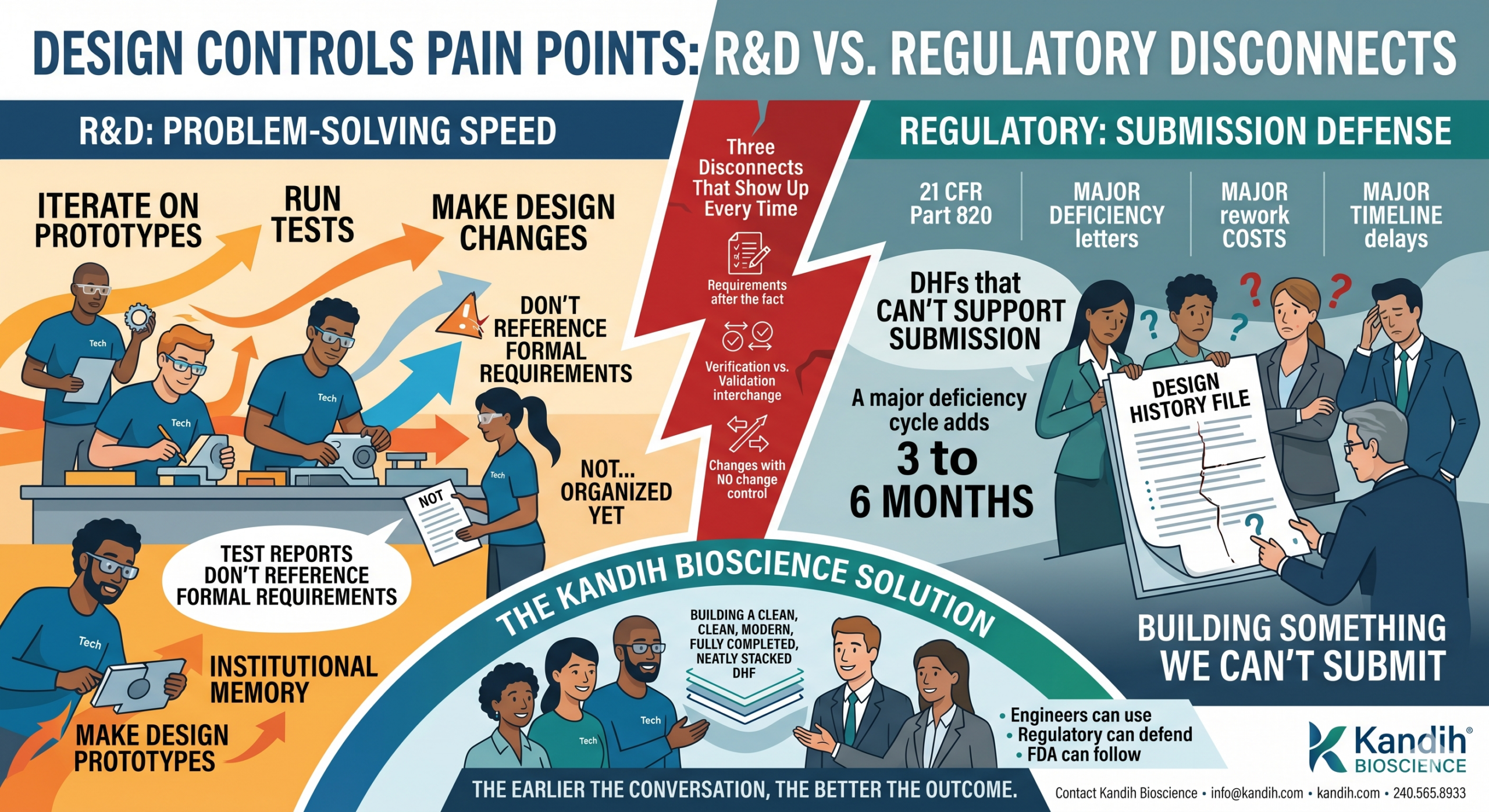
Design Controls Pain Points: R&D vs. Regulatory Disconnects
From r/medicaldevices: “Our R&D team thinks design controls are bureaucratic box-ticking. Our regulatory lead says we’re building something we can’t submit. They’re in the same room and they’re not speaking the same language. Has anyone actually fixed this?”
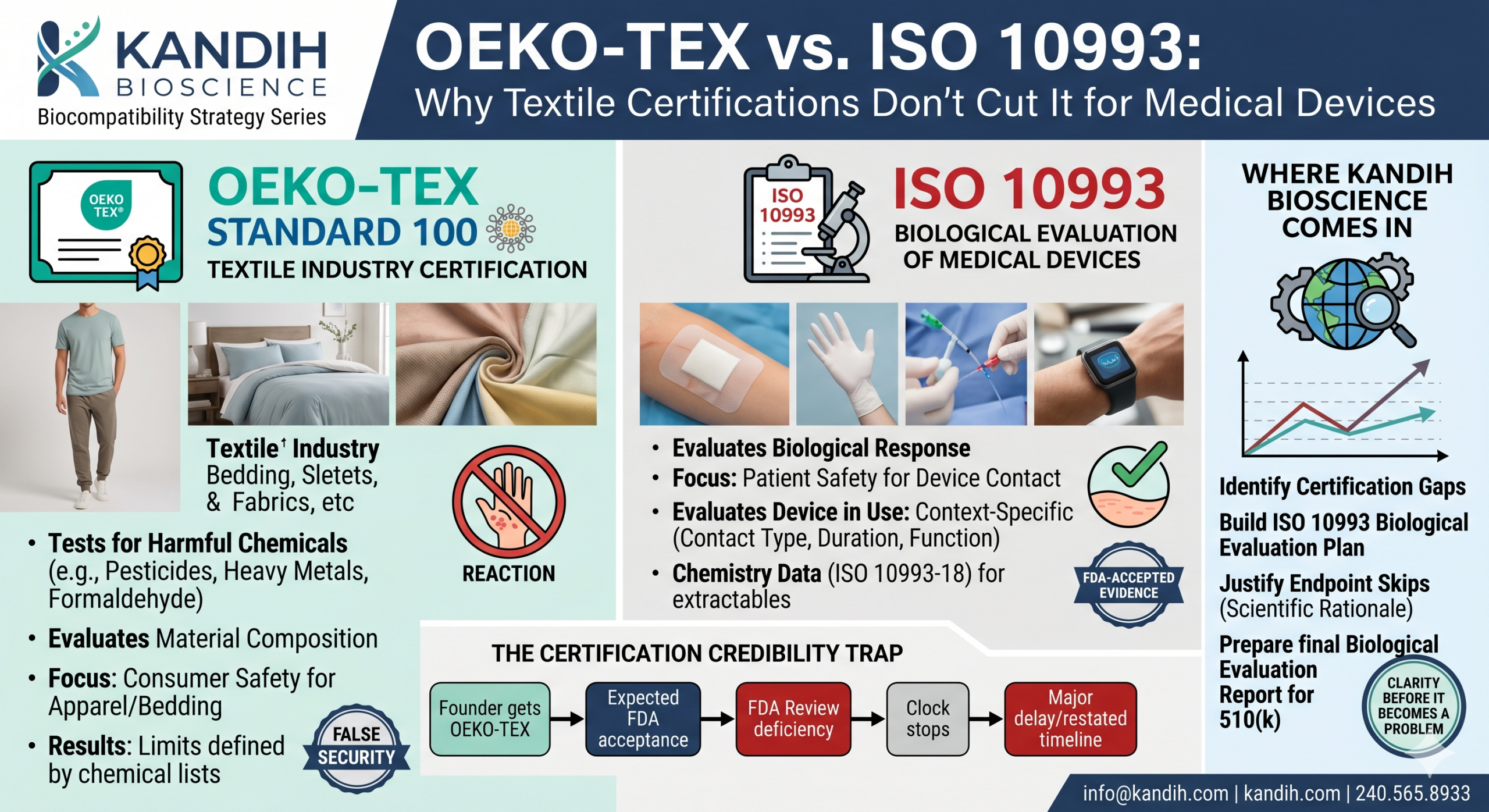
BIOCOMPATIBILITY • REGULATORY STRATEGY • INVESTOR INSIGHT
From r/medicaldevices: “We have OEKO-TEX STANDARD 100 certification on all our textile components. Our investor keeps asking if that’s ‘good enough’ for FDA. Honestly — I don’t know what to tell them.”
If you’re a founder or an investor in the medical device space, this scenario probably feels familiar. You’ve spent real money getting your textile materials certified. The certificate looks official. It has logos, test numbers, a clean layout. It says the materials are safe.
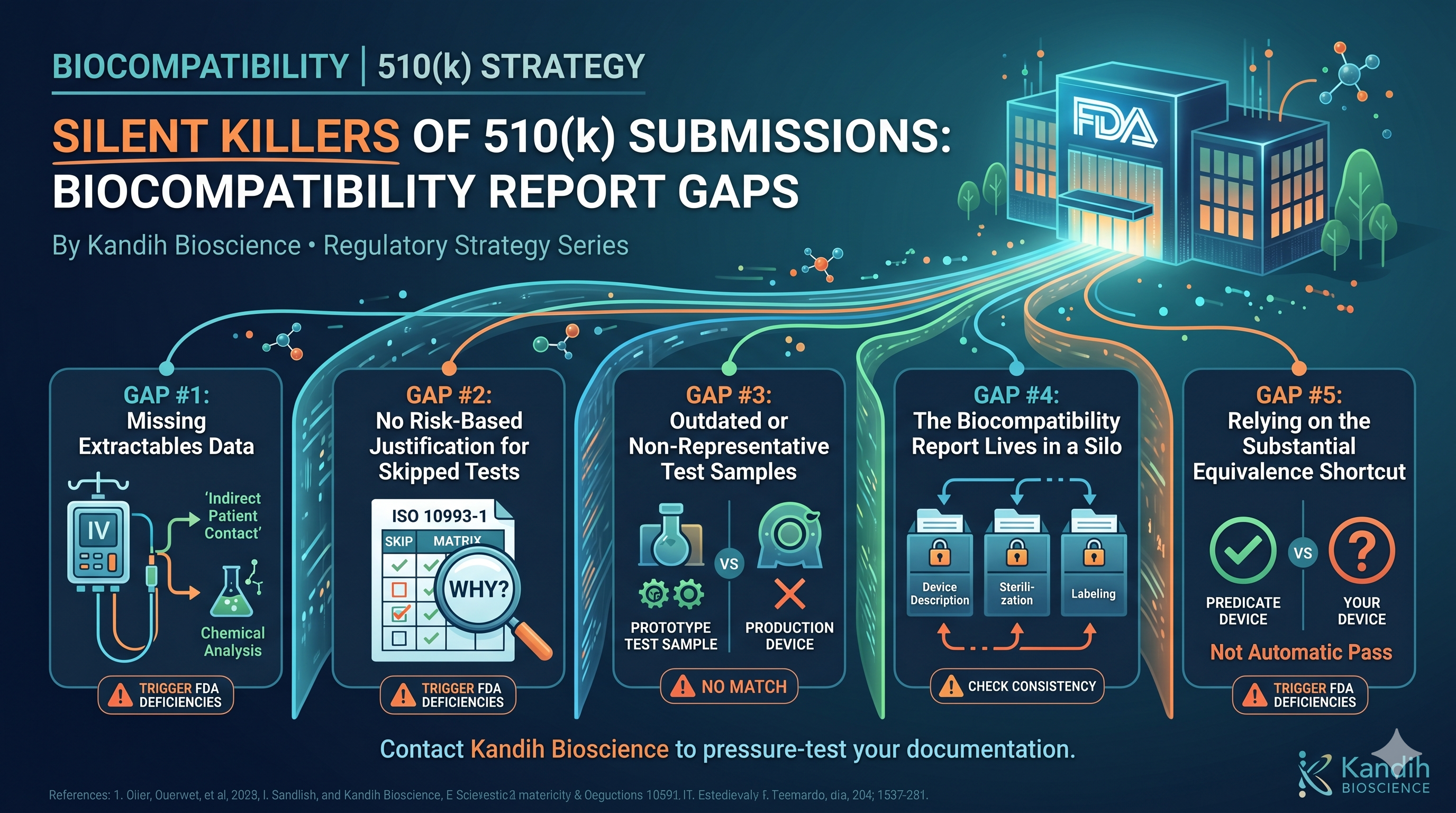
BIOCOMPATIBILITY | 510(k) STRATEGY
Silent Killers of 510(k) Submissions: Biocompatibility Report Gaps By Kandih Bioscience • Regulatory Strategy Series The truth is, it rarely comes out of nowhere. There are specific, well-documented gaps in biocompatibility reports that trigger FDA deficiencies almost every single time. They’re not obvious. They’re not always covered in training. And they can quietly kill a submission that should have sailed through. Let’s walk through what they […]

Why a Toxicology Strategy — Not Just Tox Studies — Is What Gets Your Product to Market
A toxicology strategy is a structured plan that connects your safety data to your regulatory pathway. It does more than confirm that a product won’t harm patients — it tells reviewers how you evaluated risk, why your evidence is sufficient, and what that means for market clearance or approval. Without it, even a clean set of tox studies can stall a submission.