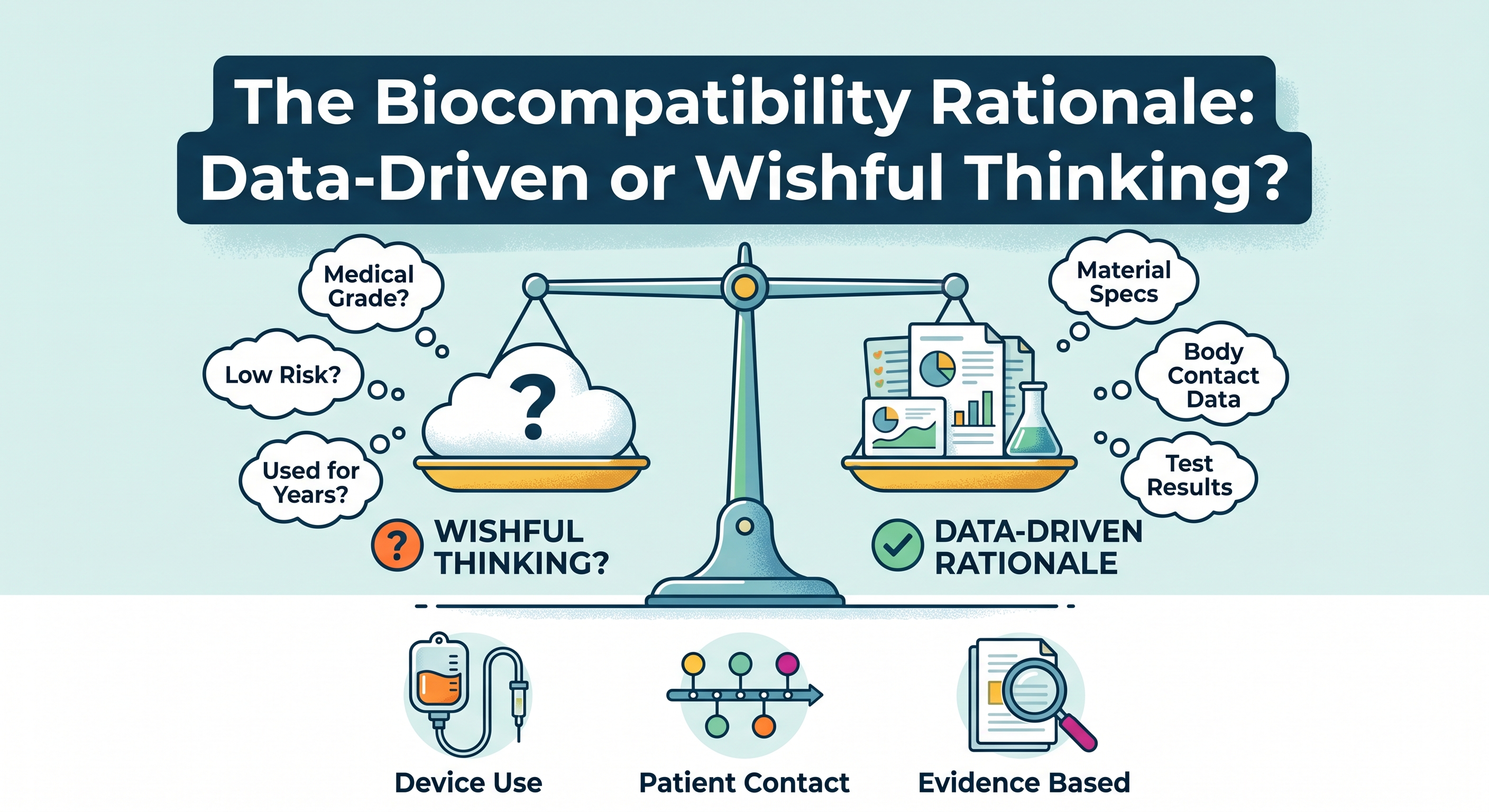
The Biocompatibility Rationale: Data-Driven or Wishful Thinking? 

The team had a problem. 

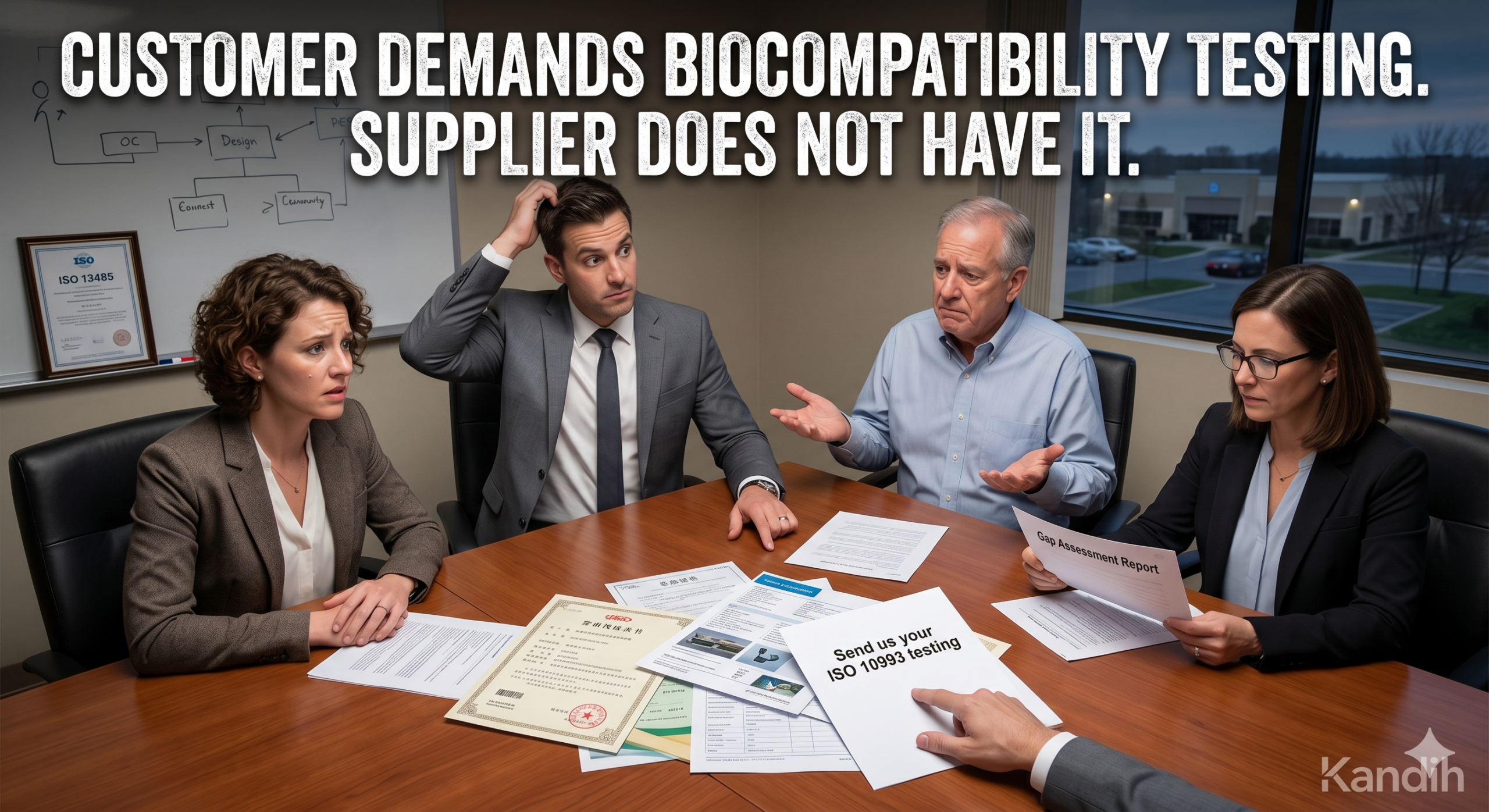
Their medical device needed a biocompatibility explanation. Not necessarily a huge testing program. Not necessarily a stack of lab reports. But they needed a clear reason why the device was biologically safe. 

So someone wrote: 

“The device is made from medical-grade materials and is therefore biocompatible.” 

That sentence looked harmless.
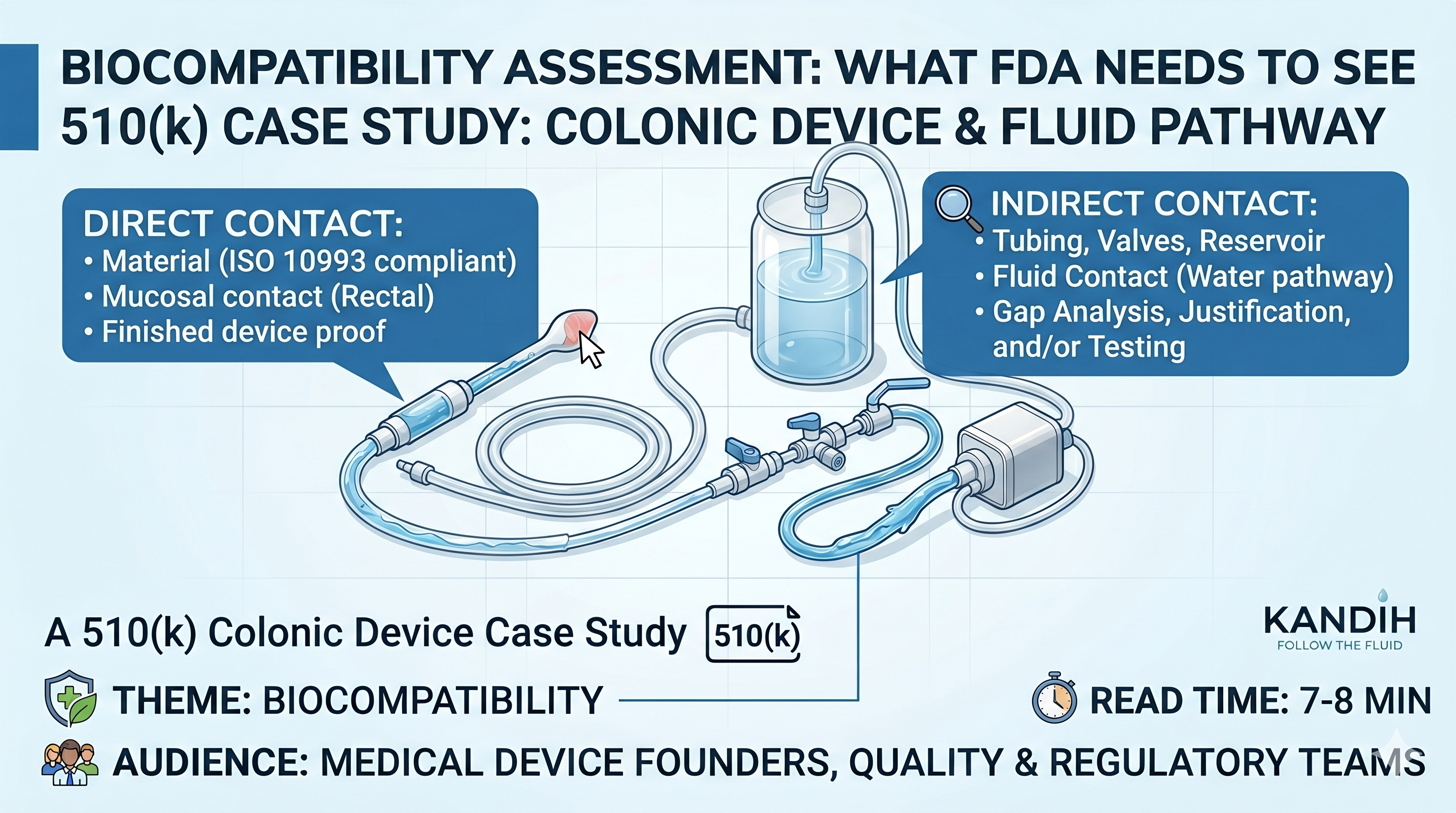
Direct vs. Indirect Contact in ISO 10993: A 510(k) Colonic Device Case 

Theme: Biocompatibility Audience: Medical device founders, quality teams, regulatory teams, importers, and anyone trying to understand what FDA may ask in a 510(k) Estimated read time: 7–8 minutes  Medical Devices: Irrigation System Confusion  The team thought the device was simple.  Water goes in. Waste comes out. Only one part goes into the patient.  So someone said:  “Only the nozzle touches the patient. That’s the only […]

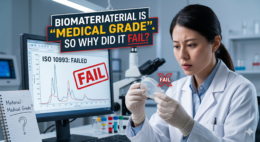
Your material is “medical grade.” So why did it fail? 

A device that passes material inspection can still fail ISO 10993 biocompatibility testing — and understanding why the difference between a delay and a disaster is. 

Kandih Regulatory Insights  · 

The team thought this would be easy. The material was “medical grade.” The supplier had used it in healthcare for years. The device seemed simple enough, and the regulatory plan looked clean.

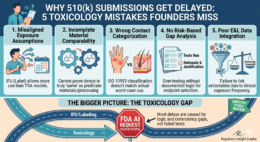
Why 510(k) Submissions Get Delayed: 5 Toxicology Mistakes Founders Miss

Your 510(k) Timeline Is Decided Months Before You File
Week seven of FDA review.
The email lands.
Subject: Additional Information Request
“Provide clarification regarding exposure assumptions relative to intended use.”
The toxicological risk assessment modeled once-daily adult use on intact skin.
The Instructions for Use allowed multiple daily uses across broader patient populations — including compromised tissue.

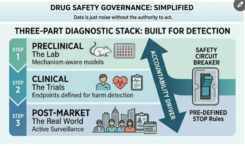
Safety is Not Advice: Why Better Data Won’t Save Your Drug Without Diagnostic Infrastructure

Every major medical product safety disaster has a predictable anatomy. From thalidomide in the 1960s to Vioxx in the 2000s, from Avandia to recent issues with JAK inhibitors, ranitidine, and opioids, the pattern is the same. It’s not that the science was missing – often the safety signals were there – but the system refused to be accountable to the science. In each case, warning signs existed, yet no one owned the obligation to act on them. This uncomfortable truth underpins why simply getting “better data” isn’t enough: safety advice only matters when someone is accountable to enforce it.

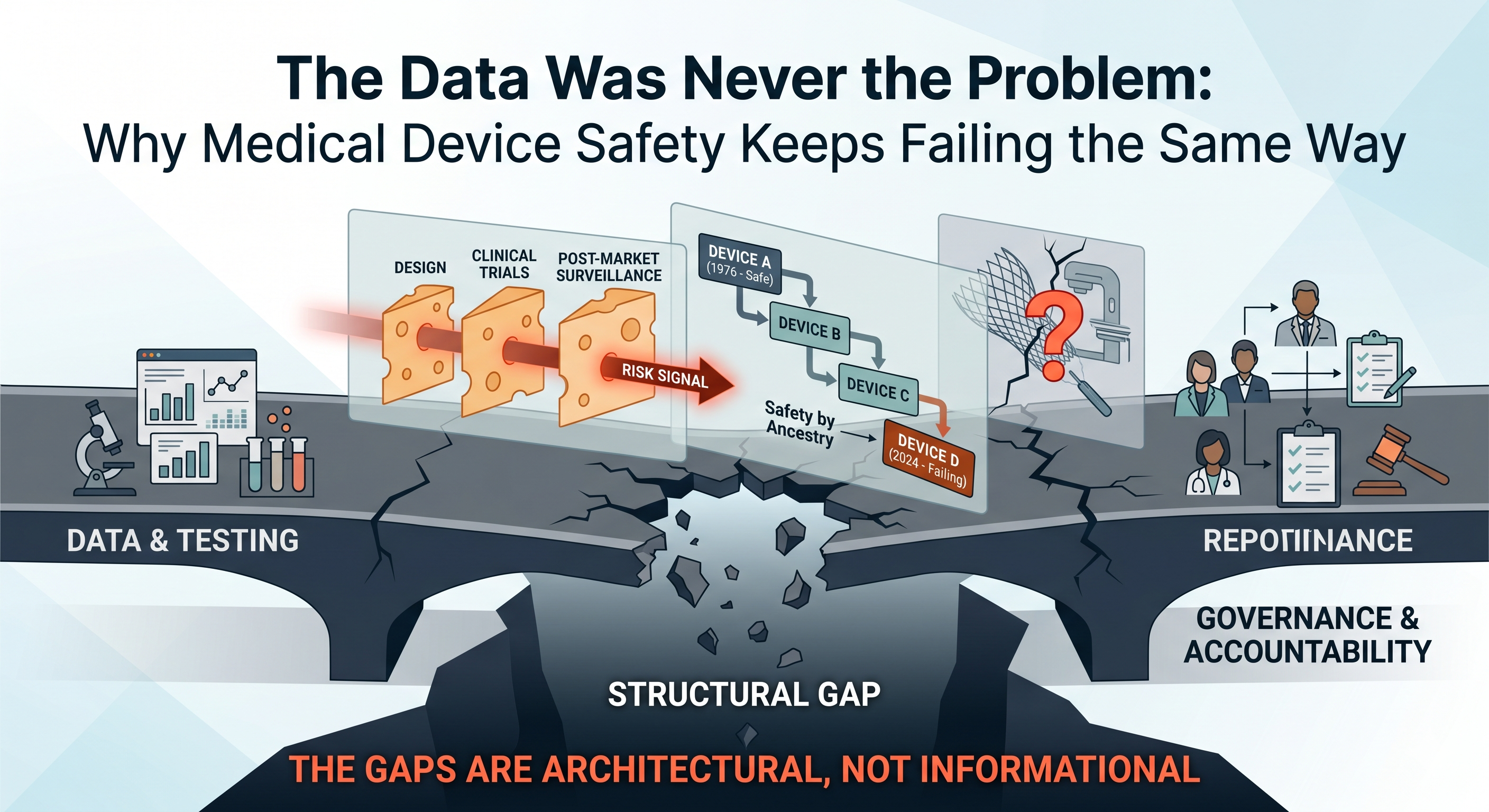
The Data Was Never the Problem: Why Medical Device Safety Keeps Failing the Same Way

Every major medical device safety disaster has a predictable anatomy — and it’s the same anatomy as drug safety disasters. From the Dalkon Shield in the 1970s to metal-on-metal hips in the 2000s, from Therac-25’s lethal radiation overdoses to Philips’ contaminated CPAP machines, the pattern repeats: warning signs existed, the science was available, and no one with authority was accountable to act on it. The device world just has its own particularly insidious ways of letting danger through.

Environmental Risk Assessment in Drug Development: What It Is, Why It Matters, and When to Start

A drug can be clinically successful, commercially promising, and still carry an environmental problem nobody planned for.

That usually does not show up in the first investor deck.
It does not get much airtime in early product meetings.
And it definitely does not sound exciting at kickoff.

Until it becomes a filing issue.

💬

Chat with us