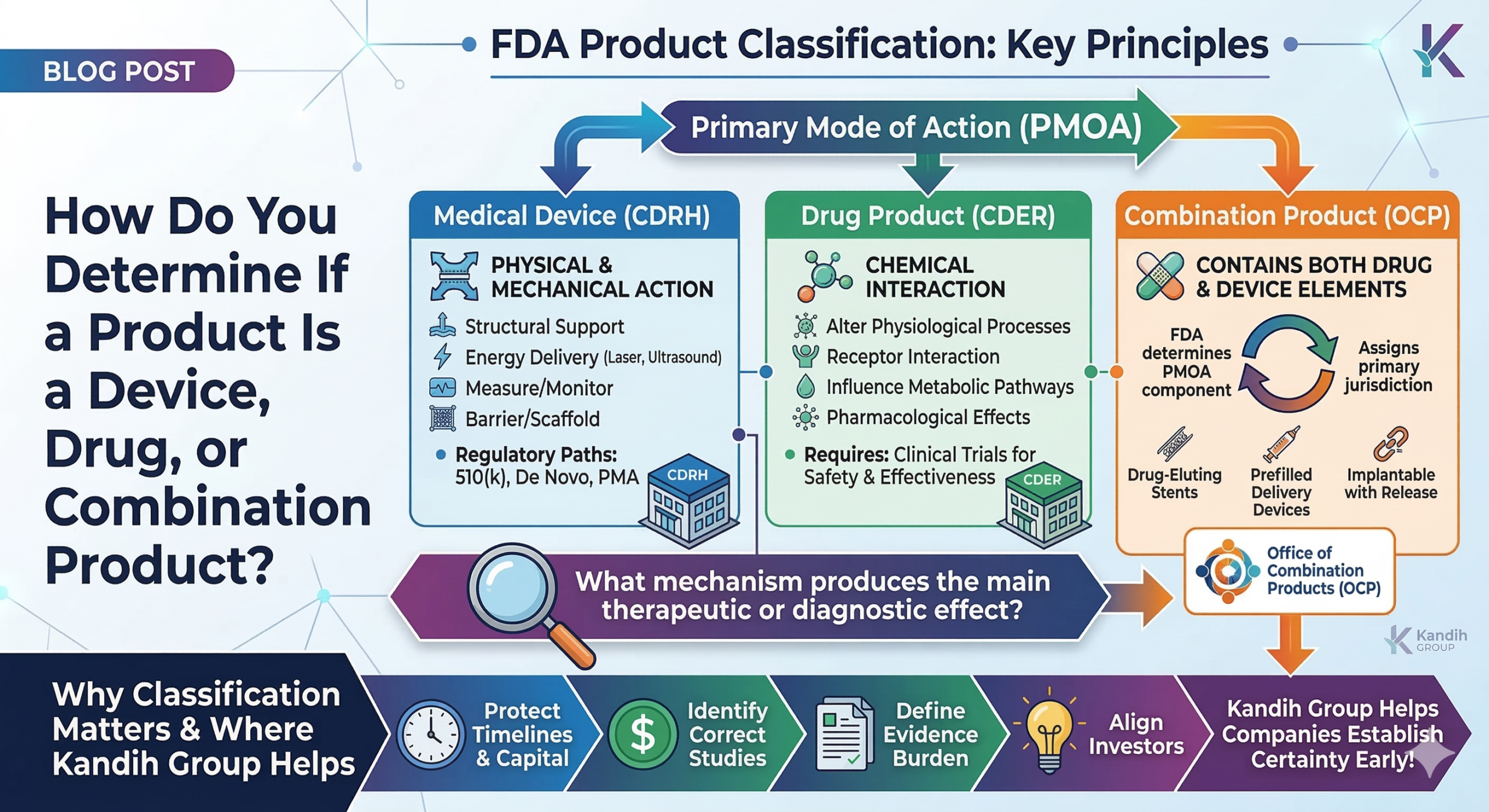
How Do You Determine If a Product Is a Device, Drug, or Combination Product?

Short answer: the classification depends on the product’s primary mode of action (PMOA)—how the product achieves its main intended effect in the body.

This determination matters because it decides which center of the U.S. Food and Drug Administration will regulate the product and what type of evidence will be required.
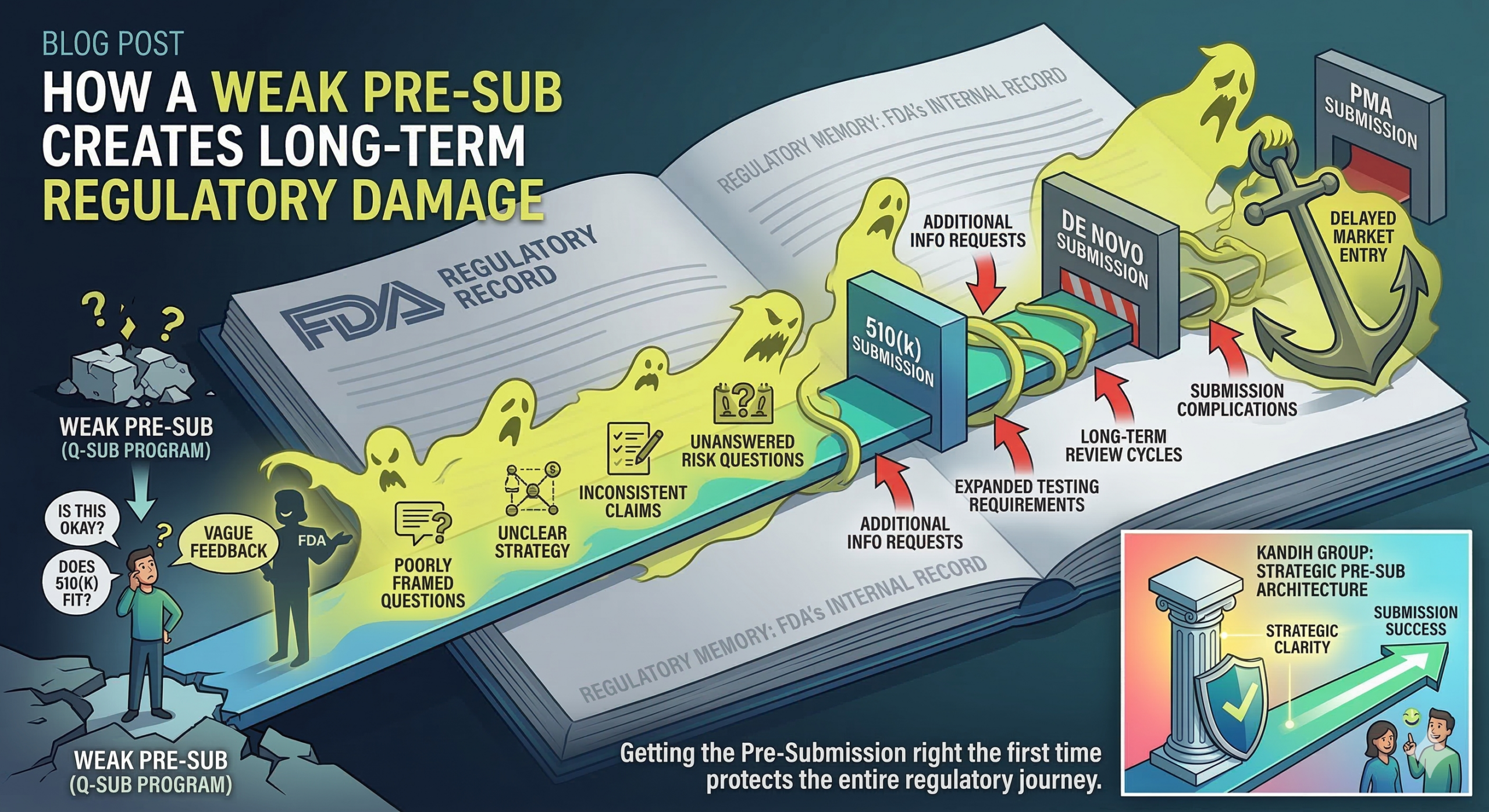
How a Weak Pre-Sub Creates Long-Term Regulatory Damage

Short answer: a weak Pre-Submission (Pre-Sub) does not just waste a meeting with the FDA. It creates a regulatory record that can follow your device through the rest of development.

Many founders treat a Pre-Sub as a casual conversation with the U.S. Food and Drug Administration. In reality, it is a formal interaction within the FDA’s Q-Submission program. The discussion becomes part of the agency’s internal regulatory history for your device.

How Investors Interpret Pathway Assumptions

Short answer: investors do not just look at your FDA pathway. They look at how realistic your pathway assumptions are. If your regulatory strategy sounds optimistic, your valuation will be discounted. In medical device investing, the chosen pathway—510(k), De Novo, or PMA—is more than a regulatory decision. It is a signal of timeline stability, capital […]

The 100-Year Mirage: Why Modern Longevity is a Childhood Survival Story

We often hear that modern science has “doubled” the human lifespan. We look at the statistics from 1840—where life expectancy was a mere 40 years—and compare them to our 80-year average today, assuming we’ve fundamentally reengineered human biology.
But the data tells a different, more sobering story.

FDA Pathways as Portfolio Risk Indicators

Short answer: an FDA regulatory pathway is not just a compliance decision. It is a portfolio risk signal. For investors, the difference between 510(k), De Novo, and PMA is not technical—it’s financial. Each pathway signals a different level of timeline risk, capital intensity, and probability of return. Understanding that signal changes how smart investors allocate […]

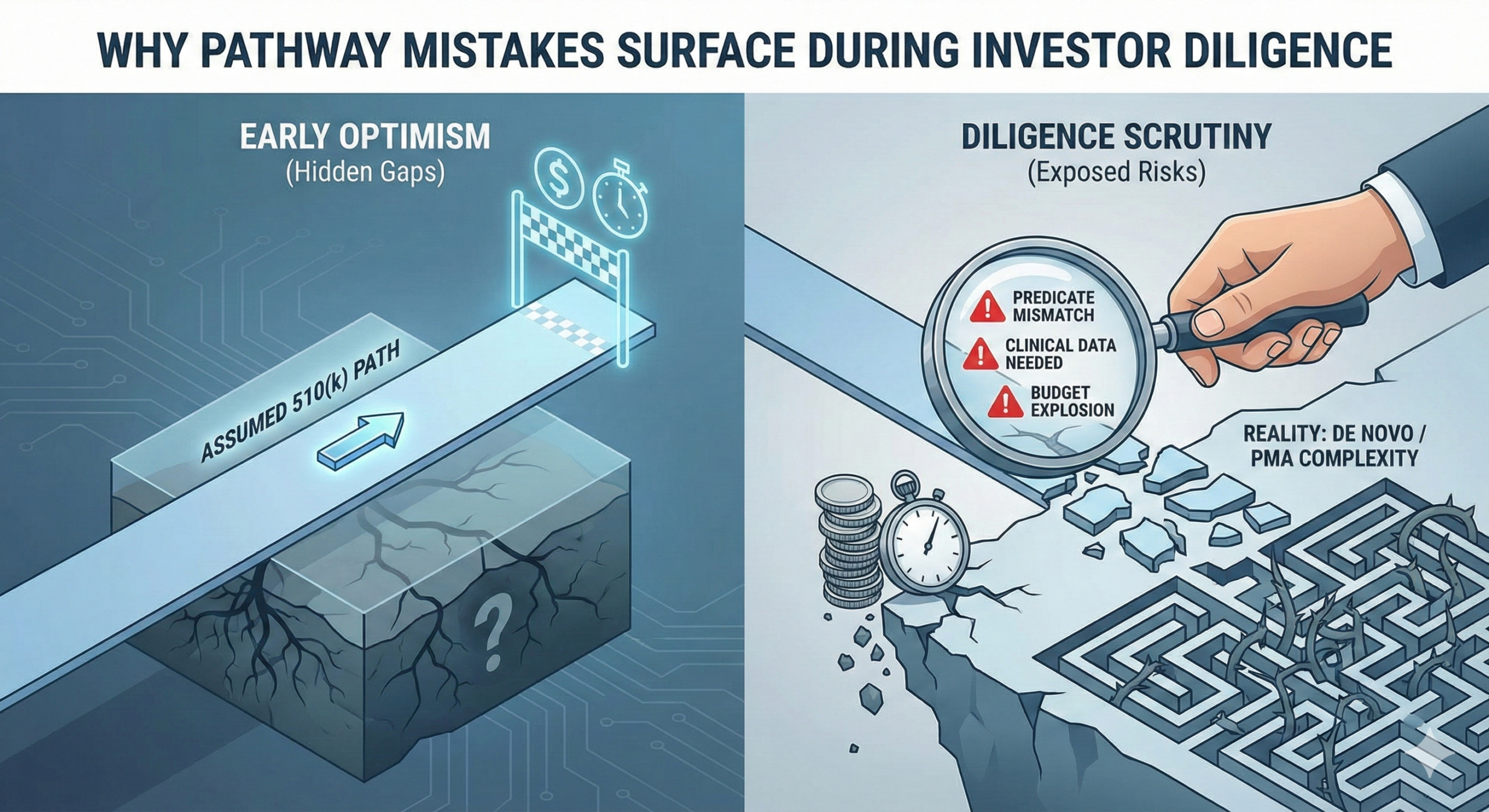
Why Pathway Mistakes Surface During Investor Diligence

Short answer: incorrect FDA pathway assumptions don’t usually fail at the beginning. They fail when investors start asking hard questions.

Early on, optimism hides regulatory gaps. During investor diligence, those gaps get exposed.

That’s because regulatory pathway decisions—510(k), De Novo, or PMA—are not just technical. They define your timeline, capital needs, and exit strategy.

How Device Classification Controls Timelines

Straight answer: device classification controls how much evidence you must generate—and that controls how fast (or slow) you reach market.

If you don’t understand your classification early, your timeline is not a plan. It’s a guess.

Under the framework of the U.S. Food and Drug Administration, medical devices are placed into three risk-based classes: Class I, Class II, and Class III. The higher the risk, the heavier the evidence burden—and the longer the timeline.

💬

Chat with us