Who Actually Decides Product Classification—Sponsor or FDA?

Short answer: the sponsor proposes a classification, but the final decision belongs to the FDA.

Many companies assume they can simply decide whether their product is a device, drug, or combination product. In practice, the U.S. Food and Drug Administration determines the final regulatory classification.

This matters because classification determines which regulatory center reviews the product, what evidence is required, and how long development may take.
Why Misclassification Quietly Kills Timelines

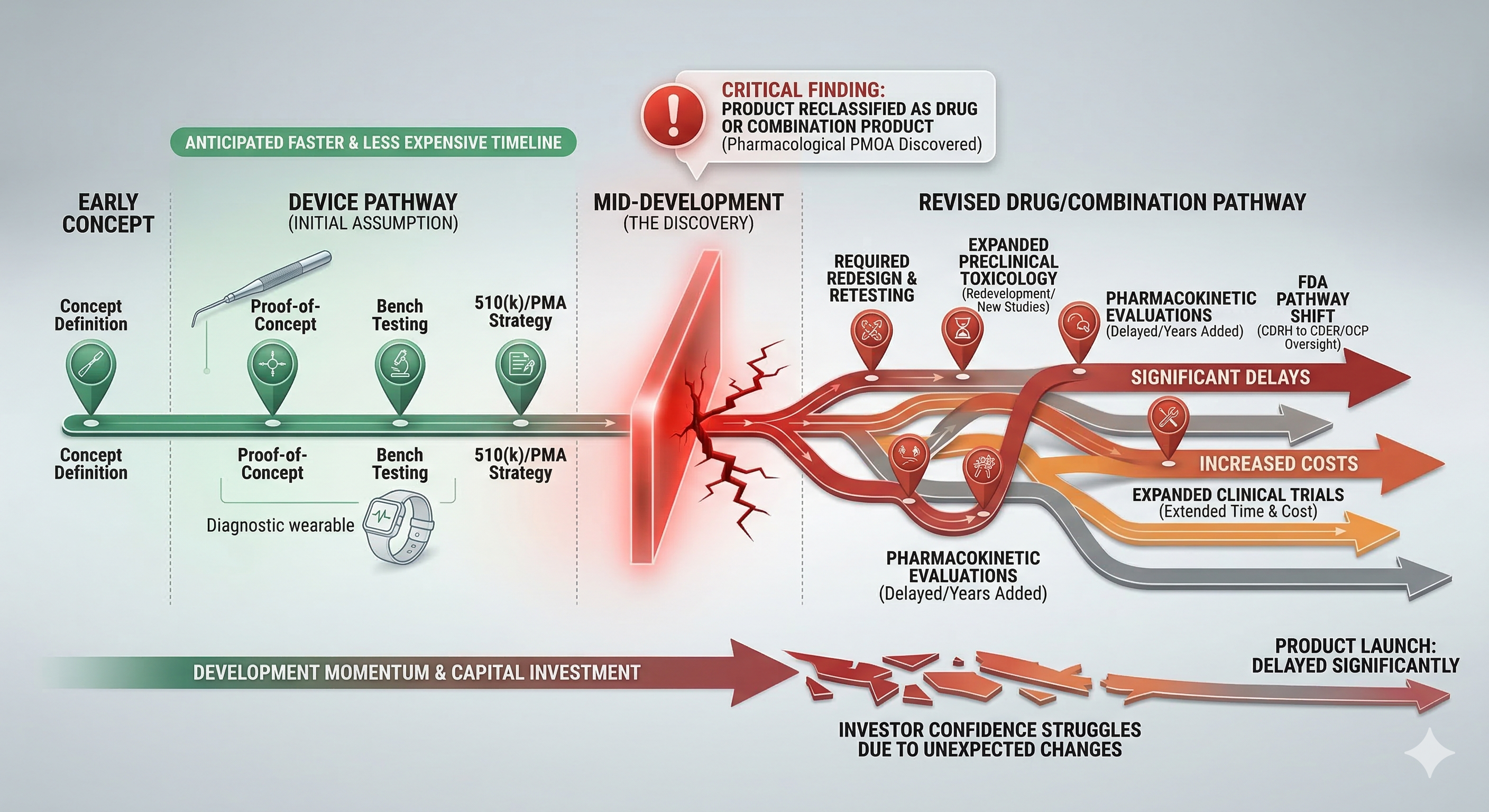
Short answer: product misclassification rarely causes immediate failure—but it quietly destroys timelines later.

Many companies begin development assuming their product is a medical device because that pathway often appears faster and less expensive. Months—or even years—later, they discover the product functions more like a drug or combination product

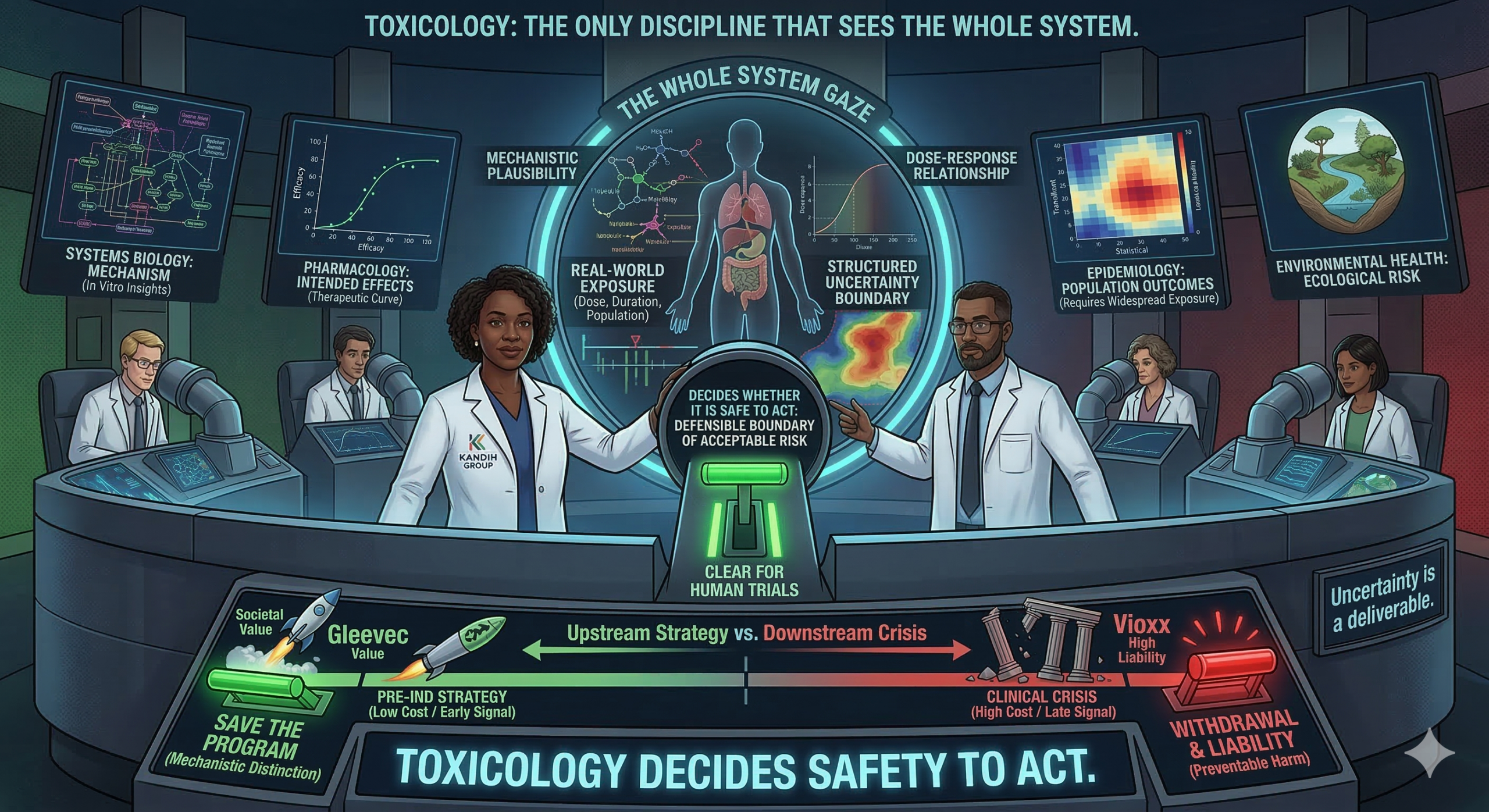
Toxicology Is the Only Discipline ThatSees the Whole System

By Harriet Kamendi | Regulatory Toxicologist | Kandih Group Imagine you are a founder. You have compelling efficacy data, a clean mechanismof action, and enough runway to file an IND. Your investors are excited. Yourscientific advisory board is aligned. And your toxicology package consists of asingle 28-day rat study and a literature review.You are not […]

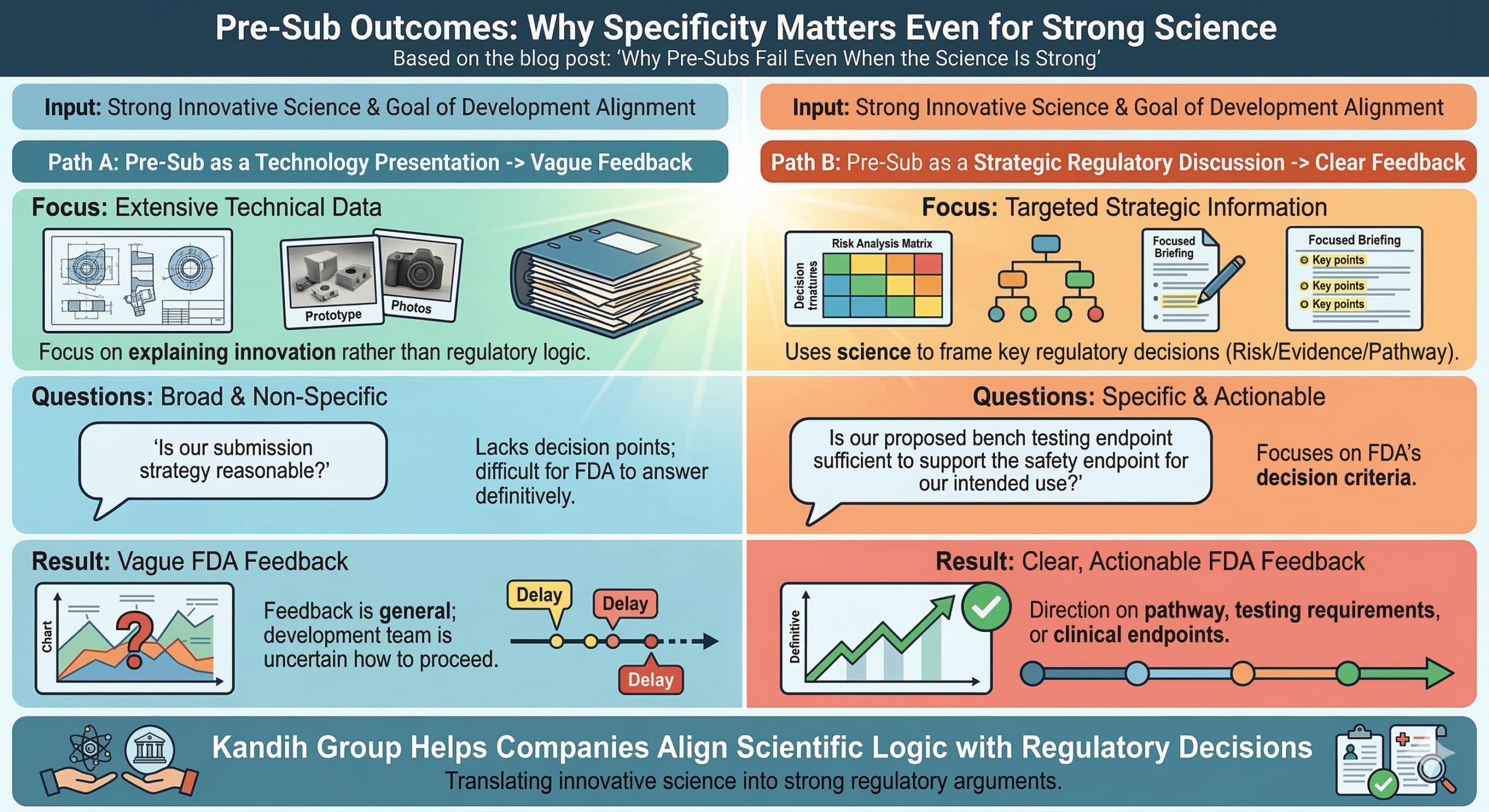
Why Pre-Subs Fail Even When the Science Is Strong

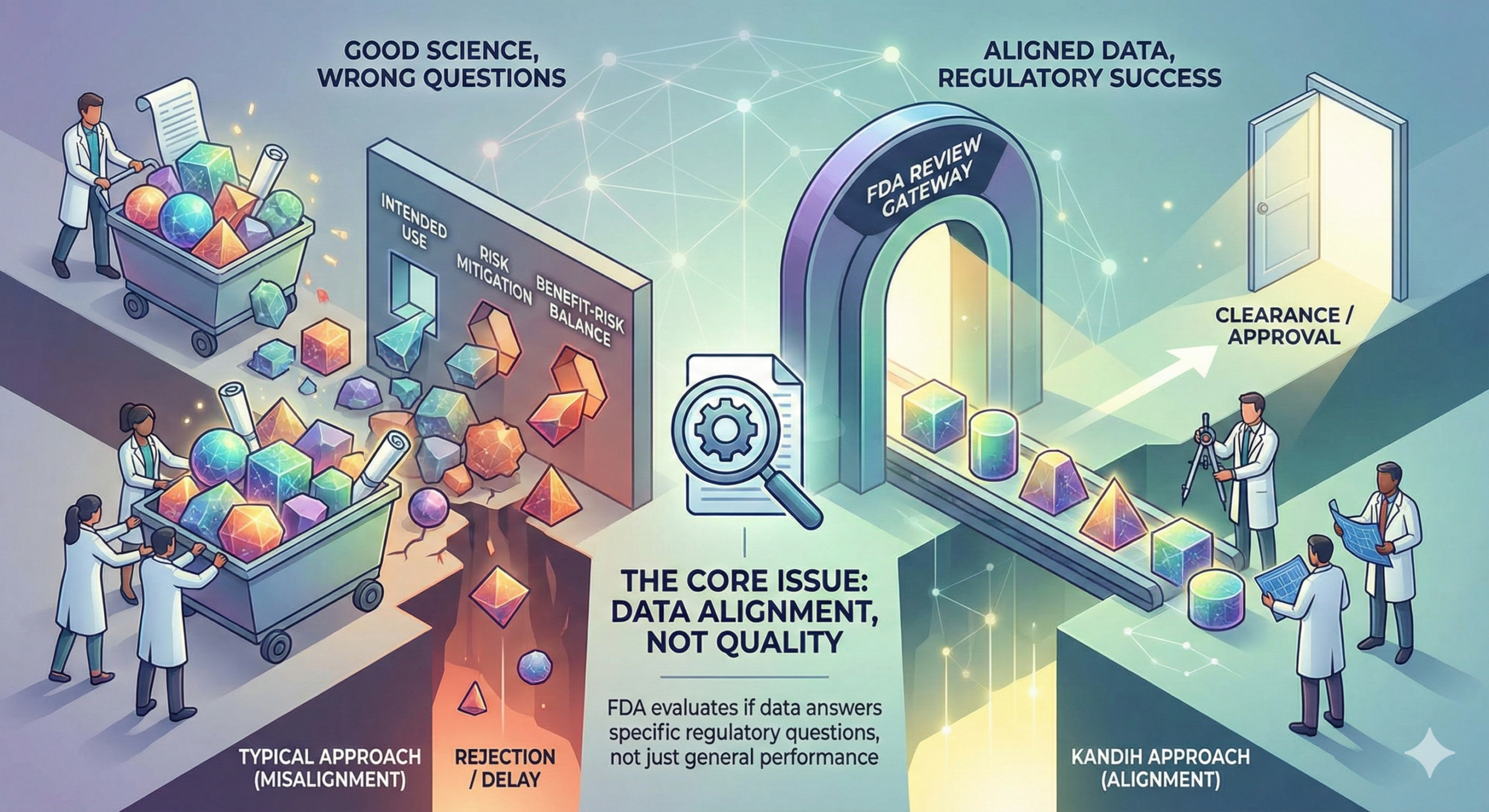
Short answer: Pre-Submissions (Pre-Subs) often fail not because the science is weak, but because the wrong regulatory questions were asked.

Many companies approach a Pre-Submission thinking the goal is to prove the device works. In reality, the goal is to align the development plan with the expectations of the U.S. Food and Drug Administration before major investment decisions are made

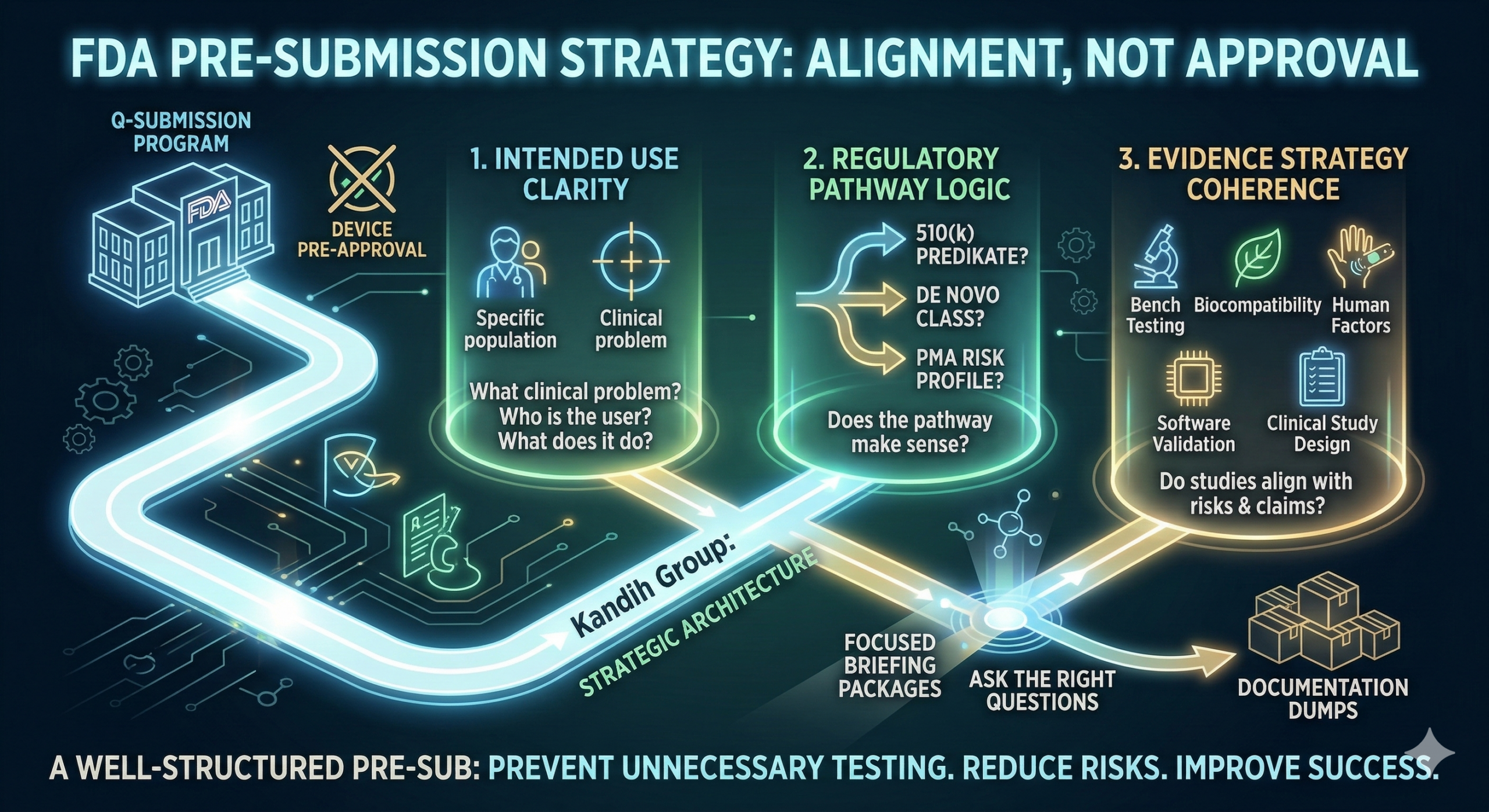
What Does FDA Actually Expect in a Medical Device Pre-Submission?

Short answer: the FDA expects a Pre-Submission (Pre-Sub) to clarify risk, regulatory pathway, and evidence strategy—not to pre-approve your device.

A Pre-Submission meeting allows companies to ask the U.S. Food and Drug Administration targeted questions about their development plan before investing heavily in studies or submissions.

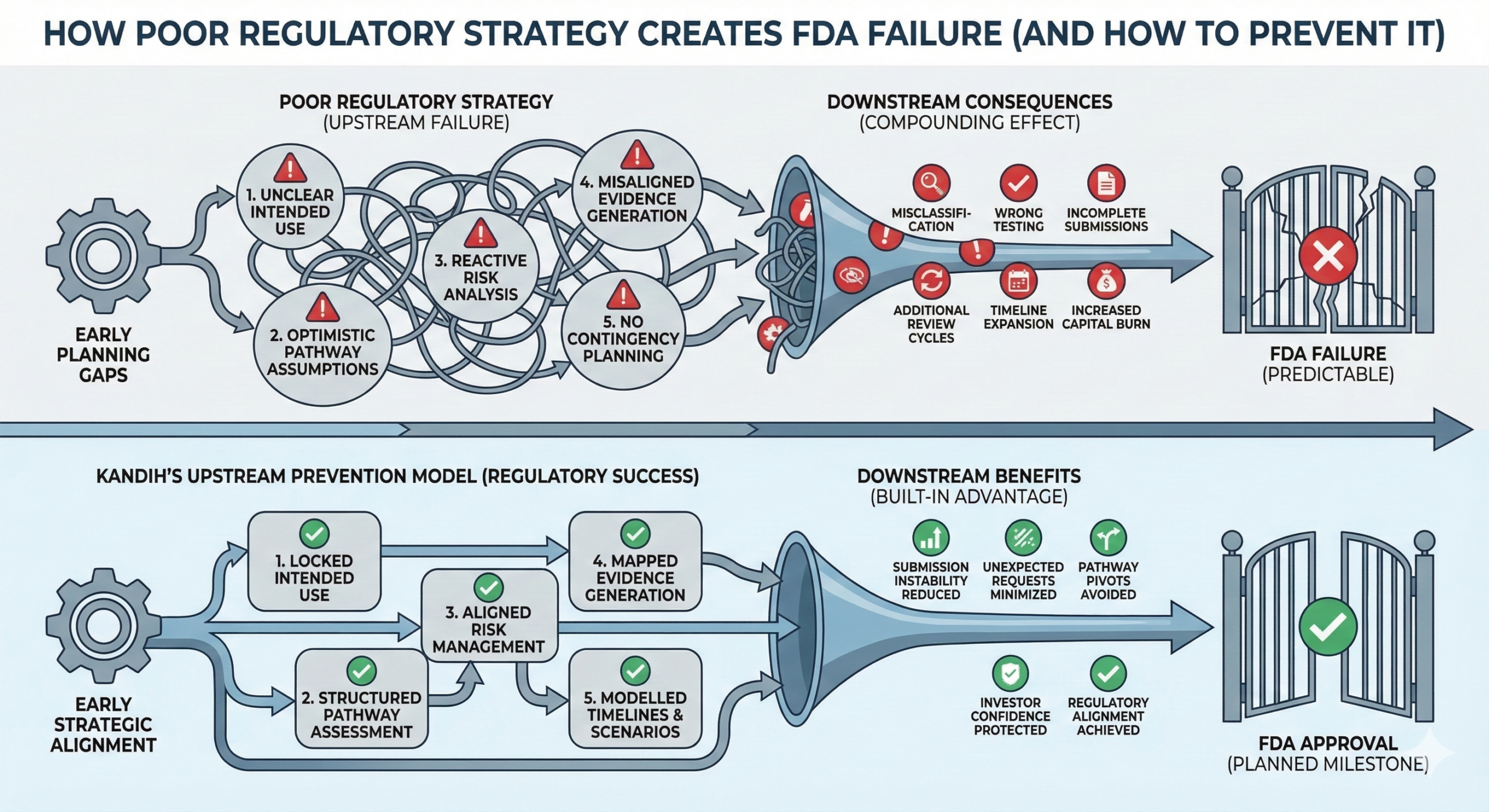
How Poor Regulatory Strategy Creates FDA Failure

Short answer: most FDA failures are not created during review. They are created months—or years—earlier during poor planning.

By the time a submission reaches the U.S. Food and Drug Administration, the outcome is often already predictable.

FDA does not “surprise” companies. Companies surprise themselves by discovering too late that their strategy never aligned with regulatory expectations

💬

Chat with us