Why Medical Devices Fail FDA Review

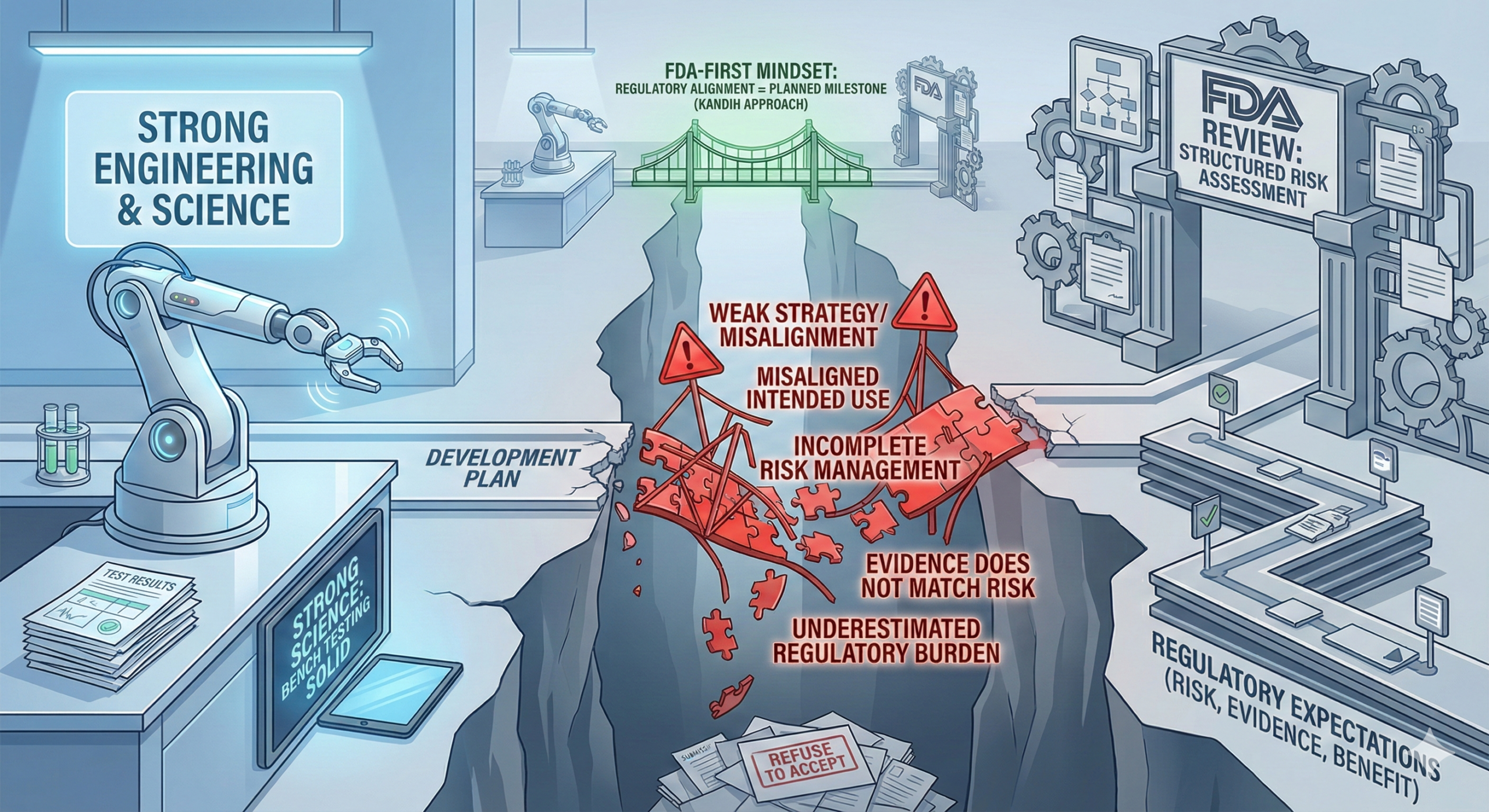
Direct answer: most medical devices do not fail FDA review because the science is weak. They fail because the strategy was weak.

In many cases, the engineering works. The bench testing looks solid. The prototype performs as expected.

But the submission fails because the development plan was not aligned with how the U.S. Food and Drug Administration evaluates risk, evidence, and benefit
Why “We’ll Try 510(k)” Is a Red Flag

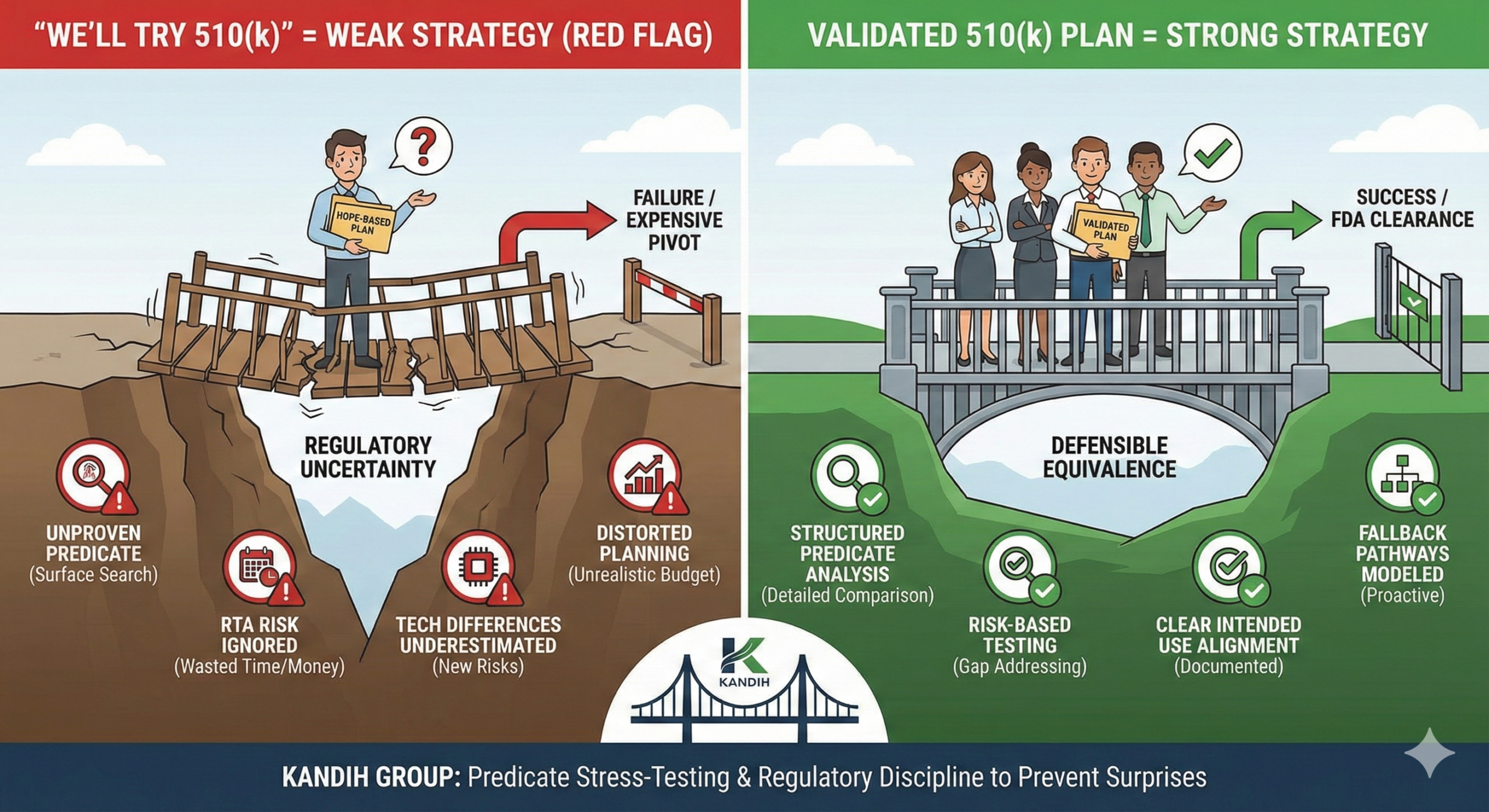
Short answer: when a team says, “We’ll try 510(k),” it usually means the regulatory strategy is not fully developed.

A 510(k) is not something you “try.” It is something you qualify for.

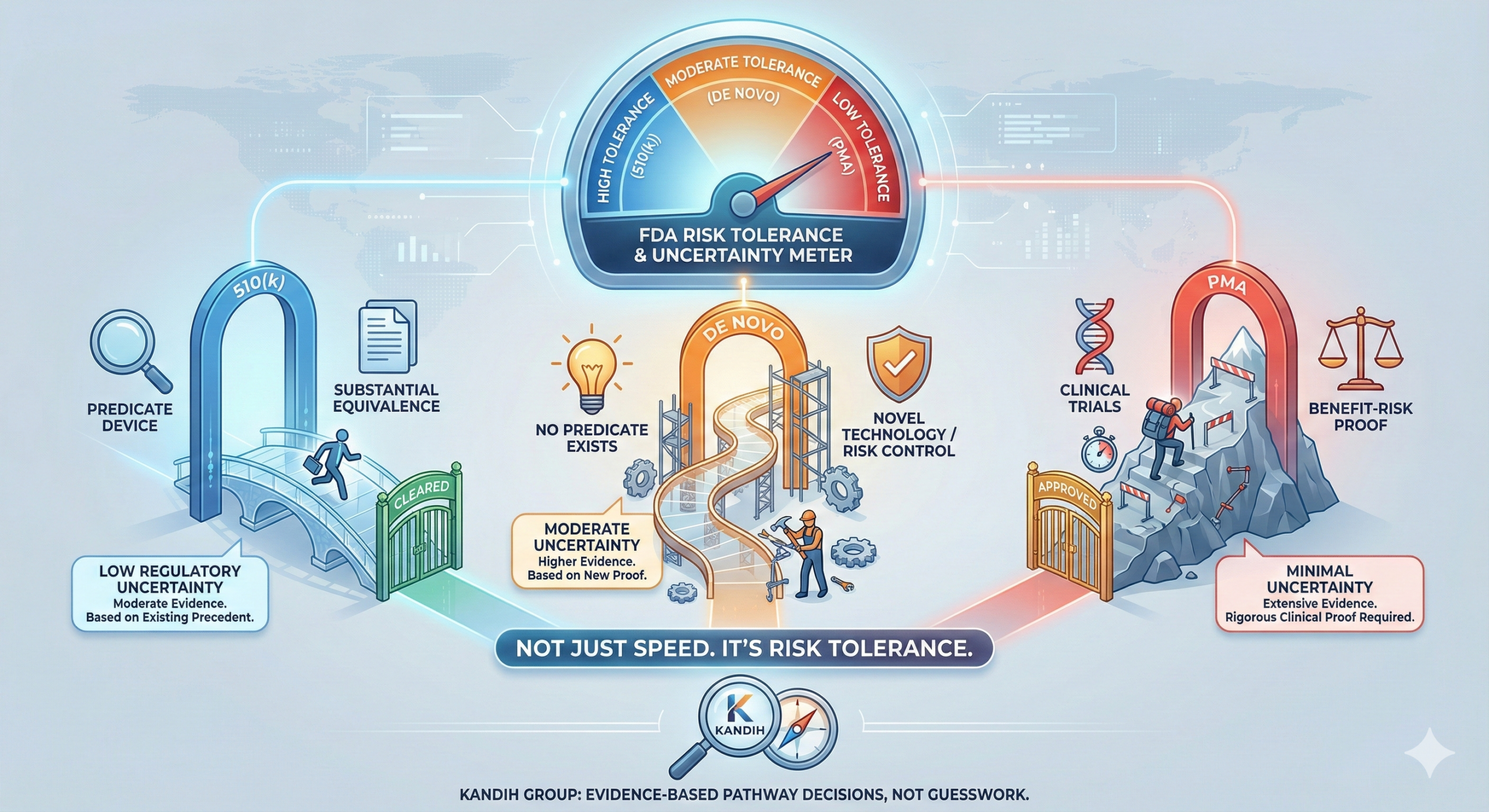
Under the framework of the U.S. Food and Drug Administration, the 510(k) pathway depends on a very specific standard: substantial equivalence to a legally marketed predicate device.

If that logic is not solid, the pathway collapses.

How Early FDA Misalignment Increases Development Costs

Simple truth: small regulatory misalignments early in development don’t stay small. They compound—quietly at first, then catastrophically—into six- and seven-figure problems later. Most medical device cost overruns are not caused by bad engineering. They are caused by early FDA misalignment that went unnoticed or unchallenged. How Small Misalignments Snowball Into Big Losses1. A Slightly Off […]

Can Regulatory Strategy Begin Before a Prototype Exists?

Yes—absolutely.In fact, regulatory strategy is most powerful before a physical prototype exists. At the earliest stage, regulatory thinking acts as a design compass. It tells you what you can build, how risky it will be, and what proof you’ll eventually need—before you spend real money on engineering. How Regulatory Strategy Works at the “Paper Stage” […]

What Breaks When Regulatory Strategy Starts Too Late

When regulatory strategy starts after prototyping, things don’t just slow down—they break. And once they break, they are expensive to fix. Medical device development is not linear. FDA expectations are woven into design, testing, and evidence generation. When those expectations are ignored early, downstream failures stack up fast. What Actually Goes Wrong (and Why It […]

When Should Regulatory Strategy Actually Start for a Medical Device?

Direct answer: regulatory strategy should start at the idea stage, not after you build a prototype. If you wait until the device is engineered to think about FDA requirements, you’ve already made decisions that may be expensive—or impossible—to fix later. Why Regulatory Strategy Starts at Ideation From the very beginning, the U.S. Food and Drug […]

💬

Chat with us