
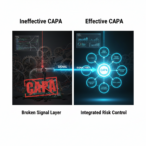
CAPA Survival Playbooks — Kandih Bioscience If your CAPA depends on complaints—but your complaint handling system is weak—your CAPA is already dead.From an FDA inspection perspective, complaints are not paperwork to close. They are early-warning signals that feed the CAPA risk-control loop. When complaint signals are distorted, minimized, or inconsistently escalated, CAPA operates on corrupted […]
Category: Toxicology
Scromiting”: The Brutal Side Effect of Chronic Cannabis Use That’s Changing How We Think About Toxicology
The New York Post reports a rising trend among heavy cannabis users:
“scromiting” — a mix of screaming and vomiting — formally known as Cannabinoid Hyperemesis Syndrome (CHS).
Patients suffer uncontrollable nausea, repetitive vomiting, abdominal pain, dehydration, and panic. Hospitalizations are increasing nationwide.
(New York Post, 2025)
Ozempic 2.0: The “Needle-Free” Weight-Loss Pill Everyone’s Talking About — A Toxicologist’s Perspective
By Dr. Harriet Kamendi, PhD — Regulatory Toxicologist & CEO, Kandih BioScience The Times of India reports that Ozempic 2.0, a new oral, needle-free formulation of semaglutide (the active ingredient in Ozempic), is generating global hype as a potential replacement for weekly injections.(Times of India, 2025) The public sees convenience.Clinicians see improved adherence.Investors see a […]
Acute Myeloid Leukemia: What Toxicology and Product Development Can Learn from the Frontlines of Blood Cancer
By Dr. Harriet Kamendi, PhD — Regulatory Toxicologist & CEO, Kandih BioScience USA Today reports that cases of acute myeloid leukemia (AML) continue to rise, especially among adults over age 60 — and despite advances in targeted therapy, survival remains below 35% for many groups. (USA Today, 2025) The public sees this as an oncology […]
Amazon Recall: Children’s Items Pulled Nationwide Over Fatality Risks — A Regulatory Toxicology Wake-Up Call
According to Fox Business
, Amazon has issued an urgent nationwide recall of multiple children’s products — including sleep loungers, toys, and furniture — after the U.S. Consumer Product Safety Commission (CPSC) determined they posed risks of strangulation, suffocation, and chemical exposure.
This isn’t just another recall headline
Long-Term Melatonin Use: What Toxicology, Regulation & Product Development Must Learn Now
In November 2025, the American Heart Association (AHA) reported early findings linking long-term melatonin use (≥1 year) with alarming outcomes:
~90% higher risk of heart failure
~2× higher all-cause mortality
~3.5× higher risk of hospitalization for heart failure
(AHA, 2025
, Science Media Centre Spain, 2025
)
For professionals in toxicology, regulatory science, or product development, this should be a red flag:

7 Costly FDA Mistakes EU Medical Device Companies Make
Entering the U.S. market requires a fundamental shift from the EU’s CE Marking philosophy. Underestimating the differences in the FDA’s regulatory framework leads to costly delays, Refuse-to-File letters, and Form 483s. Here are the top 7 regulatory and quality mistakes EU device companies make: 1. Assuming CE Marking Strategy Translates to FDA Strategy 2. Underestimating […]

Infant Botulism Outbreak Linked to Infant Formula: A Toxicology & Product-Design Alarm
The implicated product: two recalled lots of ByHeart Whole Nutrition Infant Formula.
For toxicologists, regulatory scientists, and product developers, this isn’t just another recall — it’s a wake-up call.
Toxicology must be embedded in infant-formula design — not just for chemical safety, but for microbial and process-related toxins that can turn nutrition into neurotoxin exposure.

Deadly Multistate Listeria Outbreak Expands: A Wake-Up Call for Toxicologists and Product Developers
The CDC and FDA have confirmed a deadly multistate Listeria outbreak linked to ready-to-eat pasta meals, as reported by the Center for Infectious Disease Research and Policy (CIDRAP). Several states are now investigating illnesses and hospitalizations tied to contaminated refrigerated pasta products — items once considered “low-risk.” For professionals in toxicology, regulatory safety, or product […]