
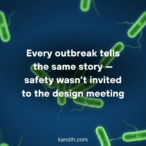
The CDC and FDA have confirmed a deadly multistate Listeria outbreak linked to ready-to-eat pasta meals, as reported by the Center for Infectious Disease Research and Policy (CIDRAP)
.
Several states are now investigating illnesses and hospitalizations tied to contaminated refrigerated pasta products — items once considered “low-risk.”
For professionals in toxicology, regulatory safety, or product development, this isn’t just another foodborne illness alert — it’s a system failure.
When convenience collides with complacency, biology reminds us who’s really in charge.
What Happened: The Listeria Outbreak
The FDA and CDC traced the outbreak to commercially packaged pasta and prepared meals distributed across multiple states.
Early findings point to cross-contamination during processing or post-cooking packaging — where fully cooked foods came back into contact with contaminated surfaces or air.
What makes Listeria monocytogenes especially dangerous is its ability to thrive at refrigerator temperatures — surviving where other bacteria die. This resilience allows it to persist in factory environments, contaminating products even after cleaning.
The Toxicology Connection: What Lies Beneath
Foodborne pathogens like Listeria are biological hazards — but toxicologists study any agent capable of causing harm through biological mechanisms, whether chemical, microbial, or environmental.
Here’s how toxicology connects to this outbreak:
Mechanistic Toxicology
Listeria produces a potent toxin, listeriolysin O, that allows it to escape immune detection and invade host cells, including the central nervous system (CNS).
This toxin helps the bacteria cross the blood-brain barrier, leading to meningitis, sepsis, and, in pregnant women, fetal infection or miscarriage.
(Reference: Radoshevich & Cossart, 2018, Nature Reviews Microbiology
)
Regulatory Toxicology
This outbreak exposes how food safety frameworks often underestimate toxicological interactions within the production environment.
Manufacturers focus on microbial limits but may neglect the chemical safety of cleaning agents, packaging leachables, and process residuals — all of which can interact with bacteria or food components in unexpected ways.
Product Development Toxicology
During formulation and packaging design, toxicologists can model how temperature, pH, and environmental factors affect both bacterial survival and chemical stability.
This predictive work prevents safety failures long before they hit the market.
This is where product development meets regulatory toxicology — and where too many systems fail when safety is treated as an afterthought.
Rooted in Experience: Why Toxicologists Must Be in the Room
This outbreak isn’t just an incident — it’s a case study in what happens when toxicology is left out of early decision-making.
When toxicologists are involved only at the end — during testing — we react to crises instead of preventing them.
A robust toxicology risk assessment could have predicted contamination risks through:
Modeling Listeria’s survival kinetics using environmental sampling data
Evaluating sanitation chemicals for efficacy loss under varying pH conditions
Testing equipment surface compatibility to predict bacterial adherence potential
Toxicologists offer not just analysis but foresight — predicting where harm could emerge in complex real-world systems.
Practical & Tactical Takeaways for Product Developers
Integrate Toxicology into HACCP & Food Safety Plans
Don’t stop at microbial counts. Incorporate chemical and toxicological endpoints such as residual exposure, cleaning agent compatibility, and material migration.
Design for Environmental Control
Engineers and toxicologists should co-design facilities that limit biofilm formation, condensation, and microbial persistence — evaluating how materials influence contamination.
Perform Stability & Compatibility Studies with Pathogen Persistence in Mind
Study how packaging, temperature fluctuations, and storage time affect both pathogen survival and chemical stability.
Use Predictive Toxicology Tools
Leverage in silico models to simulate microbial survival curves and toxin production under various conditions.

Engage Regulatory Toxicologists Early
Early input aligns safety plans with the FDA’s Food Safety Modernization Act (FSMA) and CDC outbreak prevention frameworks.
Opinion: Listeria Isn’t Just a Microbial Problem — It’s a Systemic One
Outbreaks are often blamed on a single lapse — a “bad batch” or a missed cleaning step.
But the root cause is systemic: a breakdown in risk communication, cross-disciplinary oversight, and predictive toxicology.
As a toxicologist, I see Listeria not as a contamination event, but as a signal:
If your product’s safety plan doesn’t include toxicological foresight, you’re not preventing harm — you’re just postponing it.
The Clear Idea
Food safety is toxicology in disguise.
This outbreak is a reminder that the next big innovation in food safety won’t come from better disinfectants — it will come from integrating toxicology into product design, environmental engineering, and regulatory science.
References
1. Centers for Disease Control and Prevention (CDC). Listeria Outbreak Updates 2025. https://www.cdc.gov/listeria/outbreaks/index.html
2. U.S. Food and Drug Administration (FDA). Foodborne Pathogens and FSMA Guidance. https://www.fda.gov/food/guidance-regulation-food-and-dietary-supplements/food-safety-modernization-act-fsma
3. Center for Infectious Disease Research and Policy (CIDRAP). Deadly multistate Listeria outbreak tied to prepared pasta meals expands. 2025. https://www.cidrap.umn.edu/listeria/deadly-multistate-listeria-outbreak-tied-prepared-pasta-meals-expands
4. Scallan E, et al. Foodborne illness acquired in the United States—major pathogens. Emerg Infect Dis. 2011;17(1):7–15. https://wwwnc.cdc.gov/eid/article/17/1/P1-1101_article
5. Radoshevich L, Cossart P. Listeria monocytogenes: towards a complete picture of its physiology and pathogenesis. Nat Rev Microbiol. 2018;16(1):32–46. https://www.nature.com/articles/nrmicro.2017.126