March 18, 2026

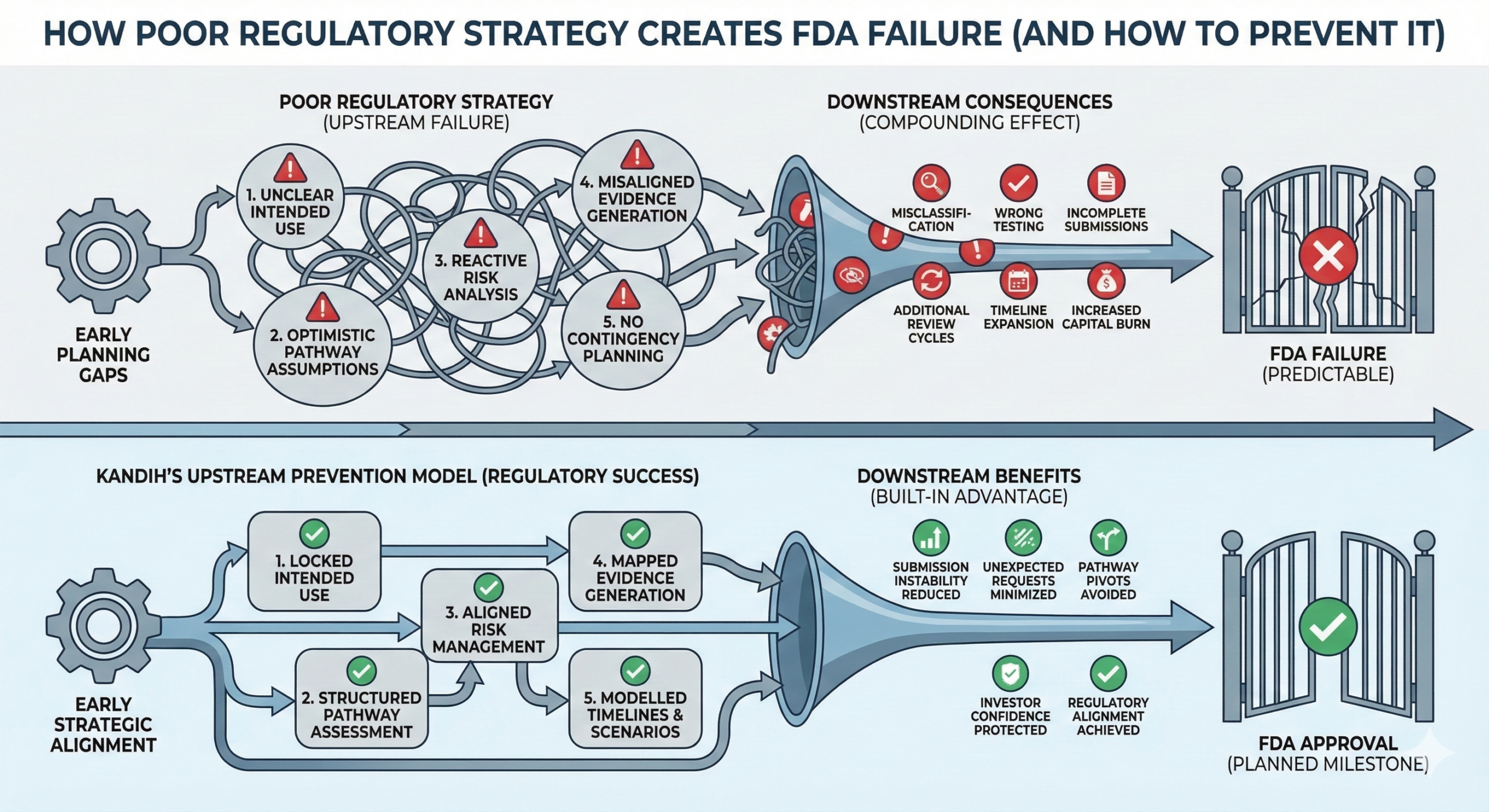
Why Misclassification Quietly Kills Timelines

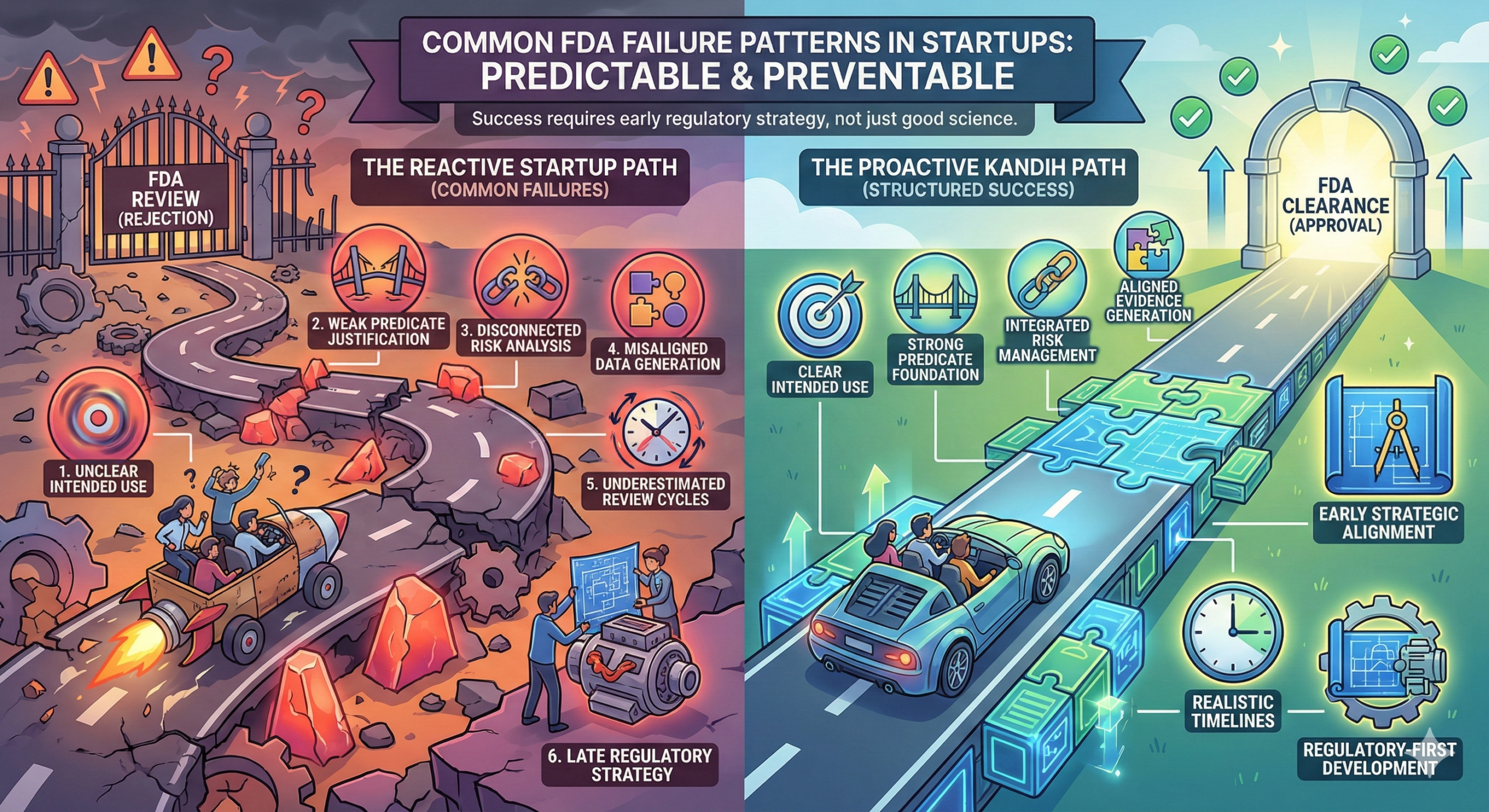
Short answer: product misclassification rarely causes immediate failure—but it quietly destroys timelines later. Many companies begin development assuming their product is a medical device because that pathway often appears faster and less expensive. Months—or even years—later, they discover the product functions more like a drug or combination product
March 17, 2026

How Do You Determine If a Product Is a Device, Drug, or Combination Product?

Short answer: the classification depends on the product’s primary mode of action (PMOA)—how the product achieves its main intended effect in the body. This determination matters because it decides which center of the U.S. Food and Drug Administration will regulate the product and what type of evidence will be required.
March 16, 2026

Toxicology Is the Only Discipline ThatSees the Whole System

By Harriet Kamendi | Regulatory Toxicologist | Kandih Group Imagine you are a founder. You have compelling efficacy data, a clean mechanismof action, and enough runway […]
March 13, 2026

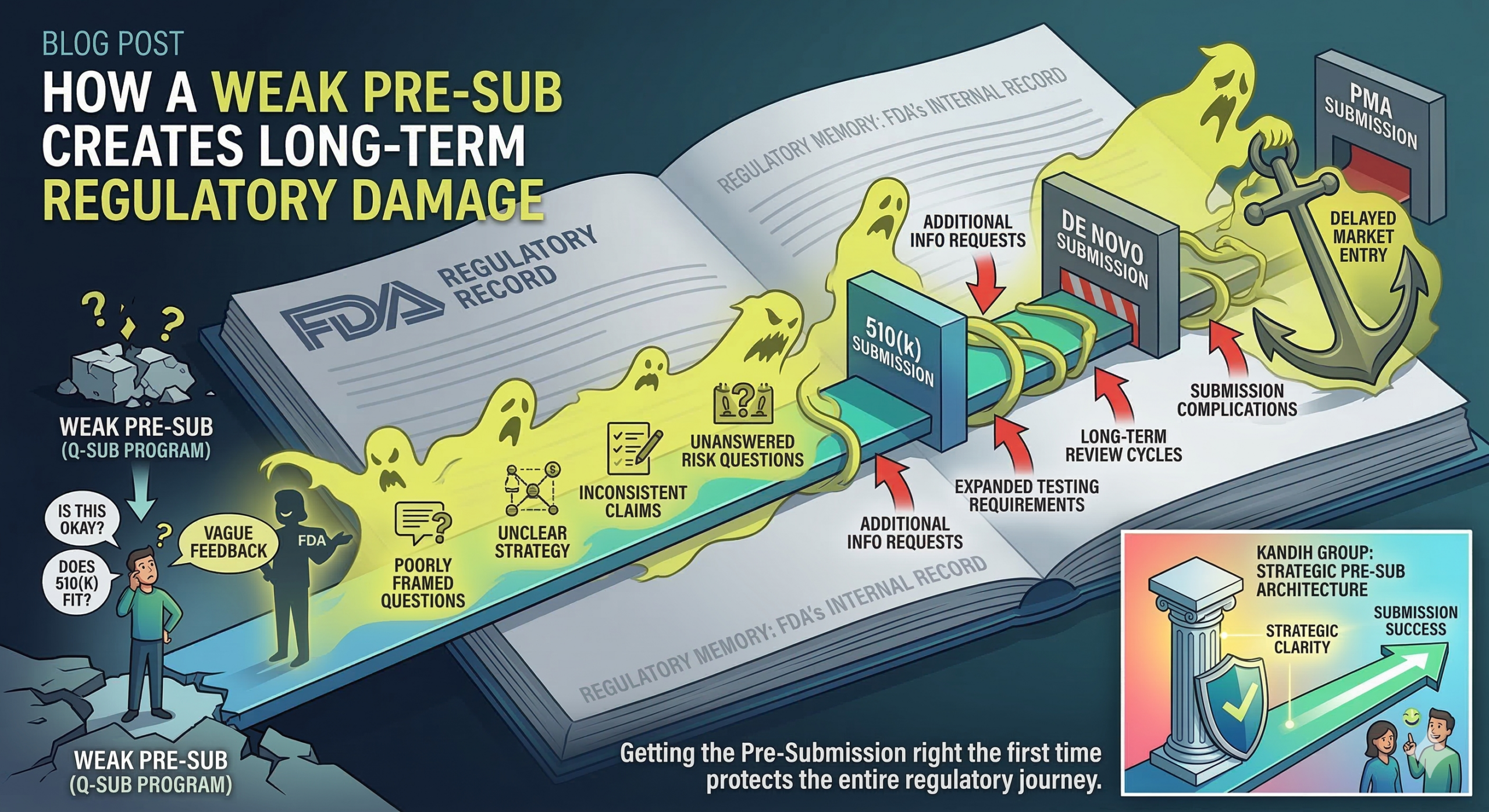
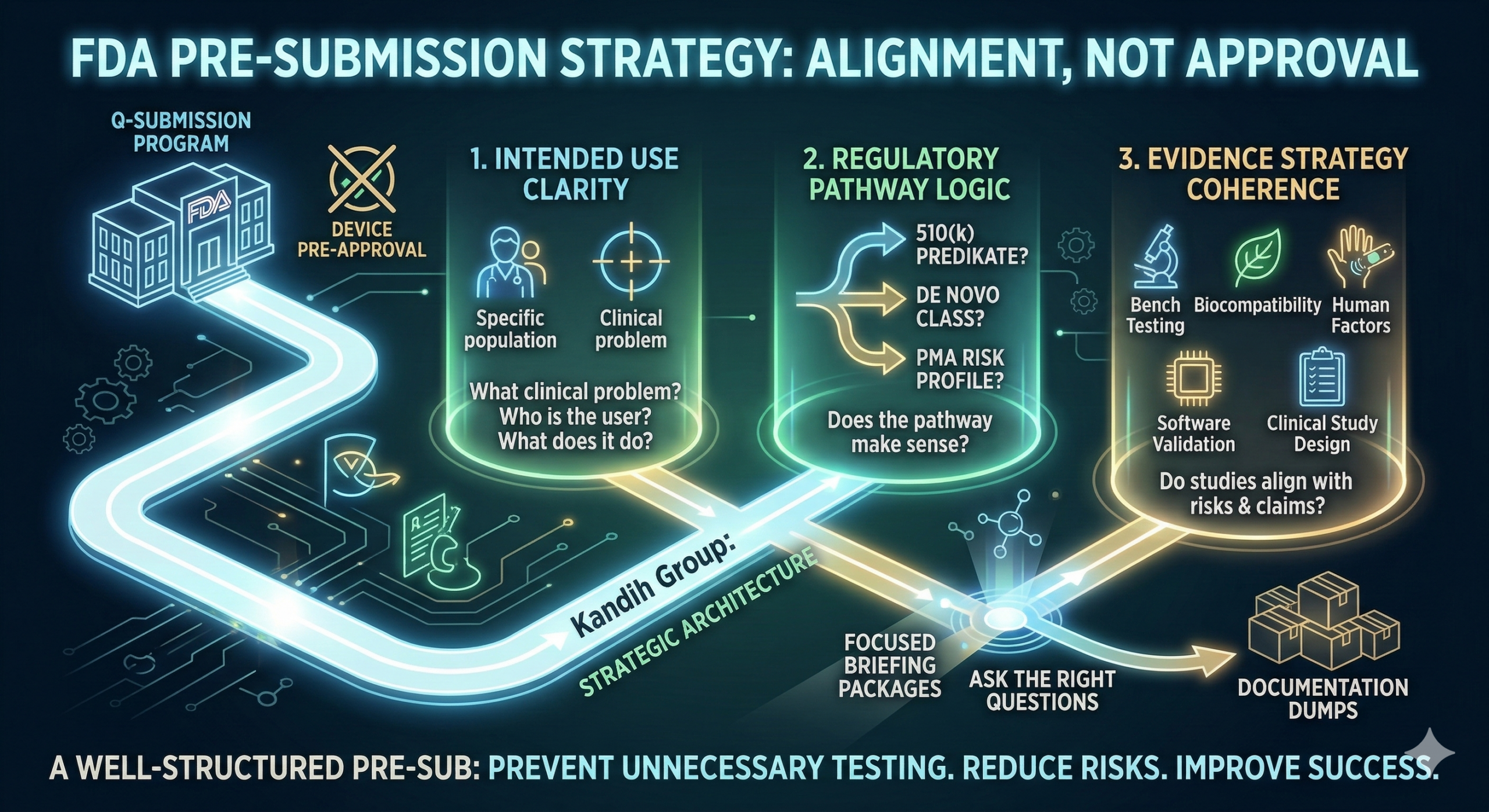
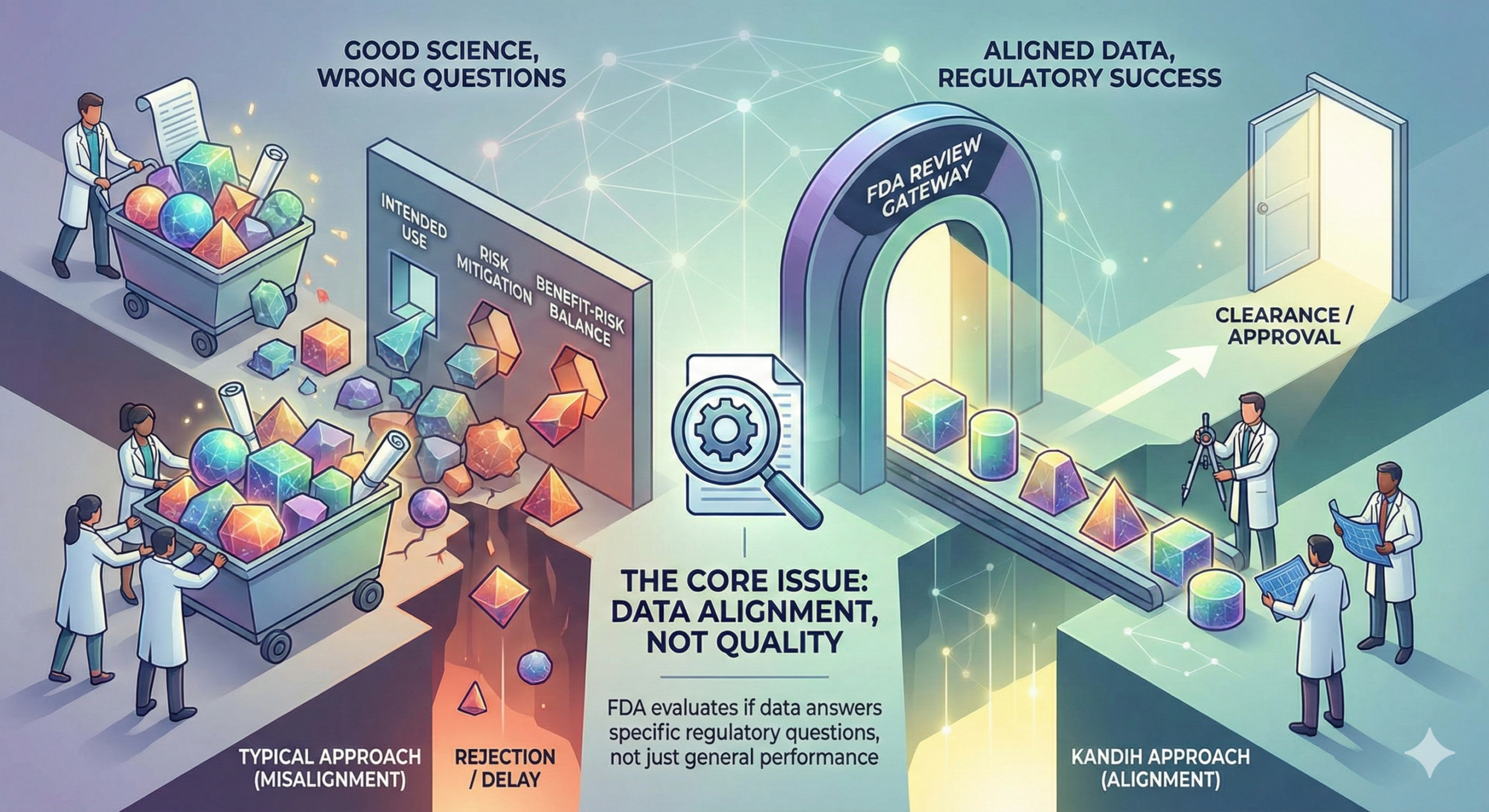
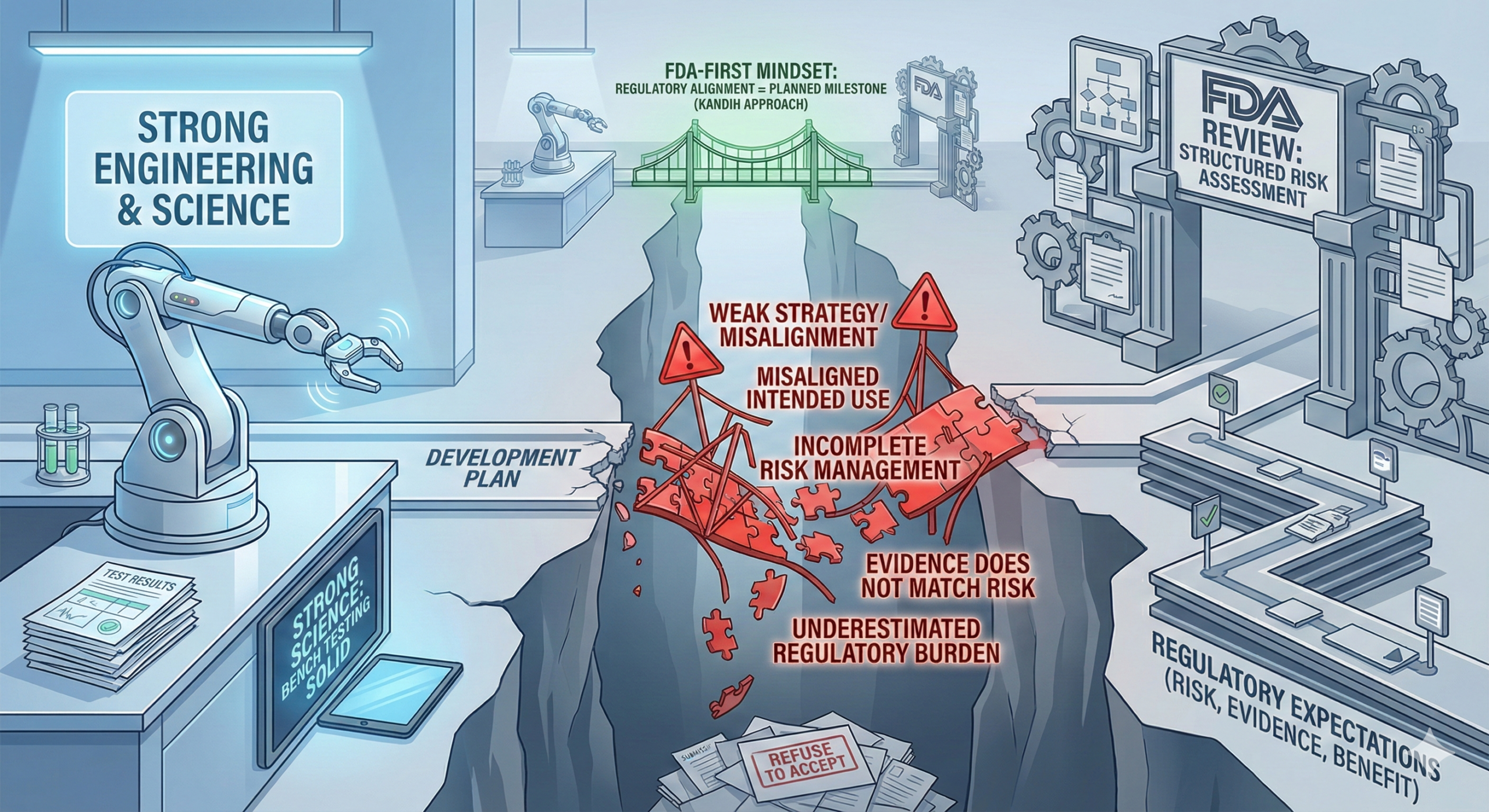
Why Pre-Subs Fail Even When the Science Is Strong

Short answer: Pre-Submissions (Pre-Subs) often fail not because the science is weak, but because the wrong regulatory questions were asked. Many companies approach a Pre-Submission thinking the goal is to prove the device works. In reality, the goal is to align the development plan with the expectations of the U.S. Food and Drug Administration before major investment decisions are made
gdpr-image
This website uses cookies to improve your experience. By using this website you agree to our Data Protection Policy.and Cookie policy
Read more
💬

Chat with us