What Does FDA Actually Expect in a Medical Device Pre-Submission?

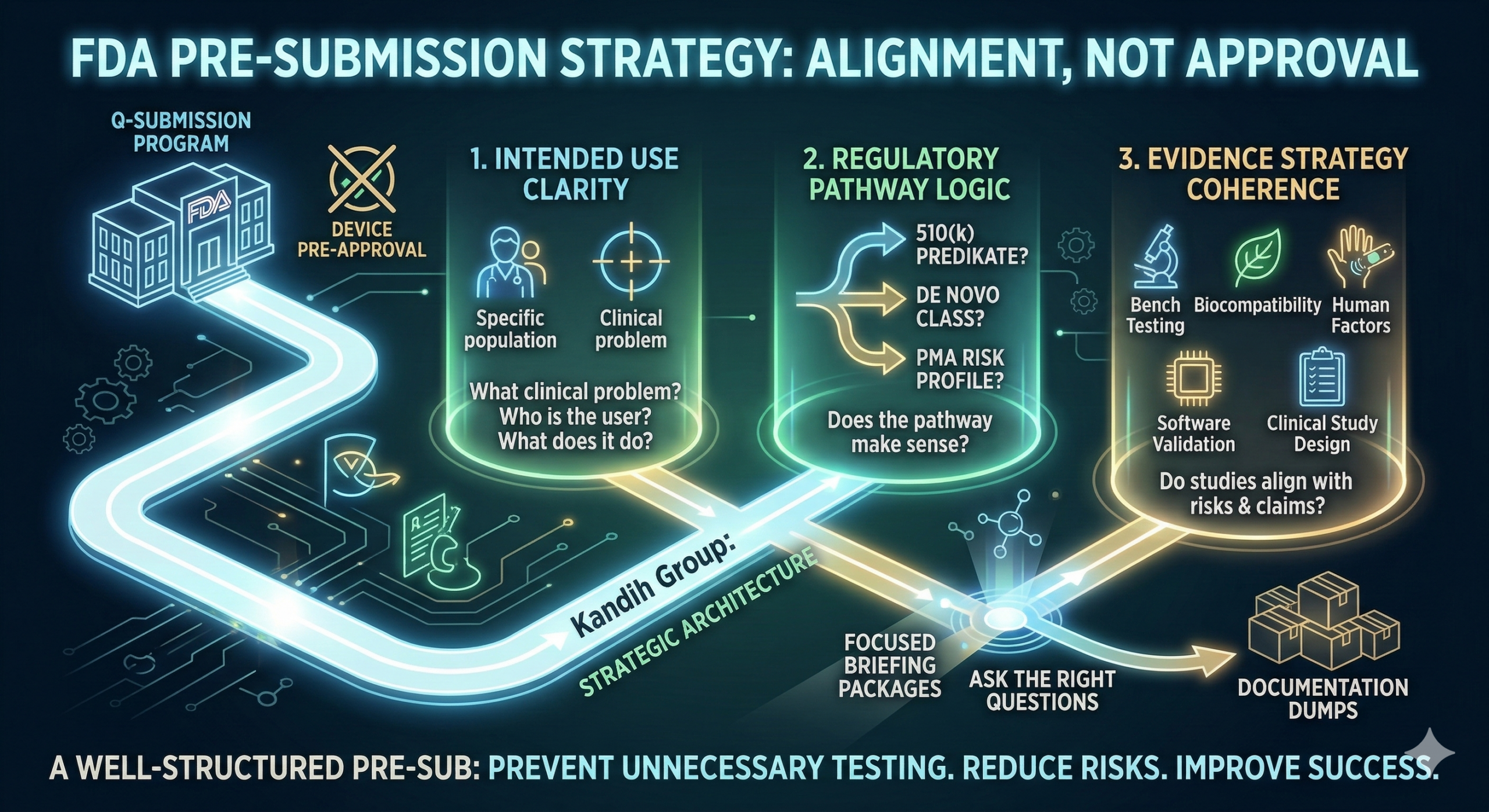
Short answer: the FDA expects a Pre-Submission (Pre-Sub) to clarify risk, regulatory pathway, and evidence strategy—not to pre-approve your device.

A Pre-Submission meeting allows companies to ask the U.S. Food and Drug Administration targeted questions about their development plan before investing heavily in studies or submissions.

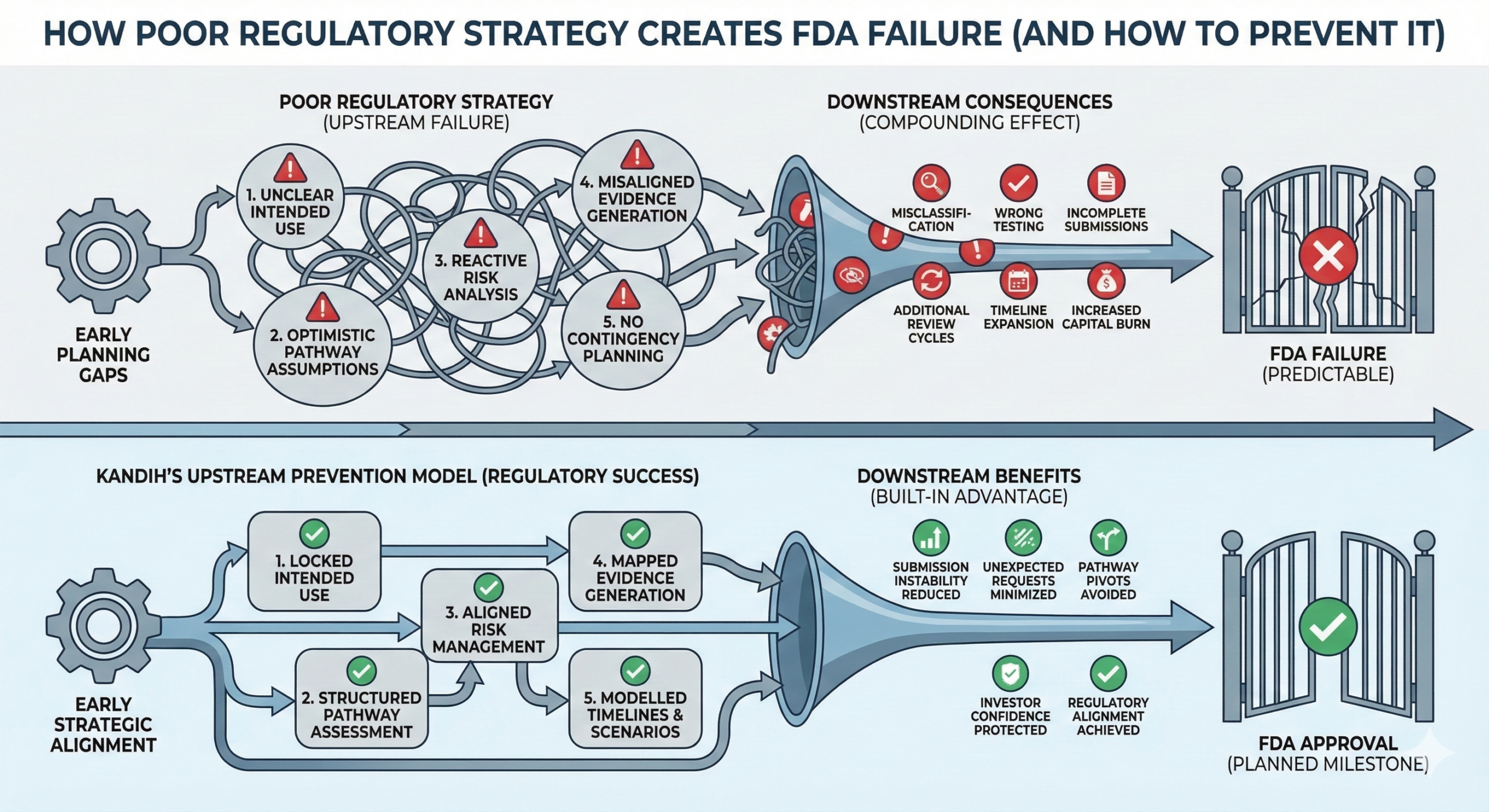
How Poor Regulatory Strategy Creates FDA Failure

Short answer: most FDA failures are not created during review. They are created months—or years—earlier during poor planning.

By the time a submission reaches the U.S. Food and Drug Administration, the outcome is often already predictable.

FDA does not “surprise” companies. Companies surprise themselves by discovering too late that their strategy never aligned with regulatory expectations

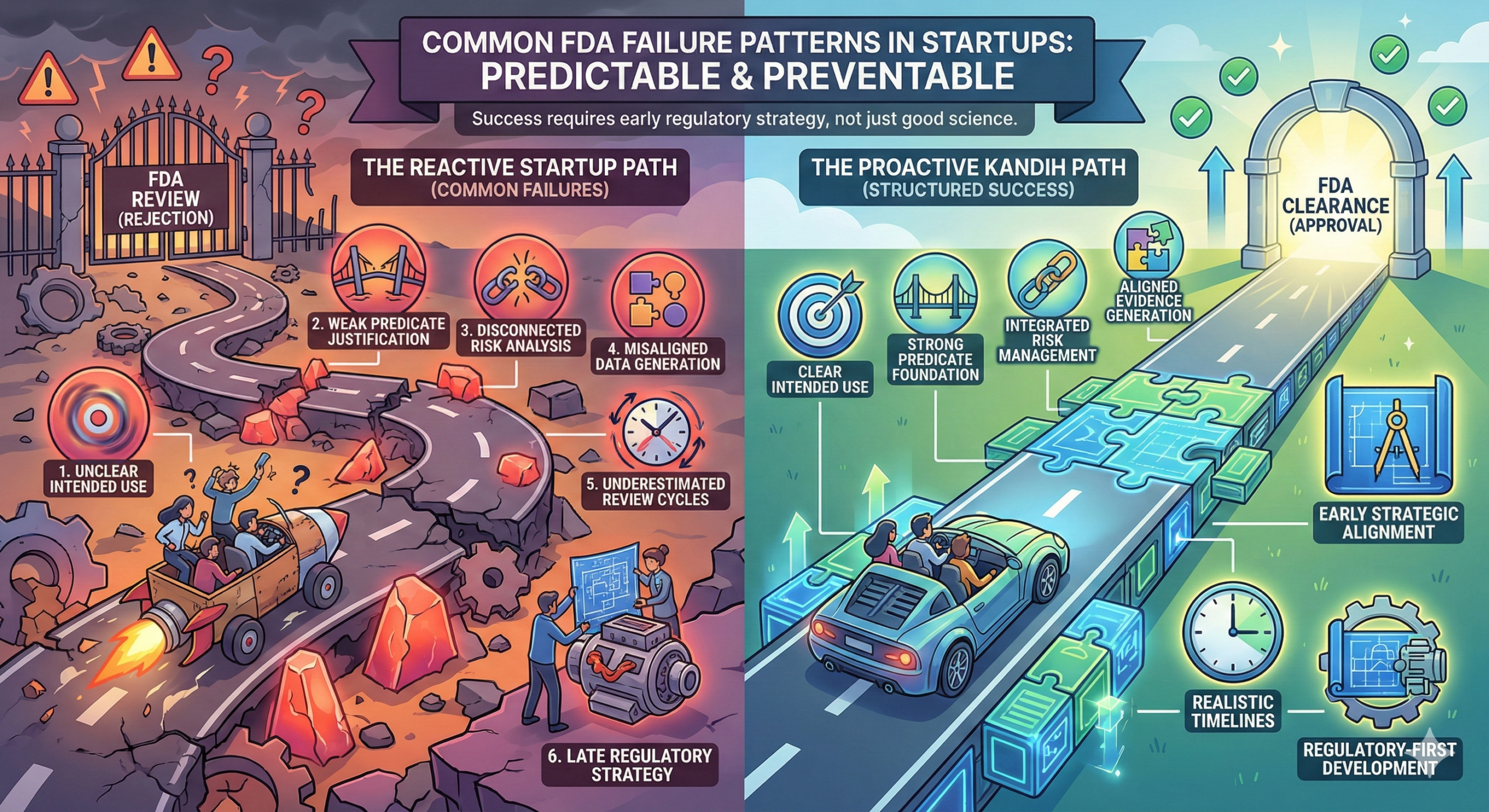
Why Medical Devices Fail FDA Review

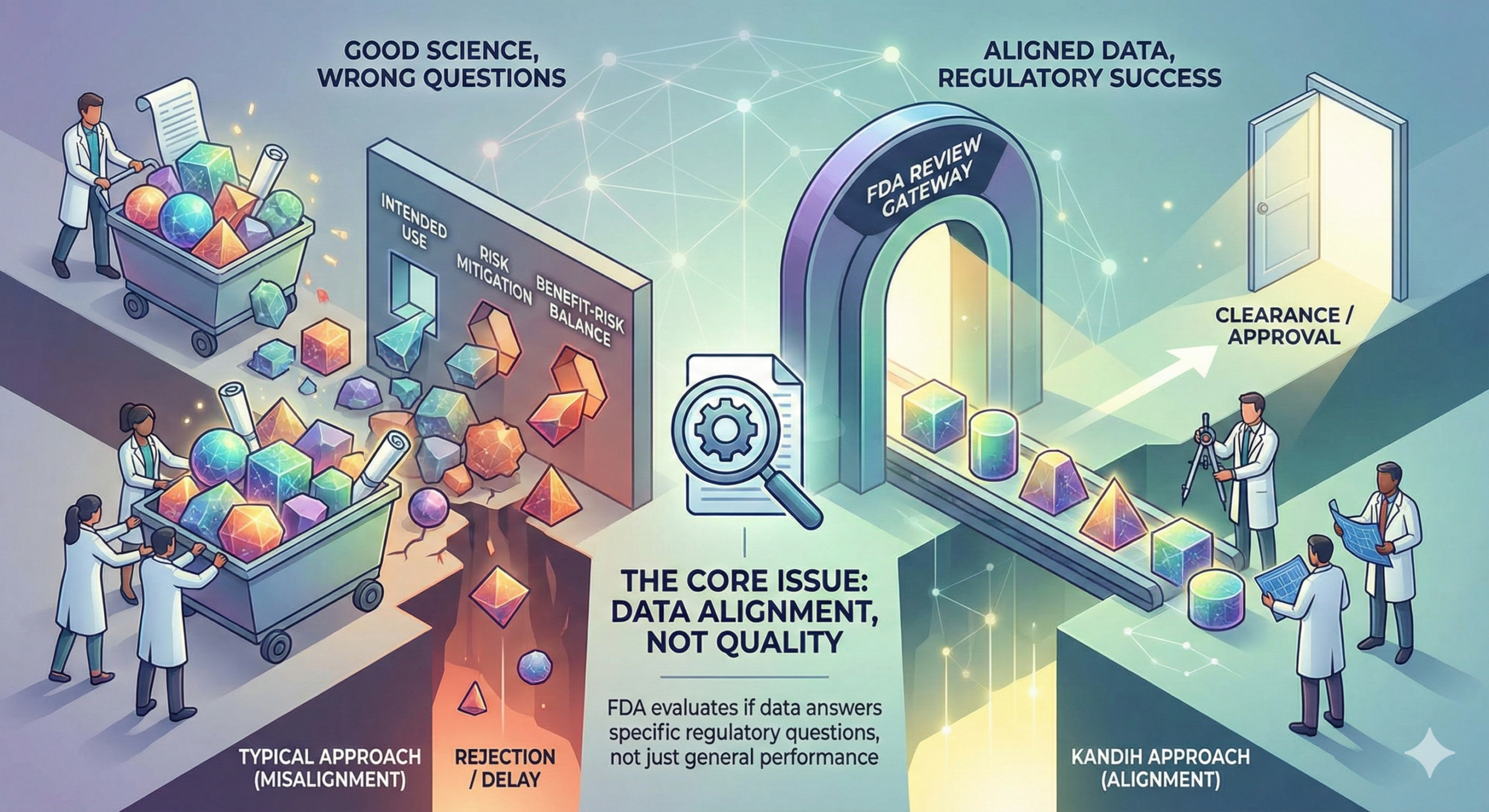
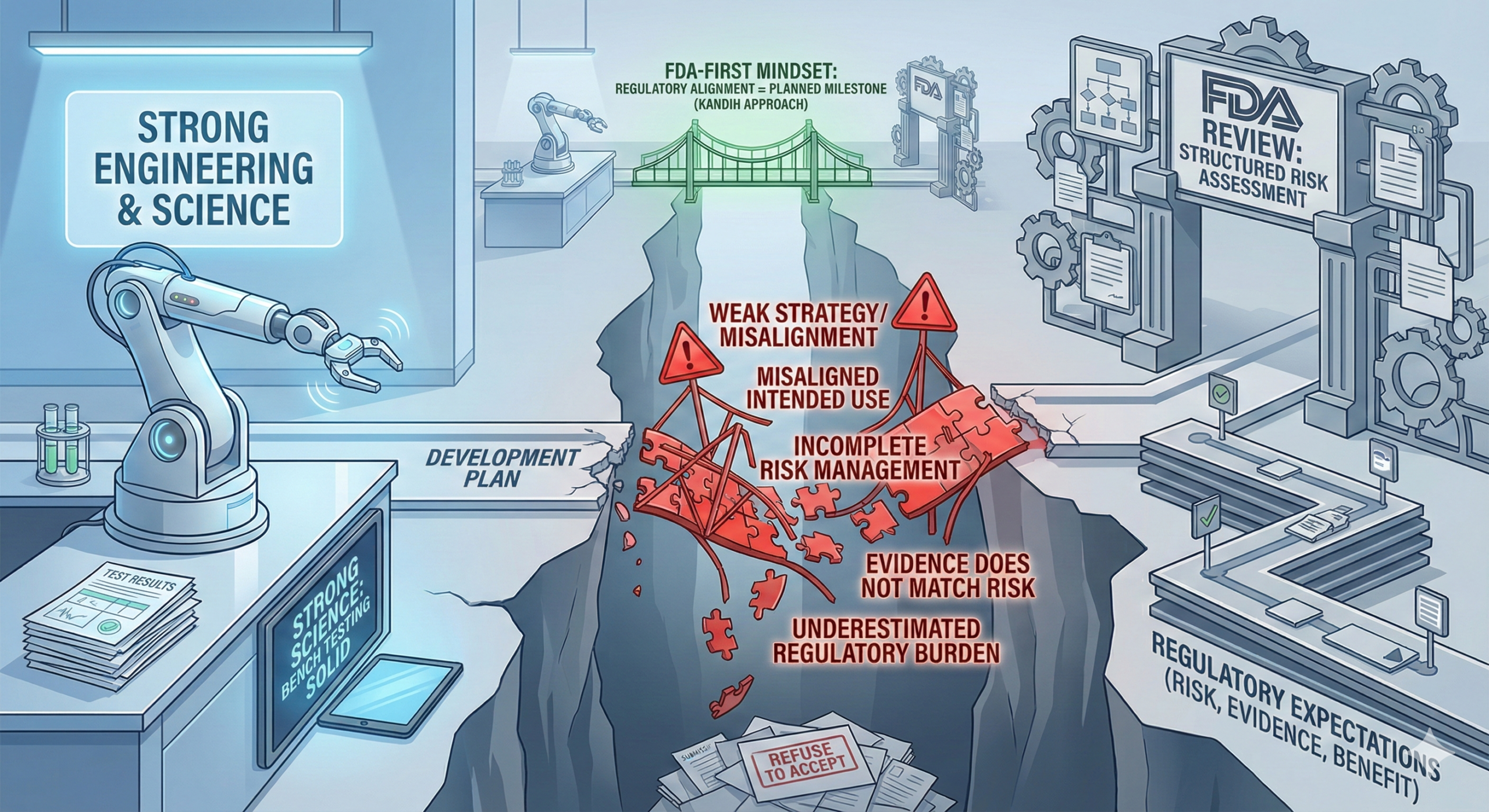
Direct answer: most medical devices do not fail FDA review because the science is weak. They fail because the strategy was weak.

In many cases, the engineering works. The bench testing looks solid. The prototype performs as expected.

But the submission fails because the development plan was not aligned with how the U.S. Food and Drug Administration evaluates risk, evidence, and benefit

How Investors Interpret Pathway Assumptions

Short answer: investors do not just look at your FDA pathway. They look at how realistic your pathway assumptions are. If your regulatory strategy sounds optimistic, your valuation will be discounted. In medical device investing, the chosen pathway—510(k), De Novo, or PMA—is more than a regulatory decision. It is a signal of timeline stability, capital […]

💬

Chat with us