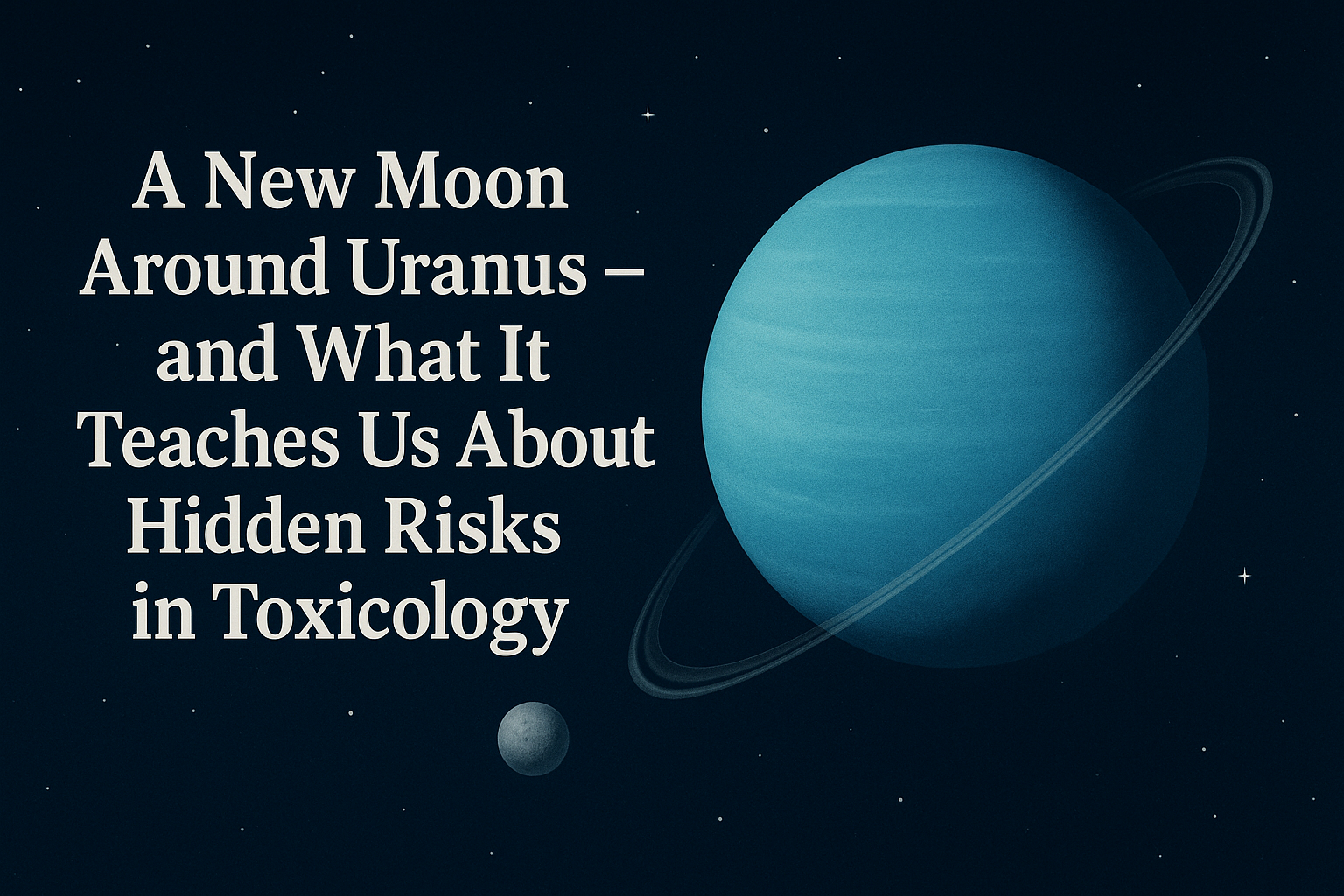
Astronomers just announced the discovery of a brand-new moon orbiting Uranus. That’s right—40 years after Voyager 2 passed by, we’re still finding satellites hiding in plain sight. The discovery reminds us of something every toxicologist knows well: sometimes the most important influences on a system are the ones you can’t see—until you look closer.
For product developers, healthcare leaders, and innovators working on drugs, biologics, devices, or even supplements, this is more than a cosmic headline. It’s a tactical reminder that in toxicology, the “unseen moons” in your data—the subtle off-target effects, low-dose signals, or overlooked metabolites—can orbit quietly until they suddenly disrupt your program.
Here’s the one clear idea: Don’t wait for a crisis to look for your hidden moons. Build early toxicology scans into your development plan.
What This Means in Practice
For drug developers: A new metabolite that appears late in IND-enabling studies can delay your clinical trial. Early mechanism-based toxicology can surface that “moon” before it derails your timeline.
For device innovators: Additives, coatings, or leachables may behave quietly until accelerated aging or unusual conditions make them visible. Early extraction and toxicology risk assessment is your telescope.
For supplement creators: That “natural” compound may orbit with an unseen partner—a contaminant, heavy metal, or interaction—that only shows up if you test beyond the basics.
My Experience
I’ve seen projects blindsided by toxicology “moons” that weren’t accounted for early. One company lost 18 months chasing down an unexpected metabolite that showed up only after they were already in Phase I. Another nearly missed a leachable that would have made their device unsafe. Both could have been avoided with systematic early toxicology review—just like astronomers using better telescopes.
Why This Matters for You
If you’re building something regulated, your unseen moons will find you eventually—either in FDA review, clinical data, or worse, in patients. The smartest teams use toxicology not as a box-checking exercise, but as an early detection system.
Just like Uranus’ new moon, the risks are out there. The question is: will you discover them on your terms, or will they surprise you at the worst possible time?
Takeaway: Don’t wait for surprise moons. Use toxicology early to scan for hidden risks, so your innovation can orbit smoothly into market.