
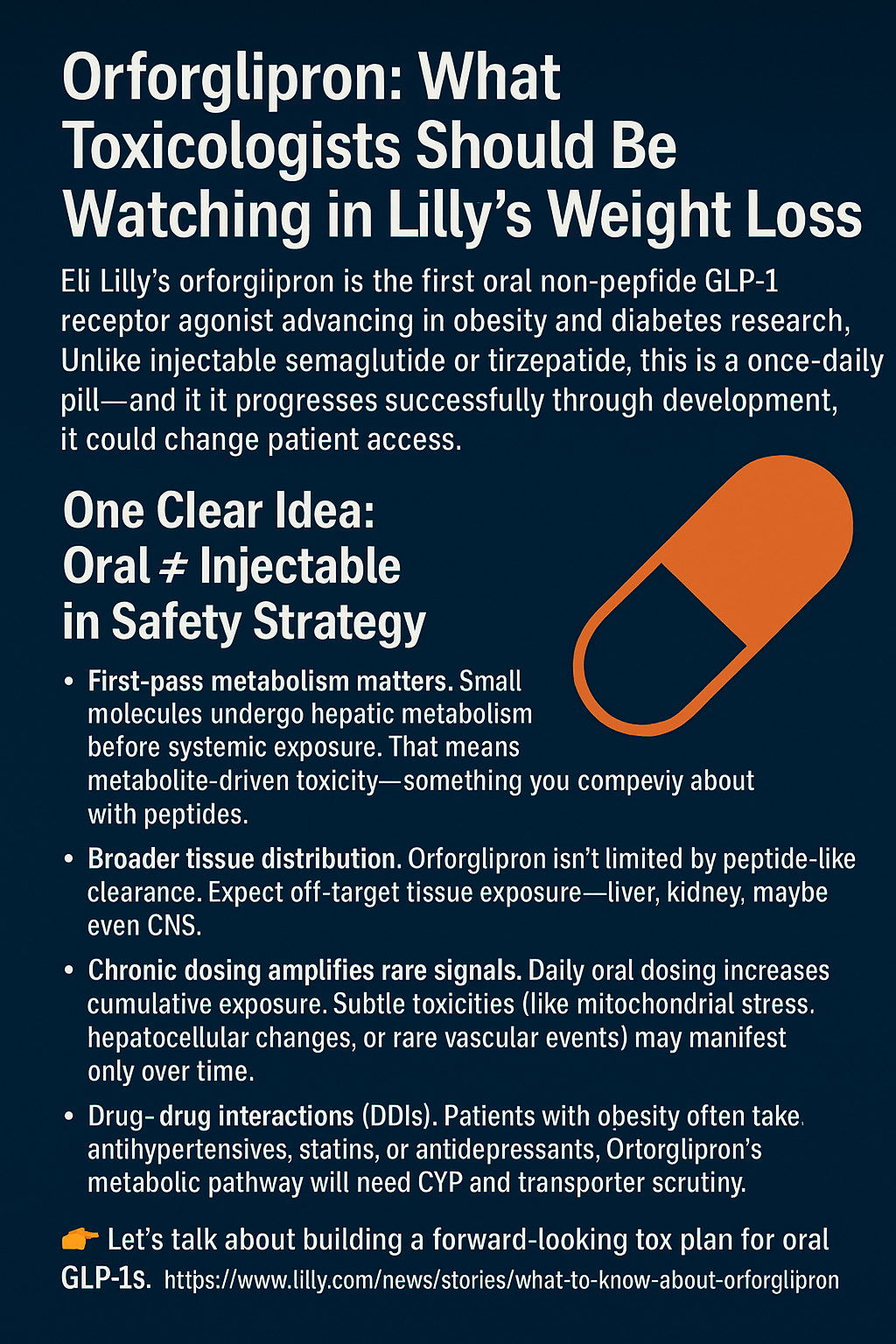
Eli Lilly’s orforglipron is the first oral non-peptide GLP-1 receptor agonist advancing in obesity and diabetes research. Unlike injectable semaglutide or tirzepatide, this is a once-daily pill—and if it progresses successfully through development, it could change patient access.
But here’s the toxicology blind spot: oral small-molecule GLP-1 drugs create a very different safety landscape than injectable peptides. Unless developers adjust how they think about risk, subtle but serious issues may slip past traditional GLP safety playbooks.
One Clear Idea: Oral ≠ Injectable in Safety Strategy
Here’s why you can’t assume the tox profile of orforglipron will mirror semaglutide or tirzepatide:
First-pass metabolism matters. Small molecules undergo hepatic metabolism before systemic exposure. That means metabolite-driven toxicity—something you don’t worry about with peptides.
Broader tissue distribution. Orforglipron isn’t limited by peptide-like clearance. Expect off-target tissue exposure—liver, kidney, maybe even CNS.
Chronic dosing amplifies rare signals. Daily oral dosing increases cumulative exposure. Subtle toxicities (like mitochondrial stress, hepatocellular changes, or rare vascular events) may manifest only over time.
Drug–drug interactions (DDIs). Patients with obesity often take antihypertensives, statins, or antidepressants. Orforglipron’s metabolic pathway will need CYP and transporter scrutiny.
Bottom line: toxicologists can’t recycle the GLP-1 injectable template. Oral delivery changes the risk map.
Practical, Tactical Watchpoints
If you’re developing—or competing with—oral GLP-1 agonists, here’s where to focus:
Metabolite characterization early. Don’t wait for Phase I. If a reactive metabolite surfaces late, regulators will stall you.
Mitochondrial stress assays. Weight-loss drugs have a history of tripping into mitochondrial liabilities (e.g., troglitazone). Screening early protects your runway.
Nonclinical cardiovascular monitoring. GLP-1s affect vascular tone and perfusion. In an oral small molecule, rare ischemic events (like optic neuropathies) could be amplified.
Long-term carcinogenicity risk. Orforglipron is a chronic-use drug in a broad population. Carcinogenicity studies are essential—begin building weight of evidence now.
Postmarketing pharmacovigilance planning. If approved, widespread use will rapidly surface real-world safety signals. Be prepared to monitor and respond.
Why This Matters
Obesity therapies are a rapidly expanding field. But recent experience with GLP-1 injectables shows that success brings scrutiny, and scrutiny exposes safety blind spots.
For toxicologists and developers, the message is simple:
Oral GLP-1 drugs aren’t just injectable GLP-1s in a different package. They demand a different toxicology lens.
If your program is in the obesity or metabolic disease space, now is the time to sharpen your safety strategy. Don’t let metabolite risks, mitochondrial signals, or subtle vascular events catch you flat-footed.
References
Wilding JPH, Frias JP, Zhang J, et al. Orforglipron, an Oral Nonpeptide GLP-1 Receptor Agonist for Adults with Type 2 Diabetes: A Phase 2 Randomized Trial. New England Journal of Medicine. 2023;389(6):492–504. https://pubmed.ncbi.nlm.nih.gov/37351564/
Eli Lilly and Company. Clinical development update on orforglipron (GLP-1 receptor agonist). Company pipeline disclosure, 2023. https://www.lilly.com/news/stories/what-to-know-about-orforglipron