
admin
August 20, 2025
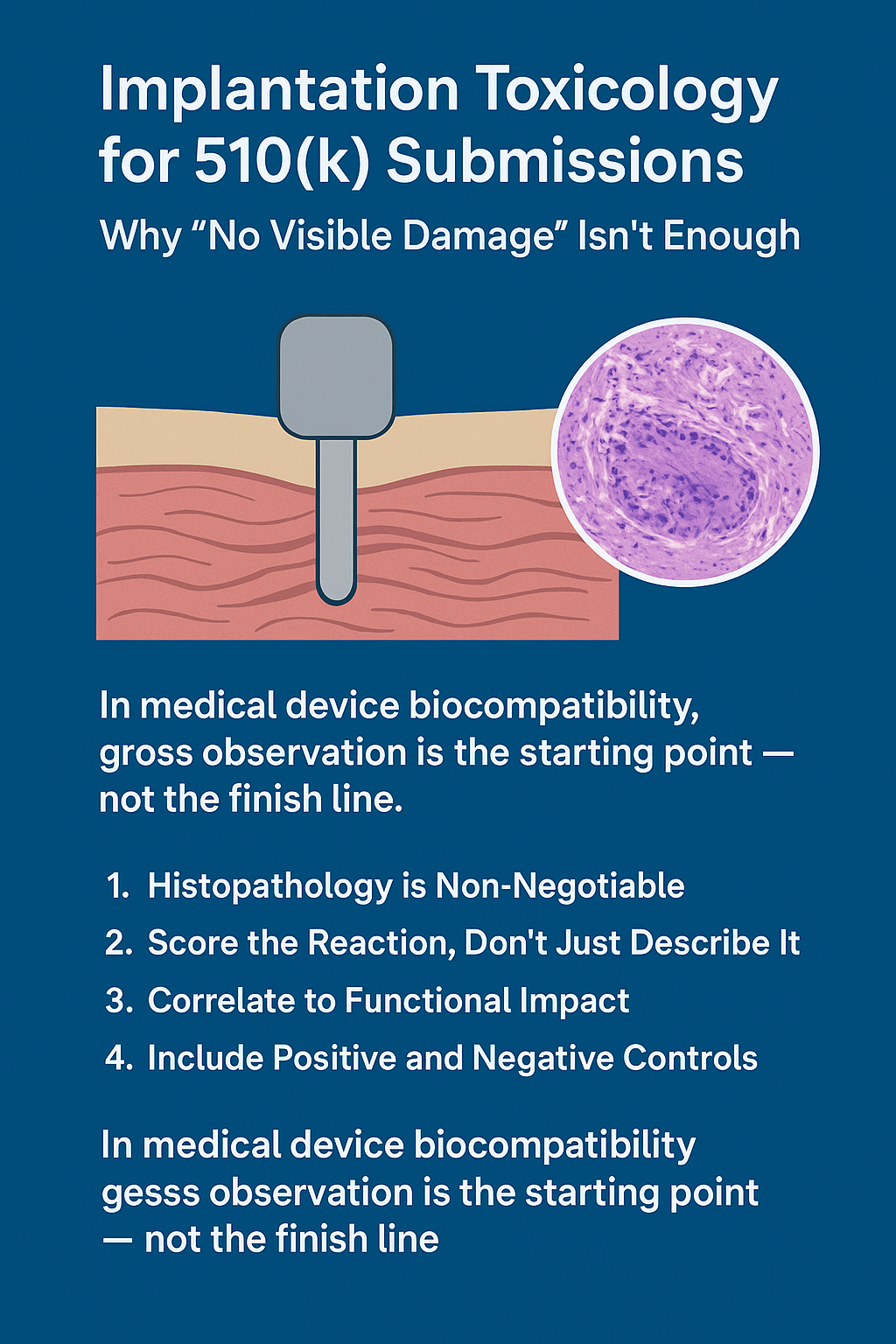
In medical device biocompatibility, gross observation is the starting point — not the finish line.
If your implantation study report for a 510(k) simply says “no visible tissue reaction”, you’re setting yourself up for FDA pushback. Why? Because regulators know what seasoned toxicologists know: devices can cause microscopic and functional changes long before they cause visible tissue damage.
August 13, 2025

Choosing the wrong tissue site in an implantation study is one of the fastest ways to derail your 510(k) submission.
We’ve seen FDA request repeat testing—adding months and tens of thousands of dollars—simply because the chosen implantation site didn’t match the device’s intended clinical use.
August 11, 2025

Many medical device developers pass cytotoxicity, irritation, and sensitization testing—only to hit a wall at the implantation stage.
In fact, one of the most common reasons 510(k) submissions face delays is a poorly designed ISO 10993-6 implantation study.
August 4, 2025

Most workplace biosafety programs fail for the same 3 reasons— and each one can expose your organization to unnecessary risk.