
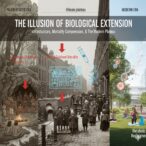
We often hear that modern science has “doubled” the human lifespan. We look at the statistics from 1840—where life expectancy was a mere 40 years—and compare them to our 80-year average today, assuming we’ve fundamentally reengineered human biology.
But the data tells a different, more sobering story.
The truth is that human lifespan potential has remained remarkably stable for thousands of years. We haven’t actually stretched the limits of how long a human can live; we’ve simply stopped dying young. If you’re waiting for a “magic pill” to push us toward a 150-year life, you might be looking at the wrong map.
The “Death Cliff” and the 1840 Myth
The popular conception that people in the 19th century “died of old age” at 35 is a demographic misunderstanding. The low average was driven by a catastrophic death cliff between the ages of 0 and 5.
In the Paleolithic era, the annual risk of death for a child was roughly 8%. By 1840, that had dropped to 5%, but it was still severe. However, if a person in 1840 survived to age 15, they commonly lived into their 60s or 70s.
The “miracle” of the last 150 years wasn’t a biological upgrade—it was an infrastructure triumph.
• Clean water and sewerage (responsible for nearly half of the gains).
• Vaccinations and antibiotics.
• Safer childbirth.
We solved the “plumbing” of public health, which saved the children and moved our average life expectancy up. But the biological ceiling? It barely budged.
The “Age 5+” Reality Check
The “punchline” of human history is revealed when you remove early childhood mortality from the equation. When we look only at the annual decline for those who made it past age 5, the “massive” historical differences vanish:
Era Annual Mortality Decline (Age 5+)
Paleolithic −0.77%
1840 Industrial −0.89%
Modern Day −0.47%
Wait—1840 was worse than the Stone Age? Yes. Urban crowding and poor industrial sanitation actually made adult survival slightly more difficult than it was for our hunter-gatherer ancestors.
The modern era has improved the slope, but not by a “doubling” factor. In every era—whether you were dodging sabertooth tigers or scrolling on a smartphone—the biological “aging slope” accelerates sharply after age 50. This is an invariant feature of the human condition.
The Modern Plateau: We’ve Run Out of “Plumbing”
We are currently witnessing a plateau in life expectancy gains. Why? Because the “low-hanging fruit” of infrastructure (vaccines and sewers) has already been harvested.
Today’s killers are different. They are endogenous—they come from within. We are facing a Metabolic Mismatch: a 200,000-year-old genome living in a world of ultra-processed food, sedentary lifestyles, and chronic light pollution.
• Cardiometabolic disease
• Neurodegeneration (Alzheimer’s/Parkinson’s)
• Cancer
These aren’t “germs” we can filter out of the water. They are systems-level failures.
The Next Frontier: From Engineering to Realignment
If the first leap in longevity was about saving the young, the second leap must be about decelerating the slope of adult decline.
This requires a pivot from infrastructure to biological realignment. We don’t need better pipes; we need to address how our environment interacts with our cells. This means shifting our focus:
1. From Infrastructure to Environment: Designing our world to encourage movement and metabolic flexibility.
2. From Exogenous to Endogenous: Shifting focus from “external germs” to internal cellular health (like autophagy and insulin sensitivity).
3. From Treatment to Alignment: Reintroducing evolutionary stressors—like thermal stress (heat/cold) and nutritional intermittency (fasting)—that our biology actually requires to function.
Final Thought
The 1840 breakthrough was a triumph of engineering. The next breakthrough must be a triumph of biology. We have “rectangularized” the survival curve, compressing death into a small window at the end of life. But to truly expand the horizon of human potential, we must stop trying to fix the plumbing and start addressing the mismatch in our wiring.
References
• Cutler & Miller (2005). The Role of Public Health Improvements:
https://pubmed.ncbi.nlm.nih.gov/15782893
• Fries (1980). Aging, Natural Death, and the Compression of Morbidity:
https://pmc.ncbi.nlm.nih.gov/articles/instance/2567746/pdf/11984612.pdf
• Gurven & Kaplan (2007). Longevity Among Hunter-Gatherers:
https://ideas.repec.org/a/bla/popdev/v33y2007i2p321-365.html
Disclaimer: This entry is for informational and educational purposes only and does not constitute medical advice. The theories presented are based on historical demographic data and evolutionary biology. Consult with a healthcare professional before making significant lifestyle changes. Views are the author’s own and do not necessarily reflect Kandih BioScience.