August 24–25, 2025 brought a rare celestial event: a Black Moon—our second new moon in one month, the first in 33 months. Most people didn’t even notice. There was no bright glow, no dramatic eclipse, just darkness. Yet, astronomers know it matters. And that’s the perfect reminder for toxicologists and health professionals: the most important risks are often the ones we can’t see.
Blog
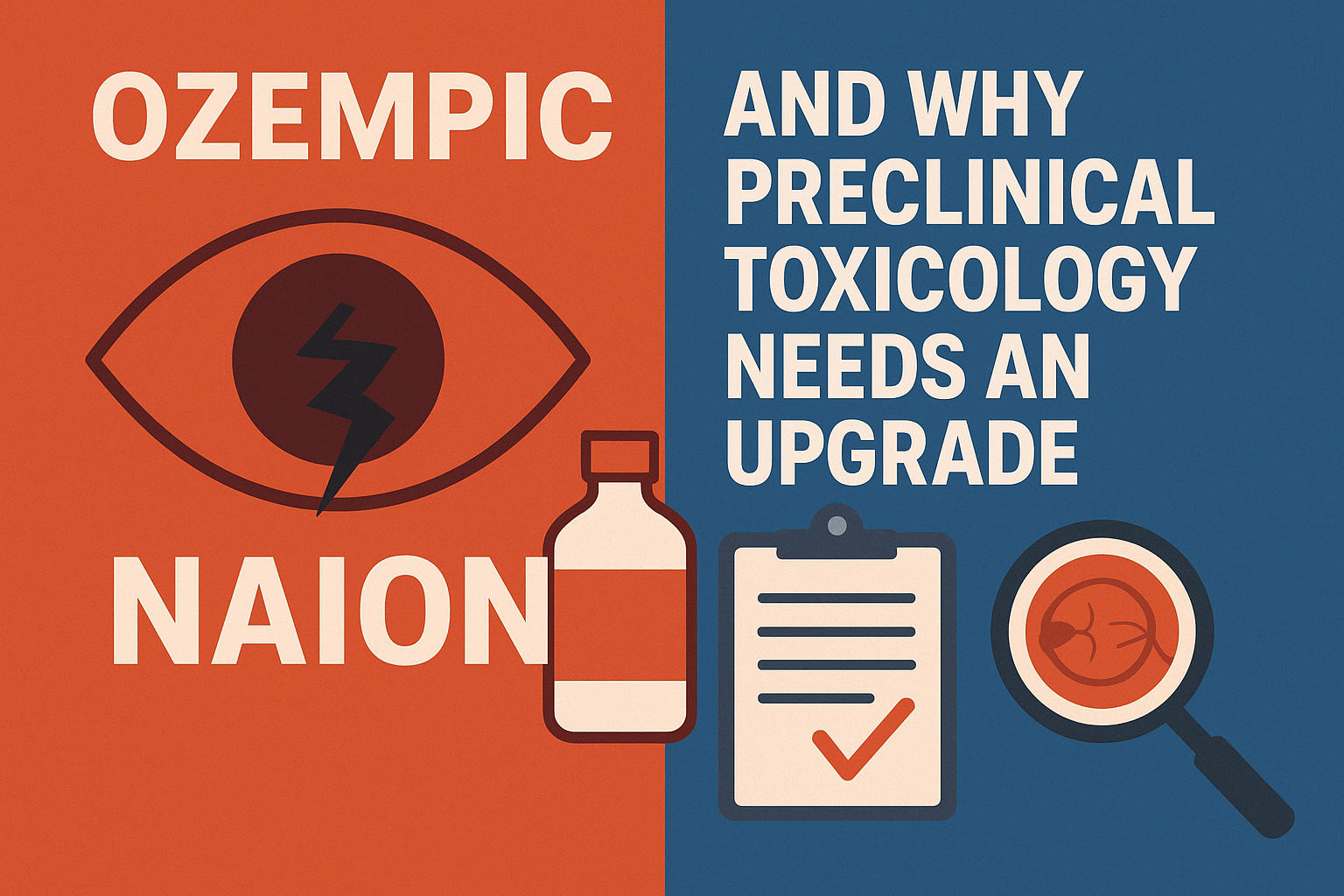
Ozempic, NAION, and Why Preclinical Toxicology Needs an Upgrade
In June 2025, the European Medicines Agency (EMA) confirmed what many clinicians suspected: non-arteritic anterior ischemic optic neuropathy (NAION) is now recognized as a very rare but real side effect of semaglutide (Ozempic).
For patients, this means sudden, irreversible vision loss.
For drug developers, it’s a wake-up call: standard GLP toxicology will almost never catch NAION.
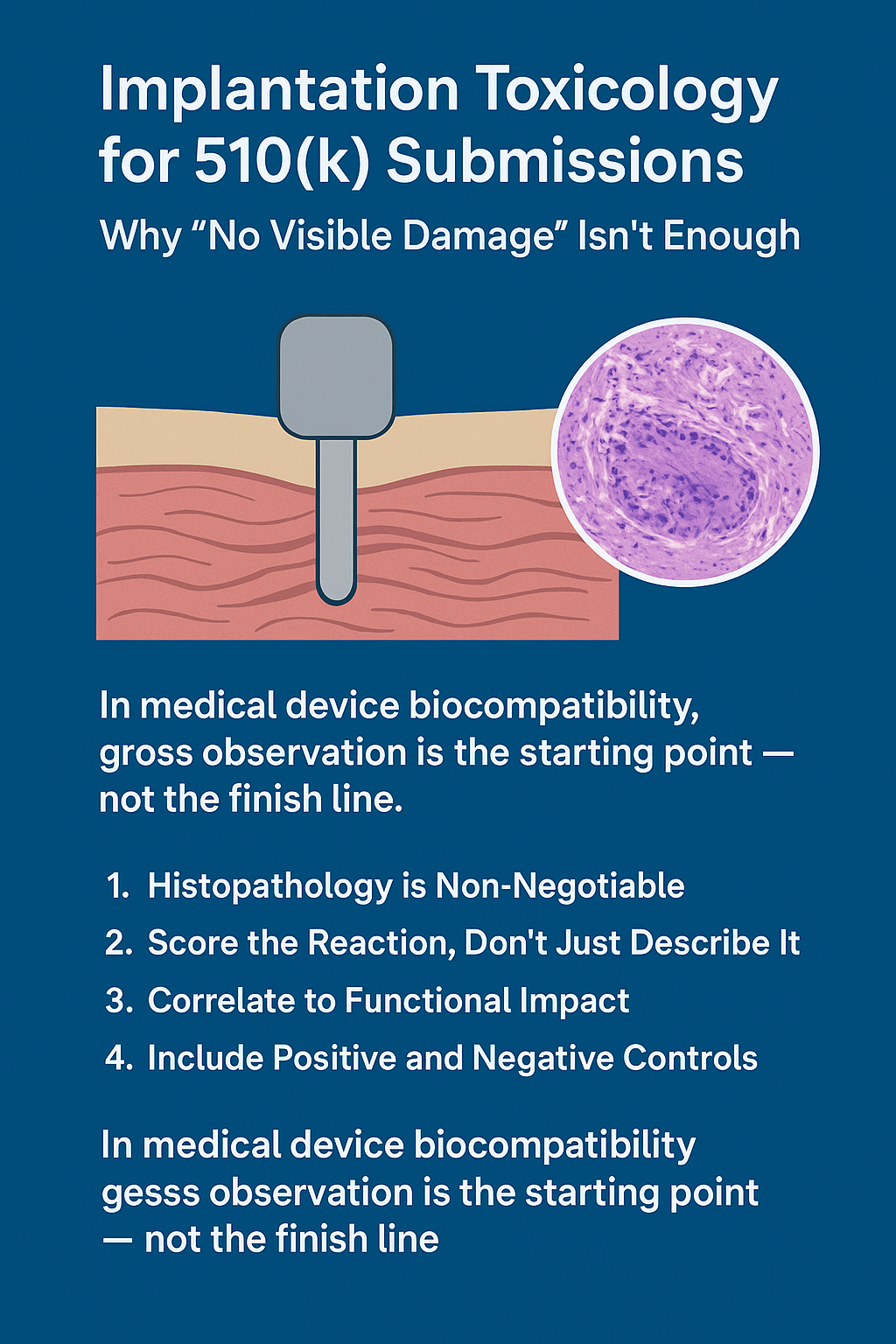
Implantation Toxicology for 510(k) Submissions: Why “No Visible Damage” Isn’t Enough
In medical device biocompatibility, gross observation is the starting point — not the finish line.
If your implantation study report for a 510(k) simply says “no visible tissue reaction”, you’re setting yourself up for FDA pushback.
Why? Because regulators know what seasoned toxicologists know: devices can cause microscopic and functional changes long before they cause visible tissue damage.
Implantation Study Success Starts with the Right Tissue Site(A Toxicologist’s Guide for 510(k) Submissions)
Choosing the wrong tissue site in an implantation study is one of the fastest ways to derail your 510(k) submission.
We’ve seen FDA request repeat testing—adding months and tens of thousands of dollars—simply because the chosen implantation site didn’t match the device’s intended clinical use.

Implantation Study Design for 510(k) Success: A Toxicologist’s Guide
Many medical device developers pass cytotoxicity, irritation, and sensitization testing—only to hit a wall at the implantation stage.
In fact, one of the most common reasons 510(k) submissions face delays is a poorly designed ISO 10993-6 implantation study.
3 Critical Mistakes EHS Professionals Make in Biological Risk Assessment (and How to Fix Them)
Most workplace biosafety programs fail for the same 3 reasons— and each one can expose your organization to unnecessary risk.

Why Your Irritation Study Got Rejected (and How to Fix It)
The #1 reason irritation testing gets rejected? You’re using the wrong exposure route. We’ve reviewed dozens of irritation studies that looked solid—until they reached regulators. The science was technically sound, but the contact model didn’t match the real-world use of the device. That mismatch? It’s an automatic red flag for the FDA and EU reviewers. […]

Stop Over-Testing Your Device: How Smarter Test Planning Saves Time, Samples, and $50K+
When it comes to medical device testing, more isn’t always better. One of the biggest mistakes we see? Teams defaulting to comprehensive test panels — even when the risk doesn’t call for it. I recently helped a client avoid six months of rework after the FDA flagged several redundant biocompatibility tests. Why? Their Biological Evaluation […]
About the Therapeutics for Rare and Neglected Diseases Program
The National Institutes of Health (NIH) Therapeutics for Rare and Neglected Diseases (TRND) program is part of a congressionally funded effort to encourage and speed the development of new drugs for rare and neglected diseases. The federal budget for fiscal 2009 dedicated $24 million to establish this initiative.
TRND will bridge the wide gap in time and resources that often exists between basic research and human testing of new drugs. The effort is grounded in, but aims to improve upon, existing processes for drug development in the pharmaceutical industry.