Blog

Blood Pressure Medication Recalled Over Carcinogen Levels: What This Means for Toxicology and Product Developers

The Recall That Shouldn’t Surprise Us Anymore

When the FDA recalled certain batches of prazosin hydrochloride—a medication widely used for high blood pressure and PTSD—because of carcinogenic impurities, patients were understandably alarmed.

But for toxicologists and product developers, this isn’t shocking.
New Coronavirus Found in Brazilian Bats: What Toxicology and Product Development Must Learn Now

When Discovery Meets Responsibility

Scientists in Brazil have discovered a previously unknown coronavirus in bats — one that carries genetic similarities to MERS-CoV, the virus responsible for deadly outbreaks in the Middle East.
(University of Nebraska Medical Center, 2025
)

For professionals in biotech, toxicology, and product development, the message is urgent and clear:

Lynkuet (Elinzanetant): What Toxicology and Product Development Teach Us About Safe Innovation

Mechanism Meets Safety

Lynkuet (elinzanetant) is one of the first non-hormonal medicines approved to treat moderate to severe hot flashes and night sweats caused by menopause (EMA, 2025).
It’s a major step forward — and a powerful reminder for developers of one core truth:

Can LED Light Really Kill Cancer? What Toxicology Teaches Us About Safety, Innovation, and Smart Design

Light as Medicine — and a Safety Challenge

You may have seen the headline:

 “LED light can kill cancer cells.”

It sounds futuristic — shining light on a tumor instead of blasting it with radiation or flooding it with chemotherapy. But this idea isn’t fantasy. It’s called photodynamic therapy (PDT) — and it’s a real area of cancer research that’s gaining traction

FDA Recalls Cholesterol Medication — What Toxicology Can Teach Developers About Hidden Risks

When “Safe” Products Become a Safety Lesson

The U.S. Food and Drug Administration (FDA) recently announced a recall of several cholesterol-lowering medications after routine testing detected nitrosamine impurities — chemicals that can increase cancer risk following long-term exposure.

For patients, the immediate health risk is low.
For scientists, regulators, and developers, however, this is a powerful reminder:

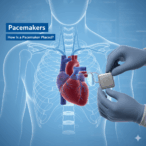
Pacemakers – How Is a Pacemaker Placed?

The procedure may be planned ahead of time, or it may be done during an emergency (temporary pacemaker). You will be given medicine to make parts of your body numb or make you sleep during the procedure.

You may receive antibiotics to prevent infection and blood thinning medicine to prevent blood clots during the procedure. Different types of pacemakers require different procedures to place them.

NASA Confirms Earth Now Has Two Moons — And What That Teaches Us About Toxicology and Product Design

A Second Moon and a Second Look at Science

NASA recently confirmed that Earth has a temporary second moon — a quasi-satellite that will orbit alongside us until 2083. This cosmic hitchhiker, roughly the size of a car, doesn’t replace our familiar Moon — but it does remind us of something profound about science:

The systems we think we understand can always surprise us.

Tislelizumab Plus Chemotherapy: What Toxicology Teaches Us About Smarter Cancer Therapy Design

The New Frontier in Cancer Therapy Cancer therapy is evolving — again.Recent clinical data show that Tislelizumab, a humanized anti–PD-1 monoclonal antibody, combined with chemotherapy, extends survival in lung, liver, and esophageal cancers. This represents the next generation of precision oncology — merging immune modulation with cytotoxic precision. But every developer and researcher knows one […]

💬

Chat with us