

Let’s say the quiet part out loud. Most product problems don’t fail inspections because no one cared.They fail because everyone thought the problem was already handled. The investigation was done.The corrective action was documented.People were retrained.The CAPA was closed. On paper, it looks responsible. Then FDA walks in…And the same issue shows up again. That’s […]
Author: admin

CAPA – Design – Risk Management
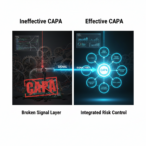
CAPA Survival Playbooks — Kandih Bioscience FDA expects CAPA, design controls, and risk management to operate as one integrated risk-control system.If CAPA closes without updating design assumptions or risk management files, FDA interprets this as stalled learning and weak management control—regardless of how complete the documentation appears. When CAPA, Design, and Risk Stop Talking, FDA […]

Why CAPA Without DHF Updates Fails
CAPA Survival Playbooks — Kandih Bioscience A CAPA that does not result in a Design History File (DHF) update is not effective in FDA’s eyes.From an inspection perspective, CAPA is expected to feed design controls. If real-world failures do not change design inputs, risk analyses, or verification strategies documented in the DHF, FDA assumes the […]

FDA Expects CAPAs to Feed Design Controls
CAPA Survival Playbooks — Kandih Bioscience From an inspection perspective, a CAPA that stops in QA without informing design inputs, risk management, or validation is incomplete. Administrative closure does not demonstrate learning or restored control; only changes to design and risk assumptions do. When CAPAs Stop at QA, Inspections Don’tOne of the most reliable predictors […]
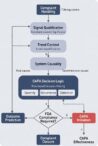
The Complaint-to-CAPA Mapping Checklist
CAPA Survival Playbooks — Kandih Bioscience Complaint-to-CAPA mapping is a risk-interpretation system, not an administrative checklist.FDA evaluates whether complaint signals are consistently interpreted, escalated, or deferred based on documented risk logic. If the linkage between complaint and CAPA cannot be explained deterministically, FDA treats it as loss of governance—regardless of documentation completeness. Why “End-of-Process” Checklists […]
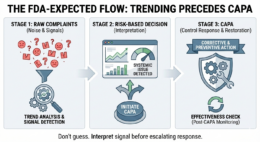
Do You Trend Complaints Before CAPA?
Yes—FDA expects complaint trending before CAPA initiation.From an inspection perspective, complaint trending is a diagnostic function, not an effectiveness check. If trending only occurs after CAPA opens, FDA assumes the escalation decision was not risk-informed and that the system reacted without understanding the signal. Why This Question Matters More Than Most Teams Realize If CAPA […]
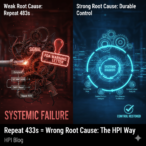
Complaint → Weak Root Cause → Repeat 483
CAPA Survival Playbooks — Kandih Bioscience Repeat FDA 483 observations almost always mean the original root cause was wrong.From an FDA enforcement perspective, recurrence equals misdiagnosis. If the root cause did not explain how the system failed—or why it could fail again—CAPA did not restore control, regardless of how clean the documentation looked. Why “Tidy” […]
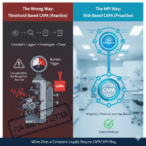
When Does a Complaint Legally Require CAPA?
A complaint legally requires CAPA when it signals loss of control in the quality system—not when it hits a numeric or procedural threshold.From an FDA enforcement perspective, CAPA is mandatory once complaint data indicates systemic risk, degraded control, or credible recurrence. Waiting for a regulation or SOP trigger means the system recognized risk too late. […]
5 Complaint Handling Errors That Kill CAPAs
CAPA Survival Playbooks — Kandih Bioscience If your CAPA depends on complaints—but your complaint handling system is weak—your CAPA is already dead.From an FDA inspection perspective, complaints are not paperwork to close. They are early-warning signals that feed the CAPA risk-control loop. When complaint signals are distorted, minimized, or inconsistently escalated, CAPA operates on corrupted […]