
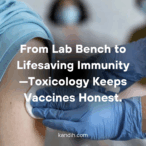
Typhoid fever isn’t a relic of the past—it remains a global health threat, particularly in regions with limited access to clean water and sanitation. For travelers, clinicians, and global health professionals, vaccination remains the cornerstone of prevention.
But here’s the overlooked truth: every safe vaccine dose exists because of toxicology.
Behind each injection lies a meticulous safety science that ensures every component—whether live, inactivated, or conjugated—protects without causing harm.
If you work in public health, global travel medicine, or vaccine development, here’s your one clear idea:
Toxicology isn’t just about poisons—it’s about precision safety in prevention.
Why Toxicology Belongs in the Typhoid Vaccine Conversation
Two vaccines dominate typhoid prevention:
Injectable Vi polysaccharide vaccine (Typhim Vi®️) — contains a purified Vi capsular polysaccharide from Salmonella Typhi.
Oral live-attenuated vaccine (Vivotif®️) — uses a weakened S. Typhi strain to stimulate immunity.
Both rely on toxicology to define safe exposure, dose thresholds, and long-term tolerability.
1. Toxicology Ensures Ingredient Safety
Each component—antigen, stabilizer, preservative, adjuvant—is rigorously evaluated under Good Laboratory Practice (GLP).
Toxicologists assess acute, sub-chronic, and chronic toxicity in preclinical studies to ensure no systemic or organ-specific harm.
2. Dose Defines the Difference
The golden rule in toxicology applies here: the dose makes the poison.
Safety studies determine the smallest antigen quantity that elicits strong immunity without triggering excessive inflammation or hypersensitivity.
3. Systemic Safety Monitoring
Before licensure, vaccines undergo preclinical toxicology testing in animal models to ensure they do not impair reproductive, hepatic, or neurological function.
Neurotoxicity screening—critical in live-attenuated vaccine evaluation—helps ensure that the weakened strain cannot revert to virulence or cross the blood-brain barrier.
4. Adverse Event Evaluation (Toxicovigilance)
After approval, post-market toxicovigilance continues through systems like VAERS and MedDRA, identifying rare or delayed side effects and guiding updates to labeling and clinical guidance.
Practical, Tactical Steps for Health Professionals
Screen Before Vaccination
Avoid the live oral vaccine (Vivotif®️) in immunocompromised or pregnant patients.
Review co-medications such as antibiotics or antimalarials that may interfere with the live vaccine’s effectiveness.
Educate on Timing and Dosing
Toxicology data support interval dosing: every 2 years for oral and every 2 years for injectable formulations for sustained protection.
Reinforce adherence to the full series to maintain immune coverage.
Promote Safe Storage and Handling
Maintain cold-chain integrity (2–8°C).
Temperature excursions can alter antigen structure or preservative stability, increasing reactogenicity and decreasing potency.
Monitor and Report Reactions
Encourage reporting of adverse effects (fever, rash, injection-site pain) to VAERS
.
These data feed directly into ongoing toxicovigilance—ensuring emerging risks are detected early.
Rooted in Experience
During a safety review for a large-scale vaccine campaign, one batch of oral typhoid vaccines showed reduced potency due to temperature instability during transport.
Toxicologists evaluated degradation byproducts and identified potential endotoxin risks, prompting an immediate recall before administration.
That intervention prevented thousands from receiving substandard or potentially harmful doses—a clear demonstration of toxicology’s real-world role in public health protection.
The Bottom Line
The typhoid vaccine stands as one of modern medicine’s quiet triumphs, but its safety story is powered by toxicology.
The clear idea:
Every vaccine, from lab bench to syringe, is guided by one principle—protect without harm.
Understanding toxicology’s role doesn’t just build safer vaccines—it builds public trust in the science that saves lives.
References
1. Centers for Disease Control and Prevention (CDC). Typhoid Vaccination: What You Need to Know: https://www.cdc.gov/vaccines/hcp/current-vis/typhoid.html
2. U.S. Food and Drug Administration (FDA). Vaccine Product Approval and Safety Standards: https://pmc.ncbi.nlm.nih.gov/articles/PMC7152379
3. World Health Organization (WHO). Typhoid Vaccines: WHO Position Paper. Wkly Epidemiol Rec. 2018;93(13):153–172: https://www.sciencedirect.com/science/article/abs/pii/S0264410X18304912
4. CDC/FDA. Vaccine Adverse Event Reporting System (VAERS) and MedDRA Safety Data Summaries: https://pmc.ncbi.nlm.nih.gov/articles/PMC4632204
5. Toxicology Testing and Evaluation. Toxicology and Immunotoxicity Assessment. 2014: https://www.sciencedirect.com/topics/pharmacology-toxicology-and-pharmaceutical-science/immunotoxicology