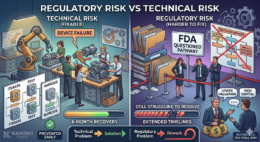
Two startups hit major problems at the same time.
One had a technical failure—the device didn’t perform as expected.
The other had a regulatory issue—the FDA questioned their pathway and evidence.
Two startups hit major problems at the same time.
One had a technical failure—the device didn’t perform as expected.
The other had a regulatory issue—the FDA questioned their pathway and evidence.
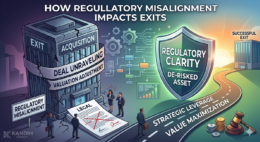
The acquisition was almost done.
Term sheet agreed.
Due diligence complete.
Press release draft ready.
Then one issue surfaced:
“Regulatory alignment needs clarification.”
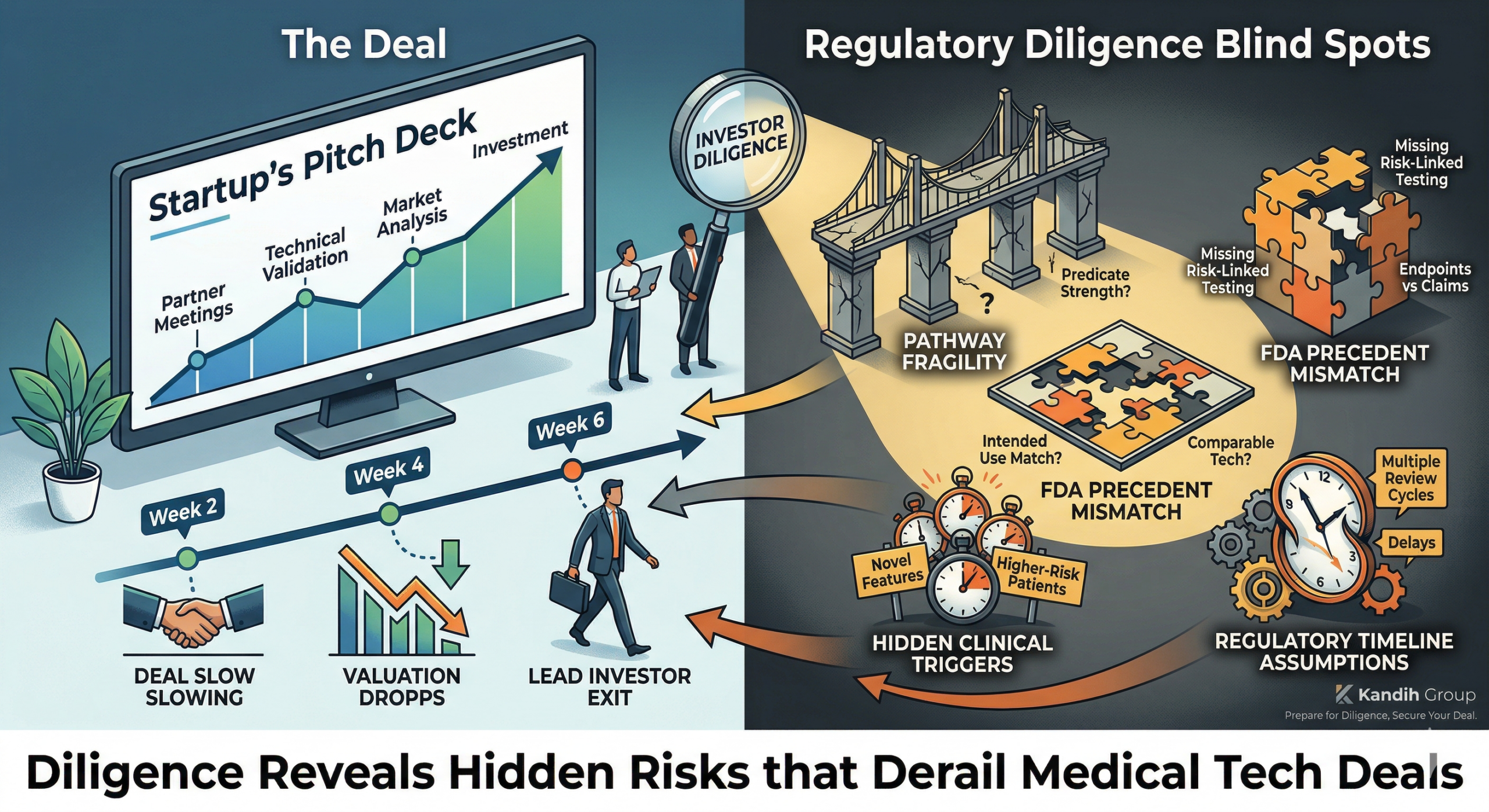
A startup made it all the way through partner meetings, technical validation, and market analysis.
Then diligence started.
Two weeks later, the deal slowed.
Four weeks later, the valuation dropped.
Six weeks later, the lead investor walked away.
A founder walked investors through a polished pitch:
Strong problem
Clear solution
Large market
Impressive prototype
Then came the slide titled “Regulatory Strategy.”
It had three bullets:
510(k) pathway
No clinical trials expected
Timeline: 12 months
Hook:An investor once passed on a startup with strong technology, a clear market, and early traction. Their reason? “The regulatory risk is unclear.” Not high. Not unmanageable.Just unclear. That single word cost the company the deal. The Reality Most Founders Miss Short answer: regulatory risk is not just about compliance.It is about uncertainty, delay, and […]
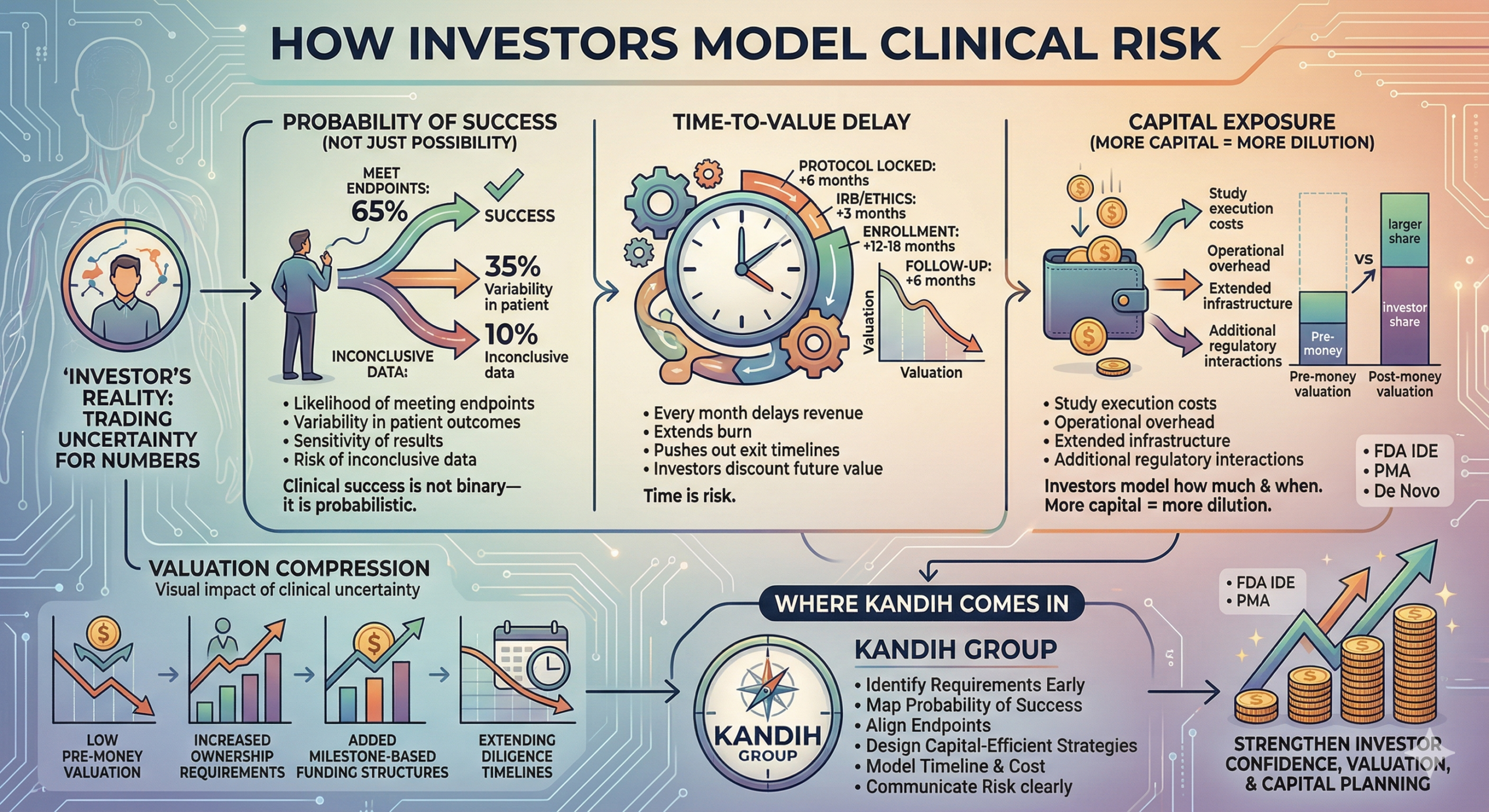
startup had everything investors usually want—strong prototype, clear market, experienced team.
Then one question changed the entire conversation:
“What’s your clinical risk?”
The room shifted.
The valuation dropped.
The timeline stretched.
The deal slowed.
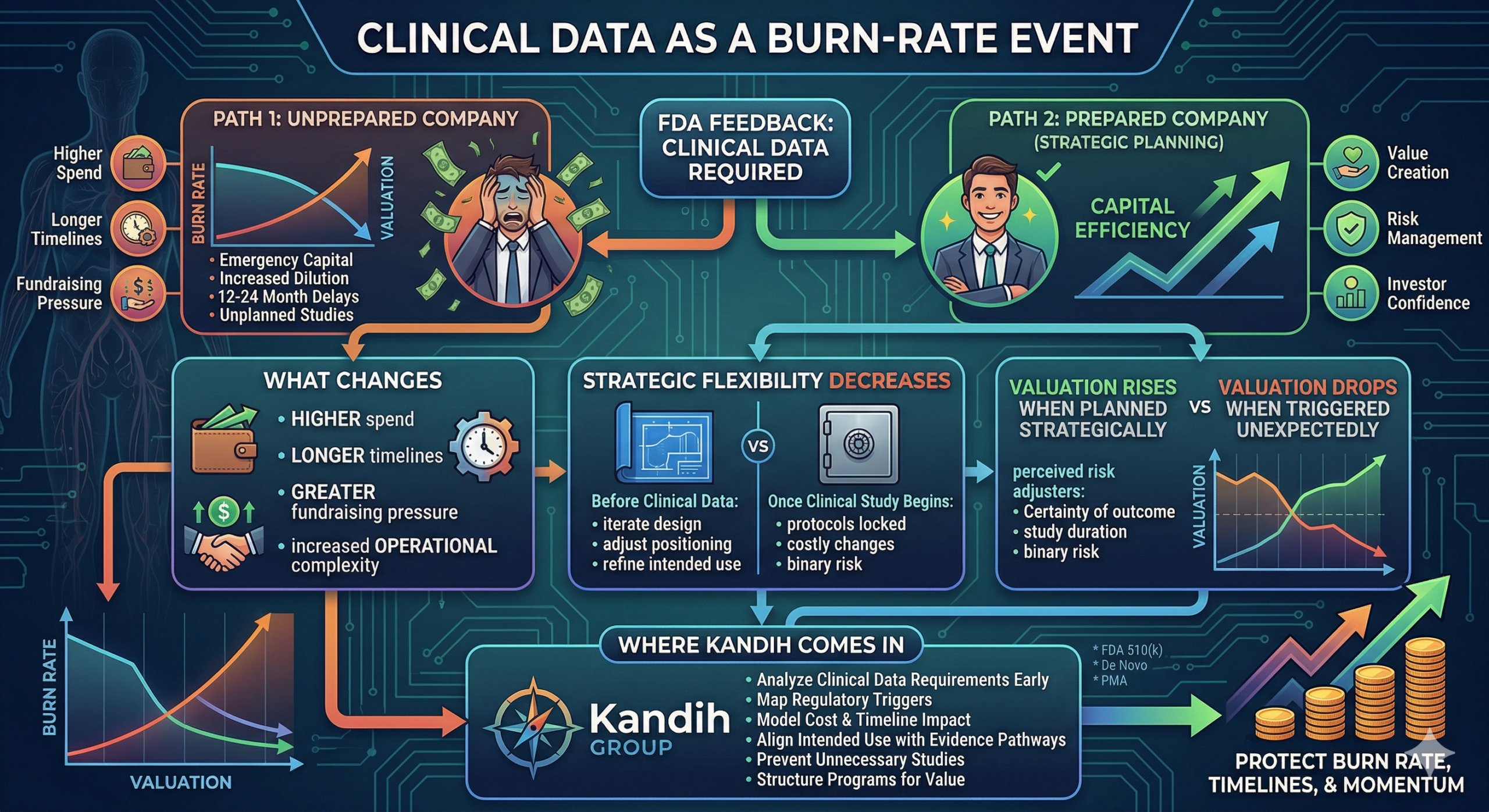
A founder once celebrated getting FDA feedback:
“Clinical data will be required.”
It sounded like progress.
Six months later, they were back in the market raising emergency capital.
Same device. Same team.
But now their burn rate had doubled—and their valuation had dropped.
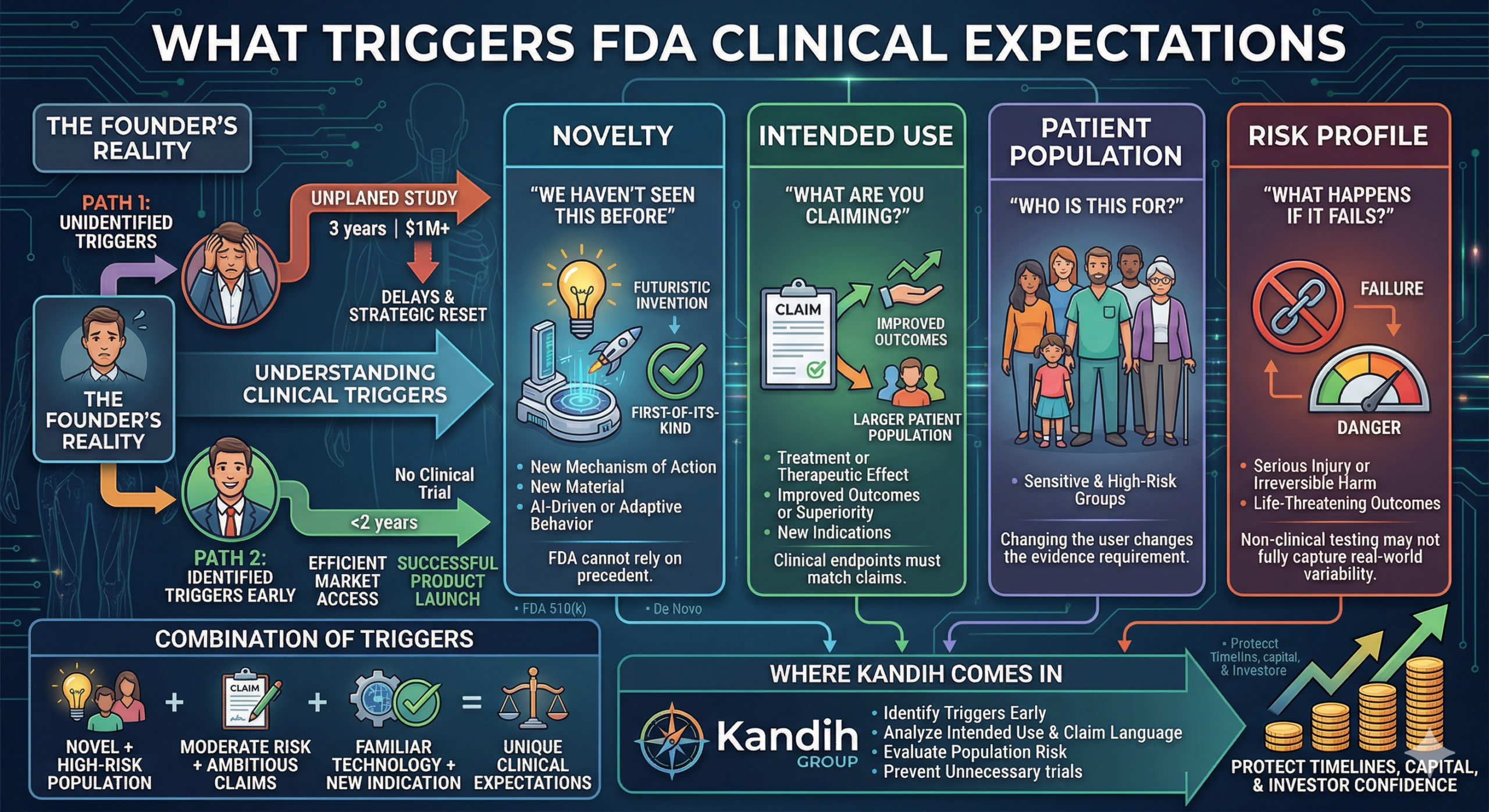
Hook:Two companies built nearly identical devices. One reached market in under two years with no clinical trial.The other spent three years running a costly study they didn’t plan for. Same category. Similar technology. Very different outcomes. The difference wasn’t luck.It was understanding what actually triggers clinical expectations from the U.S. Food and Drug Administration. The […]
A founder once delayed their entire product launch by 18 months—planning a clinical trial they never actually needed.
The device worked. The science was solid. The team had funding.
What they didn’t have was clarity.
So they defaulted to the safest assumption:
“FDA will probably require a clinical study.”