
Developmental language disorder (DLD) is a communication disorder that interferes with learning, understanding, and using language. These language difficulties are not explained by other conditions, such as hearing loss or autism, or by extenuating circumstances, such as lack of exposure to language. DLD can affect a child’s speaking, listening, reading, and writing. DLD has also been called specific language impairment, language delay, or developmental dysphasia. It is one of the most common developmental disorders, affecting approximately 1 in 14 children in kindergarten. The impact of DLD persists into adulthood
Author: admin

Respiratory Failure – Living With
For both acute (short-term) and chronic (long-term) respiratory failure, it is important to follow your treatment plan, manage your condition, and know when you should seek medical care. You may need pulmonary rehabilitation to help your lungs work better.
Your oxygen and carbon dioxide levels may take a while to return to a healthy range. Because of this, you may continue to have shortness of breath or other symptoms for a few weeks or longer. You may need to do daily activities more slowly.

Smoke in the Air, Toxins in Your Brain: What Every Health Leader Needs to Know
On September 9, 2025, researchers delivered a critical warning: even short-term exposure to smog can accelerate the buildup of toxic proteins in the brain linked to Alzheimer’s disease—with urban populations most at risk (ScienceDaily
).
If you’re a clinician, public health planner, or policymaker, here’s the single insight that matters:
toxicology isn’t just about what you ingest—it’s about what you breathe. And airborne neurotoxins demand urgent, strategic attention.

When Breakfast Goes Late: What Toxicologists Can Teach Us About Aging Health
On September 8, 2025, a major study revealed something counterintuitive: eating breakfast later in life is linked to higher risks of aging-related health problems—including depression, fatigue, oral issues, and even increased mortality.
If you’re designing nutritional programs, supplements, or elder-care products, here’s the central insight:
meal timing isn’t just about diet—it’s about metabolic safety. And toxicology offers the framework to guide those time-based risks.

Blood Moon: What Founders Can Learn About Toxicology
A blood moon looks dramatic, even a little dangerous. But the truth is simple: the moon hasn’t changed. The context has—Earth’s shadow shifts how we see it.
Drug development works the same way.
A compound that seems “safe” in one setting can behave very differently in another. That’s why toxicology is your guardrail—the science that keeps innovation on track.
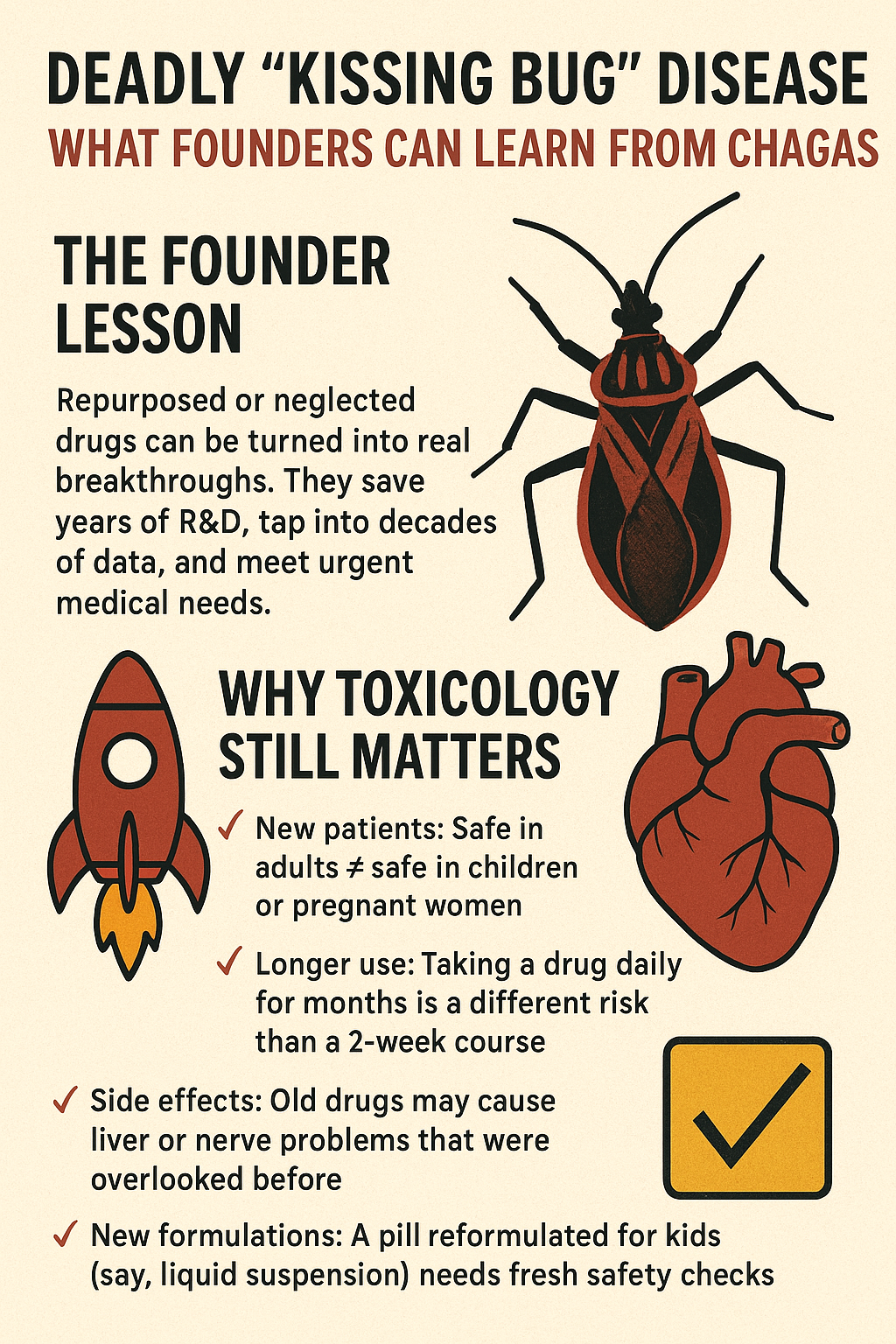
Deadly “Kissing Bug” Disease: What Founders Can Learn From Chagas
Chagas disease, spread by the so-called “kissing bug,” affects 6–7 million people worldwide. Left untreated, it can cause heart failure and even death. There are drugs for it—benznidazole and nifurtimox—but here’s the problem: – They’re old. – They’re harsh. – And they don’t work well enough for every patient. This is where you, the founder […]

Support for Teens When a Family Member Has Cancer
When a brother or sister has cancer, many things change—such as what you focus on, your family’s daily routines, and even your perspective on life. While this may be one of the most difficult experiences you go through, over time you can gain strength as you work to adjust and grow during this challenging time. While there is a team of people working to help your brother or sister get better, there are also people to support you.

Repurposed Medicines: Fast Isn’t Always Safe — Unless You Use This Advantage
Headlines buzzed about azelastine, a simple allergy spray that showed promise in cutting COVID infections.
That’s the magic of drug repurposing:
Take an old medicine, give it a new job, and skip years of costly R&D.
But here’s the truth no one puts on the slide deck:
Repurposing only works if toxicology is in the driver’s seat.
The Overlooked Side of Cancer Care: Why Toxicology is Your Silent Partner
When people hear “cancer care,” they think about surgery, chemotherapy, or immunotherapy. But here’s the hidden truth: the success of every cancer treatment also depends on toxicology—the science of how the body reacts to harmful substances. For oncologists, nurses, pharmacists, and biotech innovators, the one clear idea is this: you can’t optimize cancer care unless you understand and manage treatment toxicity.