
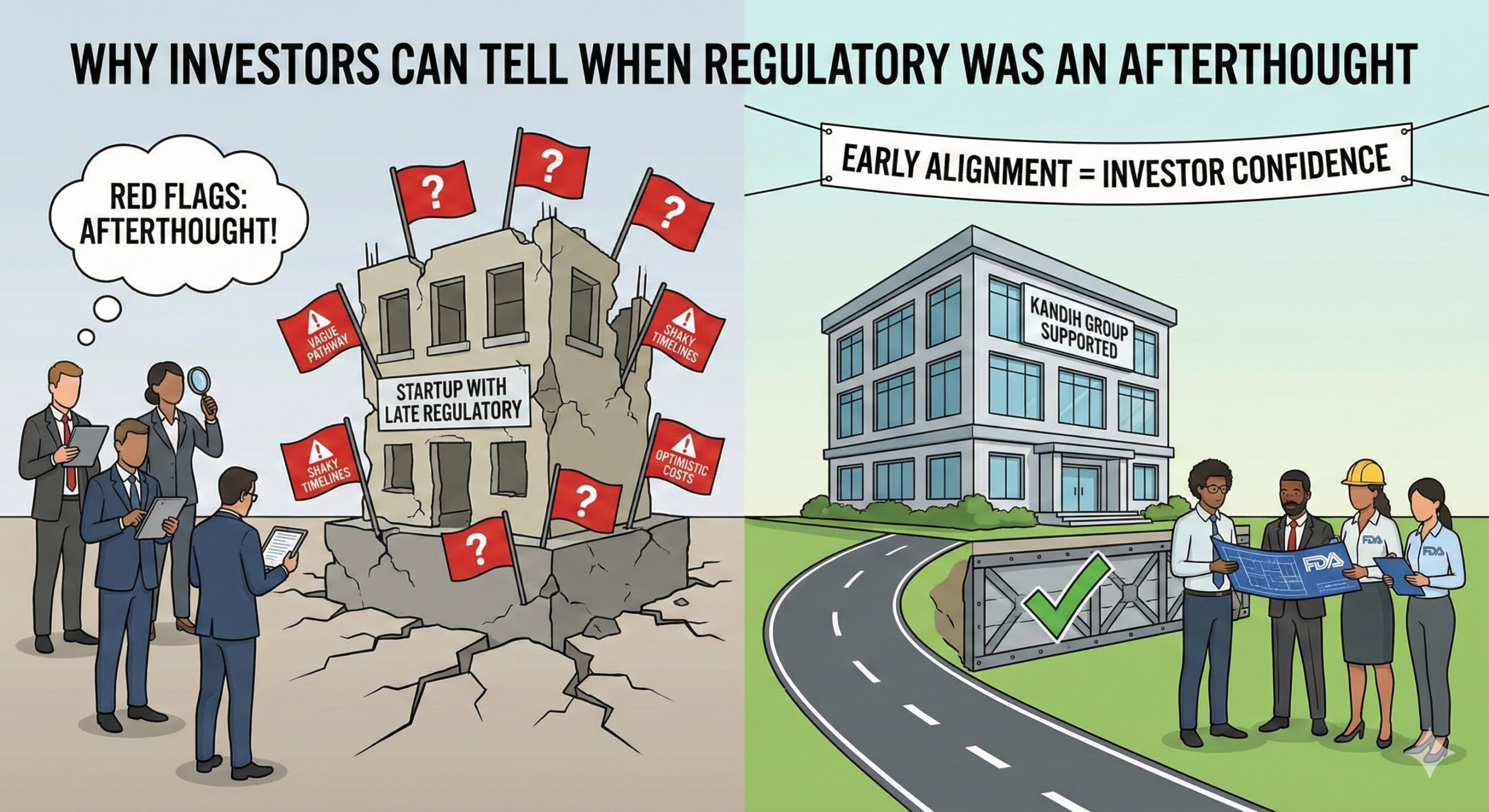
Hard reality: experienced investors can tell—often within minutes—when regulatory strategy was bolted on late instead of built in early.
You don’t need to say “we figured out regulatory later.” It shows up everywhere: in your data, your timelines, your budget, and your answers during diligence.
The Diligence Red Flags Investors Immediately Recognize
1. Vague or Shifting Regulatory Pathways
When founders cannot clearly explain:
Device classification
Intended use versus marketing claims
Why a 510(k), De Novo, or PMA pathway was chosen
…it signals that regulatory strategy was not part of early planning.
Investors know that unclear pathways translate directly into timeline risk and capital uncertainty.
2. Evidence That Looks Busy but Says Nothing
Investors don’t just ask what studies were done—they ask why.
Red flags include:
Testing performed without clear regulatory rationale
Bench or animal studies not tied to risk mitigation
Endpoints that don’t support approval or clearance decisions
This is a classic sign that studies were driven by engineering curiosity, not regulatory logic.
3. Timelines That Don’t Survive Basic Scrutiny
If regulatory strategy started late, timelines often:
Ignore FDA review cycles
Underestimate study duration and rework
Assume “fast approval” without justification
Sophisticated investors stress-test timelines. When they collapse under questioning, confidence collapses with them.
4. Cost Estimates That Feel Optimistic (Because They Are)
Late regulatory planning leads to budgets that:
Exclude repeat testing
Ignore escalation to higher-risk pathways
Underestimate documentation and quality system costs
Investors have seen this movie before. When numbers feel too clean, they assume the mess is just hidden.
5. No Clear Regulatory Owner
Another red flag: no one on the team can clearly own regulatory strategy.
If regulatory responsibility is:
“Shared”
Outsourced without oversight
Deferred until “later stages”
Investors read that as unmanaged risk.
Why This Matters to Investors
To investors, regulatory risk is not theoretical—it is:
A valuation issue
A dilution issue
A survivability issue
If regulatory strategy started late, investors assume:
Higher burn
Longer timelines
Lower probability of exit
And they price that risk accordingly—or walk away.
Where Kandih Comes In
This is where Kandih Group helps companies pass regulatory diligence with confidence.
Kandih supports investor-ready development by:
Establishing a clear, defensible regulatory pathway aligned with U.S. Food and Drug Administration
Aligning studies and endpoints with FDA expectations
Building credible timelines and cost forecasts
Strengthening regulatory narratives for diligence discussions
Acting as a clear regulatory owner and strategic partner
Instead of scrambling to explain decisions after the fact, companies can show investors that regulatory risk is understood, managed, and planned.
Bottom Line
Investors don’t need to be regulatory experts to spot regulatory neglect.
They just need to recognize uncertainty, inconsistency, and rework.
Strong regulatory strategy signals discipline, realism, and execution maturity.
That’s what Kandih helps founders demonstrate—before diligence begins.
References
FDA – Classify Your Medical Device
https://www.fda.gov/medical-devices/overview-device-regulation/classify-your-medical-device
FDA – Design Controls for Medical Devices
https://www.fda.gov/files/drugs/published/Design-Controls—Devices.pdf
FDA – Refuse to Accept Policy for 510(k)s
https://www.fda.gov/regulatory-information/search-fda-guidance-documents/refuse-accept-policy-510ks
FDA – Factors to Consider When Making Benefit-Risk Determinations
https://www.fda.gov/regulatory-information/search-fda-guidance-documents/factors-consider-regarding-benefit-risk-medical-device-product-availability-compliance-and