When Breakfast Goes Late: What Toxicologists Can Teach Us About Aging Health

On September 8, 2025, a major study revealed something counterintuitive: eating breakfast later in life is linked to higher risks of aging-related health problems—including depression, fatigue, oral issues, and even increased mortality.

 If you’re designing nutritional programs, supplements, or elder-care products, here’s the central insight:
meal timing isn’t just about diet—it’s about metabolic safety. And toxicology offers the framework to guide those time-based risks.


Blood Moon: What Founders Can Learn About Toxicology

A blood moon looks dramatic, even a little dangerous. But the truth is simple: the moon hasn’t changed. The context has—Earth’s shadow shifts how we see it.

Drug development works the same way.

 A compound that seems “safe” in one setting can behave very differently in another. That’s why toxicology is your guardrail—the science that keeps innovation on track.

The Overlooked Side of Cancer Care: Why Toxicology is Your Silent Partner

When people hear “cancer care,” they think about surgery, chemotherapy, or immunotherapy. But here’s the hidden truth: the success of every cancer treatment also depends on toxicology—the science of how the body reacts to harmful substances. For oncologists, nurses, pharmacists, and biotech innovators, the one clear idea is this: you can’t optimize cancer care unless you understand and manage treatment toxicity.

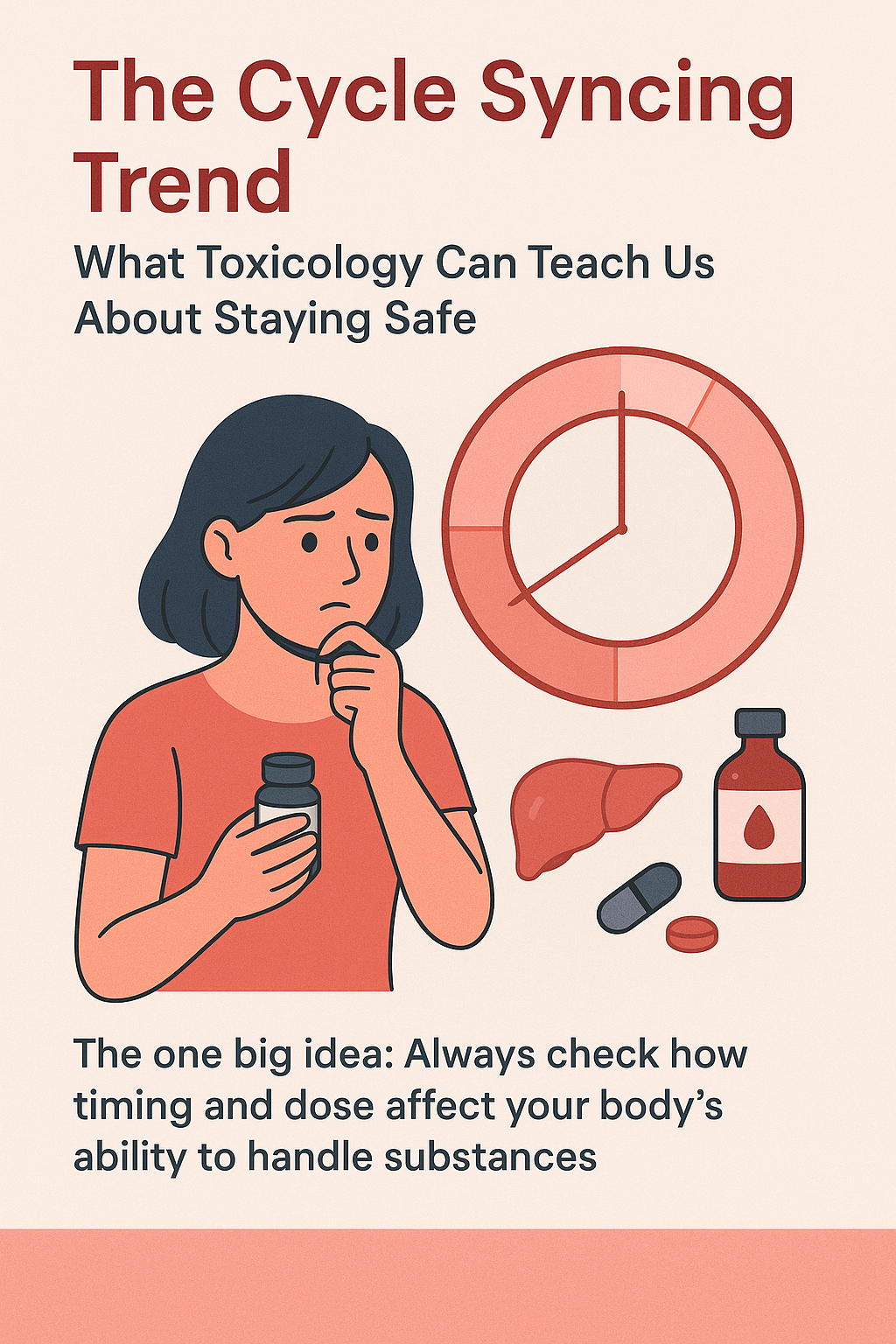
The Cycle Syncing Trend: What Toxicology Can Teach Us About Staying Safe

Cycle syncing” is a new health trend that’s blowing up online. It’s about planning your workouts, meals, and supplements around different phases of the menstrual cycle. Sounds cool, right? But here’s the problem: if you don’t think about toxicology (the science of how substances affect the body), cycle syncing could actually do more harm than good.

The Silent Risk in Fibermaxxing: A Toxicologist’s Wake-Up Call

TikTok’s “fibermaxxing” trend—urging users to dramatically boost fiber intake for gut health, fullness, and heart benefits—has gone viral. But here’s what most aren’t seeing: rapidly upping fiber without toxicologists’ guardrails may trigger unseen biochemical disruptions. If you’re a supplement developer, clinical dietitian, or wellness brand owner, here’s the single most important insight: make ‘toxicology of fiber overload’ your early-warning system.

💬

Chat with us