A Second Moon and a Second Look at Science
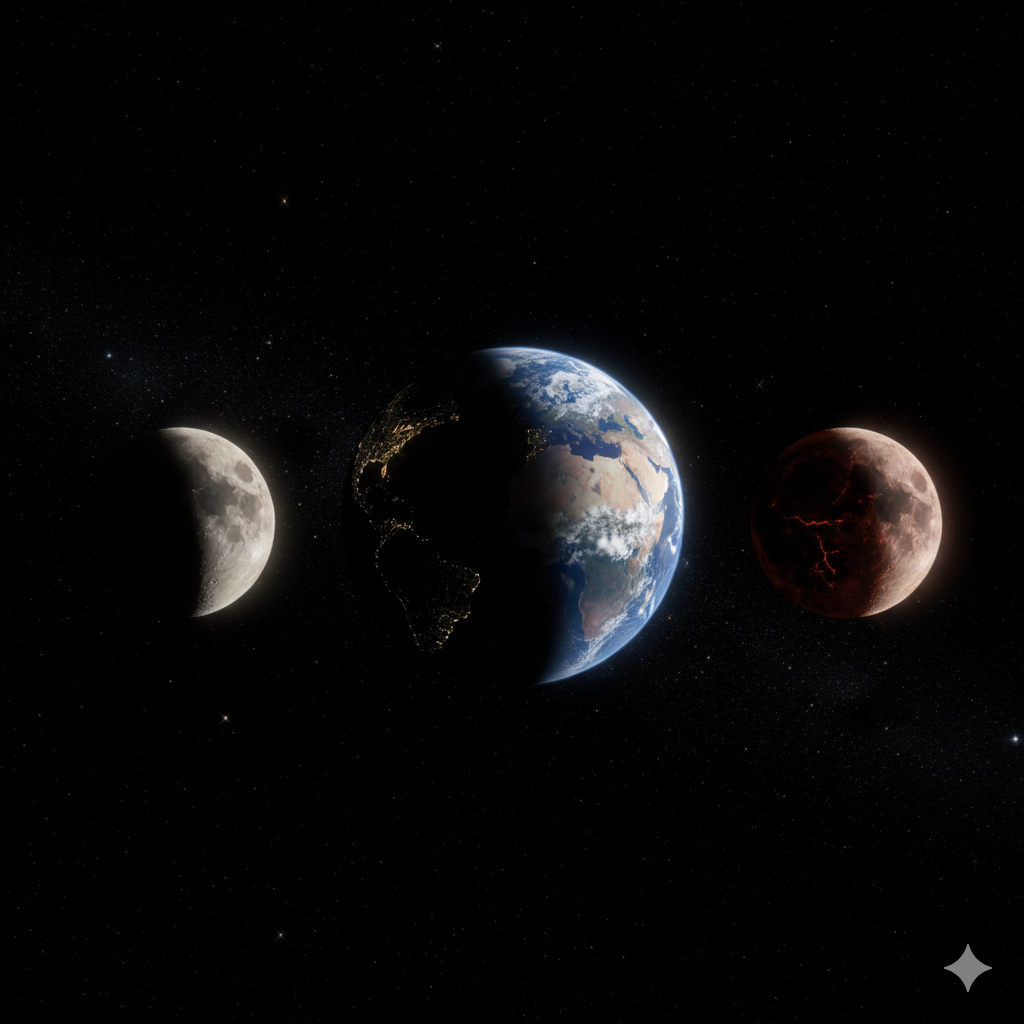
NASA recently confirmed that Earth has a temporary second moon — a quasi-satellite that will orbit alongside us until 2083. This cosmic hitchhiker, roughly the size of a car, doesn’t replace our familiar Moon — but it does remind us of something profound about science:
The systems we think we understand can always surprise us.
And that lesson isn’t just for astronomers — it’s a masterclass for toxicologists, product developers, and innovators alike.
Here’s the one clear idea:
Just as a second moon changes how we see Earth’s orbit, toxicology changes how we see innovation — revealing hidden interactions, unseen risks, and opportunities to design smarter, safer systems.
Toxicology Lessons from Earth’s “Second Moon”
This two-moon moment is a metaphor for system awareness — whether planetary or biological.
In toxicology, ignoring secondary interactions leads to the same kind of blind spots that delayed the discovery of Earth’s new satellite: invisible forces with outsized impact.
1. Hidden Forces, Hidden Risks
NASA didn’t spot the quasi-moon immediately — it’s small, faint, and easily missed.
The same applies to trace impurities, stabilizers, and excipients that seem insignificant but can cause cumulative harm.
Toxicologists use ultrasensitive analytical methods and in vivo modeling to detect these “invisible influencers” early — preventing downstream toxicities that can derail an otherwise perfect design.
2. Orbiting Systems and Chemical Balance
Just as the Moon shapes tides and planetary stability, chemical interactions shape biological homeostasis.
A single new compound can shift metabolic or immune balance in ways that ripple across systems.
Toxicologists model these multiscale interactions — between actives, metabolites, and environmental exposures — to ensure equilibrium holds, not collapses.
3. Predicting Future Behavior
NASA predicts this second moon will exit Earth’s orbit by 2083.
Toxicologists make similar predictions — not for space, but for time.
Using pharmacokinetic and toxicokinetic models, they forecast how long a compound stays in the body, where it accumulates, and how it’s cleared.
Both fields share the same foundation: prediction, prevention, and precision.
The Product Development Connection
In modern R&D, toxicology isn’t a postscript — it’s an engineering principle.
Developers who embed toxicology early save years of rework and millions in reformulation.
Drug Development: Early toxicology screens flag neurotoxic, genotoxic, or immunotoxic potential before Phase I trials.
Device Development: ISO 10993 biocompatibility testing prevents leachable-induced toxicity and long-term implant reactions.
Consumer Products: Environmental toxicology identifies packaging and ingredient risks that affect both human and ecosystem health — now a critical ESG and regulatory metric.
The message is simple: whether you’re building a therapy or a spacecraft, systems awareness prevents system failure.
Rooted in Experience
In one biopharma program, a polymer-based drug delivery system showed strong efficacy but subtle liver enzyme elevations.
After toxicologists investigated, the culprit wasn’t the active ingredient — it was a stabilizer in the polymer that accumulated in hepatocytes over time.
A reformulation solved the problem and saved the project.
Lesson learned: like Earth’s second moon, small, unseen forces can reshape entire trajectories.
Practical Insights for Developers and Scientists
Treat Toxicology as System Science: Everything interacts — model the whole ecosystem, from excipients to metabolites.
Test Early, Not Late: Toxicology screens during formulation save more time and money than crisis management post-trial.
Use Predictive Tools: Incorporate AI-driven toxicology to forecast off-target effects and metabolic liabilities pre-IND.
Stay Regulatory-Aligned: Follow FDA’s nonclinical safety guidance and CDC exposure frameworks to ensure global compliance and trust.
The Bigger Picture
NASA’s second moon will eventually drift away — but its discovery will forever change how we understand Earth’s motion.
Likewise, every toxicology discovery — every small impurity, every subtle signal — redefines how we understand safety in innovation.
Whether in orbit or in the lab, awareness of hidden systems defines survival.
For innovators, that means building safety not just around what’s visible — but around what’s predictable.
References
1. NASA Jet Propulsion Laboratory. Earth Has a Second Temporary Moon – 2025 Discovery Update. https://www.southerndigest.com/news/nasa-confirms-earth-has-a-second-moon.html
2. U.S. Food and Drug Administration (FDA). Nonclinical Safety Evaluation of Drug or Biologic Combinations. https://www.fda.gov/regulatory-information/search-fda-guidance-documents/nonclinical-safety-evaluation-drug-or-biologic-combinations
3. Centers for Disease Control and Prevention (CDC). Toxic Substances Portal. https://www.atsdr.cdc.gov
4. Eric A, et al. Toxicology Strategies for Drug Discovery: Present and Future. Chem Res Toxicol
. 2016;29(4):473-504. https://pubmed.ncbi.nlm.nih.gov/26588328
5. Wahiba O. Artificial intelligence integration in the drug lifecycle and in regulatory science. Front Pharmacol. 2024;15:1437167. https://www.frontiersin.org/journals/pharmacology/articles/10.3389/fphar.2024.1437167/full